Reported by Simon yusuph,| Journalist at wengglobal
The conclusion of the 2026 FIFA World Cup has triggered a major wave of managerial changes across international football, with at least 17 national team coaches leaving their positions in the aftermath of the tournament.
As football federations begin preparations for the next international cycle including continental championships and qualification campaigns for future global competitions the departures reflect the high expectations placed on national team managers and the relentless pressure to deliver results on football’s biggest stage.
Some exits came after disappointing performances, while others followed the completion of contractual agreements or mutual decisions to begin new chapters. Together, they mark one of the most significant post-World Cup coaching reshuffles in recent football history.
A Tournament That Redefined National Team Leadership
The FIFA World Cup remains the ultimate test for coaches, where tactical decisions, squad management, and tournament preparation are scrutinized by supporters, football associations, and stakeholders worldwide.
While several teams exceeded expectations during the expanded 48-team tournament, others fell short of their ambitions, prompting leadership reviews and strategic restructuring.
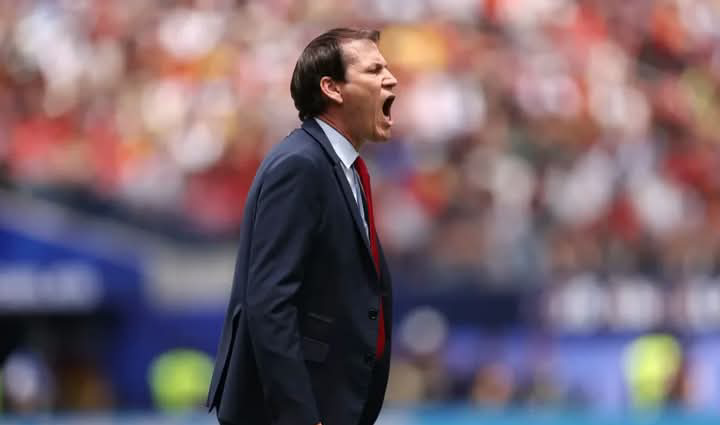
Among the most notable departures is Rudi Garcia, whose exit has attracted widespread attention following his country’s World Cup campaign. His departure symbolizes a broader trend of federations seeking fresh leadership ahead of future international competitions.
Full List of National Team Coaches Who Left After the 2026 FIFA World Cup
The following coaches have either resigned, had their contracts expire, or mutually agreed to part ways with their respective football federations following the tournament:
- Rudi Garcia
- Murat Yakin
- Luciano Spalletti
- Steve Clarke
- Kasper Hjulmand
- Dragan Stojković
- Fernando Batista
- Paulo Bento
- Héctor Cúper
- Sylvinho
- Vladimir Petković
- Roberto Martínez
- Hajime Moriyasu
- Luis de la Fuente
- Gustavo Alfaro
- Didier Deschamps
- Lionel Scaloni
Several football associations have indicated that the departures form part of broader long-term strategic plans rather than immediate reactions to tournament outcomes.
Why World Cup Coaching Changes Are Common
Major international tournaments frequently serve as natural transition points for national teams.
Unlike club football, international coaches often work within fixed tournament cycles. Contracts are commonly structured to end after a World Cup or continental championship, allowing federations to evaluate performances before deciding whether to renew agreements or appoint new leadership.
In many cases, coaches also choose to step away voluntarily after completing lengthy projects spanning multiple qualification campaigns.
Football analysts note that post-World Cup managerial turnover is a recurring pattern, with federations seeking tactical innovation, squad renewal, and improved competitiveness.
Pressure at the Highest Level
Managing a national football team presents unique challenges distinct from club football.
Coaches have limited opportunities to train players together, must navigate injuries and player availability, and face enormous public expectations during tournaments where a single result can define an entire tenure.
The expanded 2026 FIFA World Cup, featuring more participating nations than previous editions, increased competition while also exposing tactical and structural weaknesses within several teams.
For some coaches, early elimination proved costly. Others departed despite respectable performances, highlighting the evolving ambitions of football federations seeking sustained success.
What Comes Next?
Attention now turns to the appointment of new managers tasked with rebuilding squads and preparing for upcoming competitions.
Several national associations have already begun recruitment processes, with experienced international coaches and emerging tactical innovators expected to be among the leading candidates.
The next generation of appointments will play a crucial role in shaping qualification campaigns for future FIFA tournaments as well as continental championships across Europe, Africa, Asia, North America, Oceania, and South America.
Many federations are also expected to prioritize youth development, data-driven performance analysis, and long-term squad planning as international football becomes increasingly competitive.
Global Football Enters a New Era
The departure of 17 national team coaches underscores how rapidly international football evolves after every World Cup.
While some exits represent the end of successful eras, others offer opportunities for renewal and strategic transformation. History has shown that managerial transitions often lay the foundation for future achievements, with fresh ideas and renewed tactical approaches helping national teams remain competitive on the global stage.
As preparations begin for the next cycle of international competitions, supporters worldwide will closely watch which coaches emerge to lead football’s biggest nations into a new era.
For many countries, the post-World Cup rebuilding process has already begun, making the coming months one of the most significant periods for international football leadership in recent years.
Sources
- FIFA
- Reuters
- Associated Press (AP)
- ESPN
- BBC Sport
- Sky Sports
- The Athletic