Reported by Weng Patrick Atokor l Journalist at Weng Global
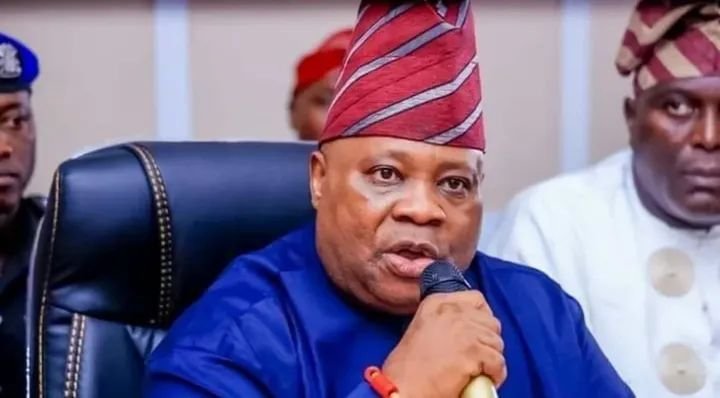
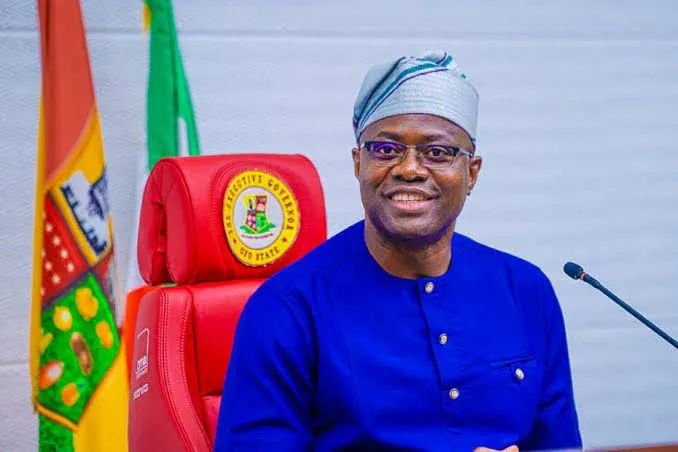
Oyo State Governor Seyi Makinde has confirmed that he is actively discussing a possible political alliance with opposition leaders, including former Vice-President Atiku Abubakar and former Anambra State Governor Peter Obi, as political preparations intensify ahead of Nigeria’s 2027 presidential election.
Makinde’s position could become an important development in Nigeria’s opposition politics, particularly as parties and influential political figures consider how to challenge President Bola Ahmed Tinubu and the ruling All Progressives Congress (APC).
In an interview with ARISE News anchor Ojy Okpe, aired on Friday, November 13, 2026, Makinde said discussions among opposition figures were continuing and that he was personally involved in efforts to identify the most effective political arrangement.
His comments suggest that the possibility of cooperation between major opposition figures remains open, although no final agreement on a coalition or presidential candidate has been announced.
The development raises an important question: Can Nigeria’s opposition parties overcome their differences and unite behind a common political strategy to challenge Tinubu in 2027?
This Weng Explain examines Makinde’s position, the political interests of the opposition figures involved, the challenges facing a possible alliance and what the development could mean for Nigeria’s next presidential election. Punch Newspapers +2
What Exactly Has Seyi Makinde Said?
Makinde has made it clear that he is willing to work with opposition leaders, particularly Atiku Abubakar and Peter Obi, if their cooperation offers a credible path towards changing Nigeria’s political direction.
He explained that discussions were already taking place and that the process was not simply about expressing willingness to cooperate.
The governor also indicated that any eventual political arrangement would depend on evidence rather than personal relationships or political emotions.
According to his position, opposition leaders should consider several factors before deciding who should lead a possible alliance.
These include:
- The manifestos and policy proposals of the candidates.
- Their previous records in public office.
- Their ability to address Nigeria’s challenges.
- Public opinion and political support.
- The possibility of building a workable national coalition.
Makinde did not announce that he had endorsed Atiku or Obi for president. Instead, he maintained that the opposition should assess the available options before reaching a decision.
He also suggested that the politicians could eventually become either political rivals or collaborators, depending on how negotiations develop.
This distinction is important because discussions about cooperation do not automatically mean that a formal coalition has been established. The Guardian Nigeria +2
Why Is an Opposition Alliance Important?
Nigeria operates a multiparty democratic system in which political parties compete for public support and electoral victories.
However, the 2023 presidential election demonstrated how divisions among opposition parties can influence the outcome of a national contest.
President Tinubu emerged victorious in that election, while Atiku Abubakar and Peter Obi finished second and third respectively.
Their supporters represented substantial political constituencies, but the opposition entered the election with competing presidential ambitions rather than a single candidate.
This created a situation in which opposition votes were distributed among different candidates.
A possible alliance ahead of 2027 is therefore significant because it could provide an opportunity for opposition leaders to coordinate their political structures, agree on common policies and avoid competing against one another in the presidential contest.
However, combining political parties is not simply a matter of bringing prominent politicians together.
A successful coalition requires agreement on leadership, party structures, campaign strategy, policy priorities and the distribution of political responsibilities.
It also requires the participating politicians to accept compromises that may not necessarily advance their individual ambitions.
Why Has Makinde’s Relationship With Tinubu Changed?
Another important part of the development is Makinde’s changing relationship with President Tinubu.
Makinde supported Tinubu during the 2023 presidential election. However, the Oyo governor has since become increasingly critical of the President’s administration and has indicated that he intends to challenge the ruling party politically.
During his recent public comments, Makinde referred to an agreement he said was reached before the 2023 election.
He maintained that he supported Tinubu partly because he expected the formation of a Government of National Unity after the election.
According to Makinde, that understanding was not honoured.
He also said his experience with Tinubu differed from his engagements with Atiku and Obi, explaining why he was more comfortable exploring cooperation with the opposition figures.
These are Makinde’s own claims about the political relationship. They should not be treated as independently established evidence of an agreement or its breach.
His position nevertheless illustrates how political alliances can change between elections as relationships, interests and disagreements develop. The Guardian Nigeria +1
Who Are the Major Opposition Figures Involved?
A possible alliance involving Makinde, Atiku and Obi would bring together politicians with different political backgrounds, regional support bases and electoral experiences.
1. Seyi Makinde
Makinde is the governor of Oyo State and an influential political figure in south-western Nigeria.
His political importance comes partly from his position as a serving governor and his experience in state-level administration.
His involvement in opposition discussions could help strengthen efforts to build political cooperation across different regions.
However, the extent to which his political influence would translate into national electoral support remains to be seen.
2. Atiku Abubakar
Atiku Abubakar is a former Vice-President of Nigeria and one of the country’s most experienced opposition politicians.
He contested the 2023 presidential election under the Peoples Democratic Party (PDP), finishing second behind Tinubu.
Atiku has maintained a significant presence in national politics and has repeatedly sought the presidency.
His participation in a possible opposition arrangement could bring political experience, established networks and support among sections of the electorate.
However, deciding who should lead a coalition could become difficult if several politicians maintain presidential ambitions.
3. Peter Obi
Peter Obi became one of Nigeria’s most prominent opposition figures following the 2023 presidential election, when he contested under the Labour Party.
His campaign attracted considerable support, particularly among young voters and Nigerians seeking alternatives to the established political parties.
Obi’s political strength is associated with his emphasis on public accountability, economic management and governance reforms.
Makinde has described him as qualified to become president and indicated that he is willing to work with him.
Nevertheless, an alliance involving Obi would also need to address questions about leadership, party structures and the interests of his political supporters.
The three politicians therefore bring different political advantages to any potential arrangement. The challenge is determining whether those advantages can be combined under a common electoral strategy.
What Happened to the Opposition’s Previous Coalition Efforts?
The latest discussions are taking place against the background of earlier attempts by opposition politicians to establish a united political front.
In 2026, opposition figures explored cooperation under an African Democratic Congress (ADC)-led arrangement intended to prevent the ruling APC from benefiting from a divided opposition.
The plan involved supporting a single presidential candidate rather than allowing several influential opposition politicians to compete separately.
However, the initiative encountered difficulties.
In a May 5, 2026 report, Reuters reported that Peter Obi and Rabiu Kwankwaso had left the ADC-led alliance amid internal disagreements, legal disputes and divisions.
The departures raised questions about whether the opposition could maintain a united front before the 2027 election.
Reuters also reported that opposition candidates collectively secured roughly 60 per cent of the votes in the 2023 presidential election, compared with approximately 35 per cent for Tinubu.
These figures illustrate why opposition cooperation has become an important political consideration.
However, they should not be interpreted as proof that a united opposition would automatically defeat the incumbent President. Voter preferences can change, and supporters of different candidates do not necessarily transfer their votes to another politician simply because their leaders form an alliance. Reuters
What Could Stop Atiku, Obi and Makinde From Working Together?
Although the idea of an opposition alliance may appear politically attractive, several challenges could prevent it from becoming successful.
Leadership disagreements
One of the biggest questions is who would become the presidential candidate if the politicians eventually agree to work together.
Atiku and Obi have both pursued the presidency, while Makinde has also indicated his own political ambitions.
A coalition involving multiple influential figures would need a credible method of selecting its candidate.
Without agreement on leadership, negotiations could collapse.
Political party differences
The politicians have different party affiliations and political structures.
A successful arrangement would require agreement on whether they would cooperate through their existing parties, establish a new political platform or adopt another legally acceptable arrangement.
Party interests and internal rules could complicate negotiations.
Regional and electoral considerations
Nigeria’s presidential elections involve political calculations across the country’s six geopolitical zones.
A successful presidential candidate needs broad national support rather than relying exclusively on one region.
The opposition would therefore have to agree on a strategy that accommodates different regional interests while presenting a national political message.
Trust and political history
Previous political disagreements and unsuccessful alliances could affect negotiations.
Politicians may agree on the need to challenge the APC but disagree over the distribution of political influence and responsibilities.
Building trust will be essential if any proposed arrangement is expected to survive beyond public announcements.
Different policy priorities
An alliance also needs more than a shared desire to win an election.
The participating politicians would have to explain how they intend to address Nigeria’s economic difficulties, insecurity, unemployment, education and other national challenges.
A coalition without a clear policy programme could struggle to convince voters that it offers a credible alternative.
Could a United Opposition Defeat Tinubu in 2027?
A united opposition could present a stronger electoral challenge to Tinubu than several competing opposition candidates.
However, political unity alone does not guarantee victory.
The APC retains the advantages associated with controlling the federal government, maintaining an established national political structure and having access to a broad network of political stakeholders.
Tinubu also has an established political base and the opportunity to campaign on the performance of his administration.
The opposition, meanwhile, would need to demonstrate that its proposed alternative offers practical solutions to the challenges facing Nigerians.
The 2023 election provides an important lesson. Although opposition candidates collectively attracted substantial support, their individual campaigns did not translate into a single national challenge.
Reuters has highlighted the difficulties created by competing ambitions and political divisions within opposition efforts.
For the 2027 election, the central question will not simply be how many prominent politicians support an alliance. It will be whether their supporters, party structures and political interests can be brought together effectively. Reuters
What Would an Opposition Alliance Mean for Ordinary Nigerians?
Beyond political competition, the most important consideration is what a possible alliance would mean for citizens.
Nigeria continues to face major challenges involving the cost of living, unemployment, insecurity, infrastructure, electricity supply and access to quality education.
For many voters, the 2027 election will be an opportunity to assess the direction of the country and decide whether the current administration deserves another mandate.
An opposition alliance could give voters a more coordinated alternative, particularly if its members agree on clear policies and demonstrate how they intend to implement them.
However, Nigerians would also need to examine the credibility of the politicians involved.
Political cooperation should not be judged only by the personalities participating in it. Voters will want to understand what the proposed government intends to achieve, how it will finance its policies and whether its leaders have records that support their promises.
Ultimately, the success of any alliance will depend on whether it can translate political negotiations into a convincing programme for national development.
What Happens Next?
The immediate next step is the continuation of discussions among opposition leaders.
Makinde has indicated that he remains involved in determining the most viable political arrangement ahead of the election.
However, several important questions remain unanswered:
- Will Atiku, Obi and Makinde eventually agree to work under one political platform?
- Who would emerge as the presidential candidate?
- Would other opposition parties join the arrangement?
- Can the politicians agree on a common economic and security programme?
- Will their supporters accept the eventual political arrangement?
Until these questions are resolved, it would be premature to describe the discussions as a completed opposition coalition.
The coming months will be important in determining whether the negotiations produce a united political movement or another unsuccessful attempt at opposition cooperation.
Weng Global Analysis: The Real Test Is Political Unity
Makinde’s willingness to work with Atiku and Obi represents an important development in Nigeria’s preparations for the 2027 presidential election.
His comments indicate that some influential opposition politicians recognise the importance of cooperation if they hope to mount a serious challenge against the ruling APC.
However, Nigeria’s political history demonstrates that bringing opposition leaders together can be considerably more difficult than announcing an alliance.
Personal ambitions, party interests, regional considerations and disagreements over leadership have repeatedly complicated efforts to establish a common political front.
For Makinde, Atiku and Obi, the challenge will be to demonstrate that their proposed cooperation is based on a shared vision for Nigeria rather than simply an agreement to oppose Tinubu.
For Nigerians, the bigger issue is not necessarily which politician becomes the opposition candidate. It is whether the available political alternatives can offer better governance, stronger institutions, economic opportunities and improved security.
The 2027 election could become a major test of Nigeria’s opposition politics. But before any alliance can threaten the ruling party, its members must first demonstrate that they can successfully work together.
Weng Global – Stories beyond borders
Sources