Reported by Weng Patrick Atokor l Journalist at Weng Global
Trabzonspor have criticised the Union of European Football Associations (UEFA) over decisions requiring Turkish clubs to play matches against Israeli opponents at neutral venues, accusing the European football governing body of applying double standards. The Turkish club also condemned the use of force against Beşiktaş supporters by Georgian security personnel during a UEFA Europa League fixture in Batumi, Georgia, on November 26, 2026.
The statement came after disturbances involving Beşiktaş supporters and Georgian police interrupted the match between Beşiktaş and Israeli side Hapoel Beer-Sheva. The incident triggered widespread reactions across Turkish football, with several clubs expressing solidarity with Beşiktaş and questioning the treatment of Turkish supporters abroad.
Trabzonspor said Turkish teams should not be deprived of the opportunity to play their home fixtures in their own countries and in front of their supporters when facing Israeli opposition.
The controversy has brought renewed attention to the intersection of football, security arrangements, political tensions and the responsibilities of international sporting organisations.
Trabzonspor Challenges UEFA’s Neutral-Venue Decisions
In its public statement, Trabzonspor expressed dissatisfaction with UEFA’s decisions concerning Turkish clubs scheduled to face Israeli teams.
The club argued that Turkish sides should retain their right to host such fixtures at home rather than being required to travel to neutral venues.
Trabzonspor described UEFA’s approach as inconsistent and said it did not accept what it considered double standards in the governing body’s treatment of Turkish clubs.
The club also condemned the intervention by Georgian security personnel against Beşiktaş supporters, describing the response as disproportionate.
It expressed solidarity with Beşiktaş and supporters affected by the incident, including those reportedly injured and taken to hospital.
The statement further called for unity among Turkish football clubs when responding to what they regard as unfair treatment of their teams and supporters.
The position was particularly significant because Trabzonspor and Beşiktaş are competitors in Turkish football, demonstrating how the incident generated support beyond normal club rivalries.
Beşiktaş Match Interrupted After Police Enter Stands
The incident occurred during the Europa League encounter between Beşiktaş and Hapoel Beer-Sheva at the stadium in Batumi, Georgia.
According to Reuters, Georgian police entered the stands during disturbances involving Beşiktaş supporters. Video footage showed officers confronting fans, while one supporter was seen being carried away on a stretcher.
The confrontation reportedly followed the display of Palestinian flags by supporters in the stands. Turkish media also reported that police used pepper spray during the intervention.
The match was interrupted in the 26th minute after referee Morten Krogh stopped play. Players and match officials subsequently left the pitch as the situation was addressed.
The fixture resumed after approximately 30 minutes, following discussions involving Beşiktaş players, supporters and the club’s director of football, Önder Özen.
Beşiktaş eventually secured a 2–1 victory over Hapoel Beer-Sheva despite the disruption.
Reuters reported that UEFA intended to assess the incidents on November 27, following the match.
The circumstances surrounding the police intervention, including the treatment of supporters and the handling of Palestinian flags, became central to the wider controversy. Reuters +1
Beşiktaş Condemns Treatment of Its Supporters
Beşiktaş also criticised the security response, describing the force used against its supporters as disproportionate.
The club said it had taken steps to raise the matter with the UEFA match delegate and the Turkish Consulate General in Batumi.
It also expressed concern over reports that some supporters had experienced difficulties entering the stadium before the match.
The club indicated that it would continue monitoring the situation until its supporters could return safely to Turkey.
The intervention prompted questions about the arrangements put in place to protect travelling supporters at an international football fixture, particularly when a match involves politically sensitive issues.
While the display of national and political symbols can create security and regulatory challenges at sporting events, the handling of such situations remains subject to applicable rules and the responsibility of the relevant authorities.
Turkish Government Intervenes as Diplomatic Concerns Grow
The incident extended beyond football, attracting attention from Turkish government officials and diplomatic representatives.
According to Anadolu Agency, Turkish Foreign Minister Hakan Fidan spoke by telephone with his Georgian counterpart, Maka Botchorishvili, following the developments in Batumi.
Turkish diplomatic sources said officials from the Turkish Embassy in Tbilisi and the Consulate General in Batumi were present at the stadium.
The diplomatic representatives were working to ensure the safety of Turkish citizens and protect their rights.
Turkish Interior Minister Mustafa Çiftçi also contacted his Georgian counterpart, Sulkhan Tamazashvili.
Reuters reported that Çiftçi said the Georgian minister had informed him that UEFA officials, rather than Georgian state authorities, had confiscated the Palestinian flags.
That account introduced another dimension to the incident, raising questions about the respective responsibilities of UEFA officials and Georgian security personnel.
However, the available reports did not independently establish the full sequence of decisions surrounding the removal of the flags or the subsequent police intervention.
Turkish Youth and Sports Minister Osman Aşkın Bak also condemned what he described as disproportionate intervention against the supporters.
The Turkish Football Federation similarly criticised the treatment of Beşiktaş fans and said it would follow the matter through to its conclusion.
The federation called for a full investigation, the identification of those responsible and appropriate sanctions where necessary.
These developments demonstrated that the incident had become a diplomatic and institutional concern rather than remaining an isolated disagreement between football supporters and stadium security personnel. Reuters +2
Other Turkish Clubs Rally Behind Beşiktaş
Trabzonspor was among the first Turkish clubs to publicly express support for Beşiktaş.
Its statement attracted attention because the two clubs are competitors in Turkish football, but the circumstances surrounding the incident prompted a collective response.
Other prominent clubs, including Fenerbahçe and Galatasaray, also condemned the intervention.
Erzurumspor, Başakşehir and Samsunspor were among the other clubs that expressed solidarity with Beşiktaş and its supporters.
Their reactions focused on two related issues: the treatment of Turkish supporters in Georgia and the restrictions affecting Turkish clubs hosting matches against Israeli opponents.
Fenerbahçe described the use of disproportionate force against supporters expressing solidarity with Palestinians as unacceptable.
Galatasaray also called on UEFA to address what it considered inconsistent treatment of Turkish clubs.
The responses highlighted an unusual moment of unity among clubs that ordinarily compete against one another for domestic honours.
The issue also demonstrated how political tensions can influence the atmosphere surrounding international sporting competitions.
Why UEFA’s Neutral-Venue Decisions Are Controversial
The dispute over neutral venues is connected to wider security concerns surrounding matches involving Turkish and Israeli teams.
UEFA’s decision to move the Beşiktaş fixture from Turkey to Georgia meant that the Istanbul club could not host the match in its usual home environment.
Reuters reported that the fixture was relocated after it was determined that it could not be played in Turkey for safety and security reasons.
The relocation has raised questions among Turkish clubs about the practical consequences of such arrangements, particularly the loss of home advantage and the inability to play before their regular supporters.
For football clubs, hosting a European fixture at home is significant beyond the sporting result.
Home matches provide opportunities for supporters to attend games, generate revenue, strengthen the connection between clubs and their communities, and create the familiar atmosphere associated with European competitions.
Playing at a neutral venue can affect travel arrangements, attendance, commercial opportunities and the competitive environment.
Trabzonspor’s criticism therefore reflects concerns about sporting equality and the rights of clubs participating in European competitions.
However, a neutral-venue decision should be assessed against the security circumstances and the criteria applied by UEFA. Establishing whether the governing body has applied different standards requires examining the specific decisions, their stated security grounds and the treatment of comparable fixtures.
Trabzonspor’s accusation remains the club’s position. UEFA’s full explanation and assessment of the latest incident will be important in determining how the controversy develops.
Wider Implications for European Football
The controversy raises broader questions about the responsibilities of international sporting organisations when political tensions affect football competitions.
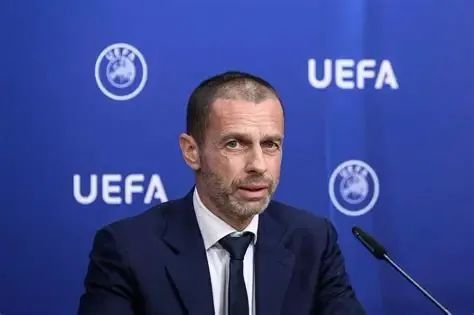
UEFA is responsible for organising European club competitions and establishing rules governing participating teams, match arrangements and stadium safety.
Its decisions can have significant consequences for clubs, supporters and host countries, particularly when security concerns require matches to be relocated.
The Beşiktaş incident also highlights the importance of protecting supporters travelling internationally to attend sporting events.
Football authorities and security agencies must balance stadium safety, the enforcement of competition regulations and the rights of spectators.
For Turkish clubs, the issue is increasingly becoming a question of whether their teams and supporters receive equal treatment in European competitions.
For UEFA, the challenge will be to demonstrate that its decisions are based on consistent security assessments and clearly communicated procedures rather than inconsistent standards.
What Happens Next?
UEFA’s assessment of the November 26 incident is expected to be an important next step.
Reuters reported that the governing body planned to review the events on November 27, 2026.
The Turkish Football Federation has also indicated that it intends to pursue the matter and seek accountability for the treatment of Beşiktaş supporters.
Meanwhile, Turkish diplomatic representatives have been involved in efforts to safeguard the supporters in Georgia.
It remains to be seen whether UEFA will issue further explanations, announce disciplinary measures or introduce additional arrangements concerning future fixtures involving Turkish and Israeli clubs.
The responses from Trabzonspor, Beşiktaş and other Turkish football organisations have made clear that the controversy extends beyond one match.
The dispute now concerns sporting equality, supporters’ safety and the responsibility of football’s governing institutions to apply their rules consistently.
For European football, the outcome could influence future discussions about neutral venues, security decisions and the treatment of supporters at politically sensitive international fixtures.
Weng Global – Stories beyond borders
Sources
- Reuters – Beşiktaş v Hapoel Beer-Sheva suspended after police enter stands (November 26, 2026).
- Anadolu Agency – Türkiye closely monitoring situation of Beşiktaş fans after police intervention in Georgia.
- Anadolu Agency – Turkish clubs condemn police intervention against Beşiktaş fans in Georgia.
- Anadolu Agency – Türkiye raises concerns over force used against Beşiktaş fans in Georgia.