Reported by Simon Daniel Yusuph l Journalist at Weng Global
Stakeholders in Nigeria’s sports industry have called on the Federal Government, state governments and private investors to increase funding for the sector, arguing that sports should be developed as a viable economic industry capable of generating employment, attracting investment and contributing to national growth.
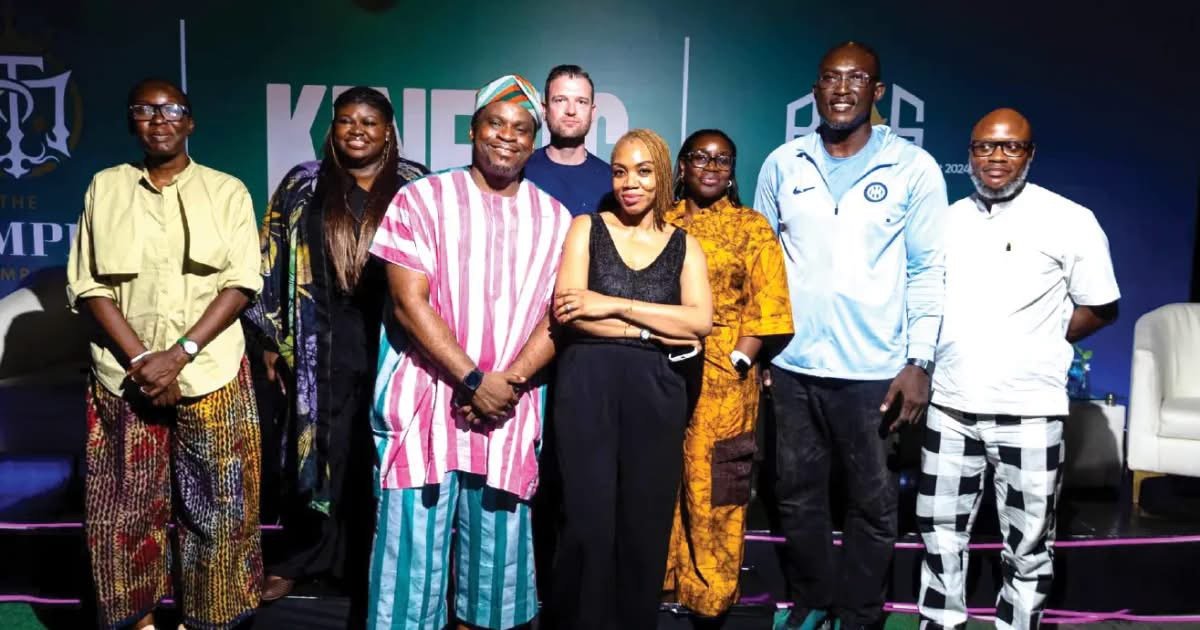
The call was made at the maiden KINETIC Sports Business Forum in Lagos, organised by The Temple Company in partnership with the Business of Sports Institute Africa, popularly known as BOS Africa.
The forum brought together sports executives, entrepreneurs, investors, football agents, administrators, sports lawyers, government representatives and finance professionals to examine the opportunities and challenges facing Nigeria’s sports industry.
Participants argued that Nigeria’s sporting potential extends far beyond the discovery of talented athletes. They maintained that sustainable development requires a functioning business ecosystem supported by investment, infrastructure, professional management, sponsorship, technology and effective government policies.
Their position reflects growing calls for a shift in how sports are perceived and managed in Nigeria, with greater emphasis on its economic value rather than treating it exclusively as recreation or a platform for winning medals and trophies.
Stakeholders Seek a Sustainable Sports Business Ecosystem
President and Chief Executive Officer of The Temple Company, Terfa Tilley-Gyado, said the forum was established to encourage conversations and partnerships that could strengthen sports business in Nigeria and across Africa.
He argued that identifying talented athletes was not enough to guarantee success in the global sports industry, stressing the importance of developing the structures and commercial opportunities that support sporting excellence.
According to him, African athletes have demonstrated their abilities internationally, but the continent remains under-represented in several areas of the global sports business.
He emphasised the need for stakeholders across different parts of the industry to work together to build an ecosystem capable of supporting athletes, businesses and other professionals.
The argument highlights an important challenge for Nigeria. While the country has produced athletes who have competed successfully in football, athletics, basketball, boxing and other disciplines, the wider commercial structures that support professional sports have not developed at the same pace.
A sustainable sports industry requires more than athletes and competitions. It also depends on sports marketing, event management, broadcasting, merchandising, talent representation, sports medicine, facility management, coaching, legal services and other professional activities.
Developing these areas could create opportunities for businesses and workers who may not necessarily compete on the field.
BOS Africa Highlights Employment and Industry Challenges
Founder of the Business of Sports Institute Africa, Beverley Agbakoba-Onyejianya, said Nigeria’s sports industry was not operating at the level expected of a country with its population, sporting culture and abundance of talent.
She noted that although Nigeria is widely recognised as a football-loving country, the sector has not generated sufficient employment opportunities or developed into a sustainable industry comparable with those in countries such as England and France.
Agbakoba-Onyejianya stressed the importance of bringing professionals from different sectors together, including financial institutions, football agents and telecommunications companies.
Her position suggests that sports development should involve a broader range of expertise and investment rather than relying primarily on government institutions and sports administrators.
Financial institutions, for example, could support viable sports businesses through financing, while telecommunications companies could contribute through broadcasting partnerships, digital platforms, sponsorship and commercial promotions.
Likewise, legal professionals and sports managers could help strengthen contracts, representation, governance and the protection of commercial rights.
The forum therefore provided an opportunity to discuss how different sectors could contribute to building a more organised and commercially sustainable sports environment.
Grassroots Development Identified as a Major Priority
Participants also emphasised the importance of grassroots sports, particularly the need to expand access to sporting opportunities for children and young people.
Chairperson of the Lagos State Aquatic Association, Aderoju Ope-Ajayi, called for greater attention to grassroots participation, arguing that a wider base of young people involved in sports would increase the pool of talent available for development.
She also raised concerns about sponsorship practices, noting that some organisations support sporting events mainly as gestures of goodwill rather than through clearly defined long-term commercial objectives.
Her observations point to the need for stronger relationships between sports organisers and sponsors.
Sponsorship arrangements can become more sustainable when businesses understand the audiences they are reaching, the visibility they receive and the commercial opportunities associated with supporting sporting competitions.
For Nigeria, strengthening grassroots sports could also provide opportunities for local businesses, schools, coaches, equipment suppliers and community organisations.
A broader participation base would help identify promising athletes earlier while encouraging healthier lifestyles and providing young people with structured activities.
It could also create a pathway through which talented individuals progress from school and community competitions to professional and international sporting opportunities.
Poor Facilities and Weak Management Remain Challenges
The condition of sporting facilities and the management of available infrastructure also featured prominently during discussions.
Several participants expressed concern about the shortage of adequate facilities in schools, particularly for sports such as basketball, athletics and rugby.
Without accessible and properly maintained facilities, young athletes may struggle to develop their abilities, while schools and community organisations face difficulties organising regular competitions.
The founder of The Athletics School Games and Pan-Africa School Games, Dr Seun Akinbolu, criticised what he considered an inadequate national approach to exploiting Nigeria’s sporting potential.
He argued that the country possesses abundant talent but has not done enough to develop the structures required to turn that potential into sustainable achievements.
Opeyemi Babalola, founder of Webber Engineering, also identified politics, poor infrastructure and weak facility management as major obstacles to the development of the sector.
He suggested that revenue-generating opportunities such as naming rights could help improve the financial sustainability of sports facilities.
Naming rights allow companies or organisations to pay for the commercial association of their brands with stadiums, arenas or other sporting venues.
Such arrangements are used in several established sports markets to generate revenue for facility operators and provide businesses with long-term brand exposure.
However, their success depends on transparent agreements, proper facility management and the ability to attract commercially interested partners.
The discussion highlights the need for Nigerian sports administrators to explore revenue opportunities that can reduce dependence on government funding.
Private Sector Participation Seen as Essential
A major recommendation from the forum was the creation of an enabling environment that would encourage private businesses to invest in sports.
Participants argued that government should focus on providing effective policies, infrastructure, regulation and incentives that make investment attractive, while private organisations contribute funding, technical expertise and commercial management.
Private-sector participation could support the development of sports facilities, academies, professional clubs, competitions, broadcasting platforms and other businesses connected to the industry.
However, investors are more likely to commit resources when they have confidence in the regulatory environment, financial transparency, management structures and potential returns.
This makes governance an important part of the investment discussion.
Sports organisations need clear financial reporting, professional administration, accountable leadership and reliable commercial arrangements to build confidence among sponsors and investors.
Without such structures, even well-funded projects may struggle to deliver lasting results.
The forum’s recommendations therefore point to the need for cooperation between government institutions, sports federations, businesses, investors and community organisations.
National Sports Commission’s ₦1 Trillion Funding Plan
The discussions also come amid efforts by the National Sports Commission to attract more investment into Nigeria’s sporting infrastructure.
The Commission announced plans in October 2026 to raise a ₦1 trillion fund aimed at rehabilitating sports facilities and attracting private-sector investment.
The proposed funding initiative reflects the growing recognition that Nigeria needs substantial financial resources to improve sporting infrastructure and strengthen the commercial foundations of the industry.
However, the effectiveness of such an initiative will depend on how the funds are mobilised, allocated and managed.
Transparent procurement processes, clear project priorities, independent monitoring and proper maintenance arrangements will be important in ensuring that investments produce lasting benefits.
The rehabilitation of existing facilities could also create opportunities for private operators and businesses to participate in the management and commercial development of sports infrastructure.
Beyond stadiums and major sporting venues, investment is also needed in school facilities, community sports centres, training grounds and specialised facilities for different sporting disciplines.
A balanced approach would help ensure that investment benefits both elite athletes and the wider population.
Young Athletes Need More Than Talent
Managing Partner of Aesura Group, Folake Shasanya, observed that young Nigerian athletes demonstrate considerable ability but often lack the systems required to sustain their development.
She pointed to Nigeria’s recent performances at the Youth Olympic Games as evidence of the country’s sporting potential.
Her observation raises an important issue about the transition from talent identification to professional development.
Young athletes require access to qualified coaches, modern training facilities, sports science, medical support, nutrition, education and opportunities to compete regularly.
They also need structured pathways that allow them to progress from grassroots competitions to national teams and professional sporting environments.
Without these support systems, talented athletes may struggle to reach their full potential or sustain successful careers.
Investment in youth development should therefore be considered a long-term strategy rather than an occasional intervention linked to major competitions.
Why Sports Investment Matters to Nigeria
The economic value of sports extends beyond the activities taking place on the field.
A properly developed sports industry can support employment across several sectors, including coaching, event organisation, broadcasting, marketing, security, hospitality, transport, healthcare, equipment production and facility management.
Major competitions can also attract visitors, stimulate local businesses and create opportunities for tourism and hospitality operators.
For young people, the sector offers potential career pathways beyond becoming professional athletes.
Sports journalism, photography, physiotherapy, sports law, talent management, data analysis and digital content production are among the professional areas that can benefit from a growing industry.
Nigeria’s large population and strong interest in sports provide a potential market for these activities. However, converting that interest into sustainable economic opportunities requires investment and effective organisation.
The challenge is to build a system in which sporting events, facilities, athletes and sports-related businesses can generate enough value to support their continued development.
KINETIC Forum to Continue
The organisers said KINETIC would become a recurring event, providing an ongoing platform for discussions, networking and collaboration among people working across the sports industry.
The decision is intended to sustain conversations about investment, professional development and the commercial opportunities available in Nigerian and African sports.
For the sector, the real test will be whether recommendations from the forum translate into practical partnerships, improved facilities, stronger grassroots programmes and measurable investment.
Stakeholders have made clear that Nigeria’s sporting potential cannot be fully realised through talent discovery alone.
Government commitment, private-sector financing, professional management and long-term planning will all be necessary to build an industry capable of creating jobs, supporting businesses and producing sustainable sporting opportunities.
The call for increased investment therefore places responsibility on both public institutions and private organisations to move beyond occasional sponsorship and develop a more coordinated approach to the business of sports in Nigeria.
Weng Global – stories beyond borders
Sources
- PUNCH Sports Extra
- THISDAY
- Federal Ministry of Information and National Orientation
- National Sports Commission