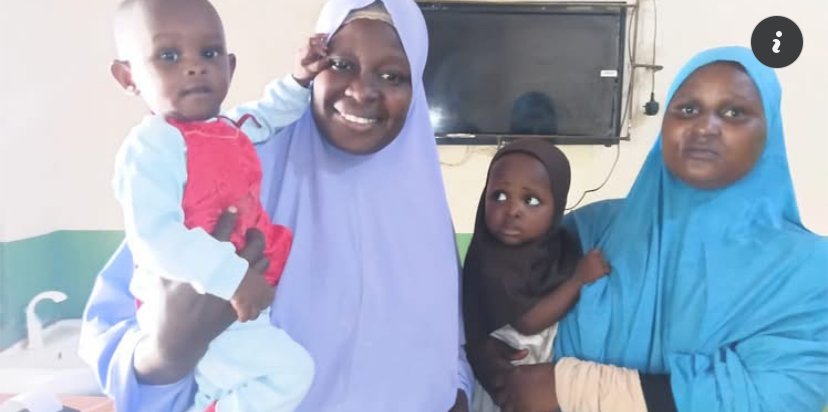
Gombe Mothers Battle Family Pressure as Water Giving Undermines Exclusive Breastfeeding!
Mothers in Gombe State are facing pressure from relatives to introduce water and other fluids to newborns before six months, making exclusive breastfeeding difficult for some families despite established medical guidance, according to accounts from mothers and reporting on infant-feeding practices in the state.
One mother described how her initial commitment to exclusive breastfeeding changed after her mother-in-law insisted that her newborn should be given water.
According to the mother, her mother-in-law argued from personal experience, saying that she had given water to her own children as babies and believed there had been no adverse consequences. The mother eventually yielded to the pressure and began giving her daughter water alongside breast milk.
She said the baby initially stopped crying as frequently after receiving water, which reinforced the family’s decision to continue the practice. She later noticed that the child appeared to demand breast milk less often and was consuming more water.
The account highlights a broader public-health challenge in Gombe and other parts of northern Nigeria: mothers may receive information about exclusive breastfeeding from health professionals but still face powerful cultural, family and social pressures that influence what happens inside the home.
Exclusive breastfeeding means feeding an infant only breast milk during the first six months, with no additional food or liquid, including water, except for medically indicated substances such as oral rehydration solution or prescribed medicines. The World Health Organisation recommends exclusive breastfeeding for the first six months because breast milk provides the nutrients and hydration infants need during that period. (World Health Organization)
When family tradition clashes with medical advice
The experience described by the Gombe mother illustrates how decisions about infant feeding can extend beyond the mother herself.
In many households, grandparents and other relatives play an influential role in caring for newborns, particularly during the early weeks after childbirth. Their advice is often based on years of personal experience and family tradition.
But personal experience does not necessarily correspond with current medical evidence.
A grandmother may remember giving water to her own children without an obvious problem, but that does not establish that the practice is safe for every infant. Modern infant-feeding recommendations are based on accumulated evidence concerning nutrition, infection prevention, hydration and child development.
The World Health Organisation specifically advises against giving water to babies younger than six months, including during hot weather. According to the organisation, breast milk contains more than enough water to meet an infant’s hydration requirements. WHO also warns that giving water can contribute to diarrhoea, malnutrition and reduced breast-milk consumption. (World Health Organization)
That guidance directly addresses one of the common arguments used to justify early water supplementation: the belief that babies become thirsty, particularly in hot climates.
For families in Gombe and other parts of northern Nigeria, where temperatures can be high, the belief that newborns require additional water can be particularly persistent.
Health education therefore has to go beyond telling mothers what to do. It must also reach husbands, mothers-in-law, grandmothers, traditional leaders and other household decision-makers.
Evidence from Gombe points to a wider problem
The mother’s experience is not an isolated example of family influence over infant feeding.
A 2024 report by Triumph Newspapers examining exclusive breastfeeding in Gombe found that mothers faced several barriers, including pressure from mothers-in-law, limited support from spouses and persistent misconceptions about the practice.
The report cited findings from the 2021 Multiple Indicator Cluster Survey indicating that more than 80 per cent of women in the north-eastern states of Adamawa, Bauchi, Gombe and Taraba, as well as Plateau State in the North-Central zone, did not practise exclusive breastfeeding from birth to six months. (TRIUMPH NEWSPAPERS)
The report also highlighted an important dimension of the problem: some men and older family members continue to believe that denying a baby water is unreasonable.
One father interviewed in the report said he had initially considered it harsh to withhold water from an infant, although he later said additional information had changed his perspective. (TRIUMPH NEWSPAPERS)
These attitudes demonstrate why breastfeeding campaigns that focus exclusively on mothers may struggle to achieve lasting behavioural change.
Mothers need support, not competing instructions
The pressure described by Gombe mothers also raises questions about who has authority over infant-health decisions inside families.
A mother may attend antenatal classes, receive advice from nurses and understand the recommendation to exclusively breastfeed, only to return home to relatives who encourage a different practice.
When that happens, the mother can be placed in a difficult position.
Rejecting an older relative’s advice may be interpreted as disrespectful, while following it may conflict with the guidance she received from healthcare professionals.
Research conducted in Gombe supports the importance of involving household members in maternal and child-health decisions.
A qualitative study published in PLOS One found that village health workers in rural Gombe helped improve maternal and child-health knowledge and influenced husbands and mothers-in-law to support women in accessing appropriate maternal and newborn services. Some women interviewed said the education they received helped them change infant-feeding practices. (PLOS)
One participant specifically contrasted her experience with older children, whom she had given traditional remedies as infants, with a younger child whom she exclusively breastfed without giving water. She associated the latter experience with better health. (PubMed Central (PMC))
The evidence suggests that community-based education can be particularly important in settings where household traditions strongly influence health decisions.
Why early water can reduce breastfeeding
The belief that water simply supplements breast milk can overlook the relationship between the two.
When an infant receives water, the baby may feel less hungry and consequently breastfeed less frequently. Reduced breastfeeding can, in turn, affect stimulation of the mother’s milk supply.
WHO specifically notes that giving water to infants younger than six months may cause them to consume less breast milk or stop breastfeeding earlier. (World Health Organization)
This is particularly relevant to the testimony of the Gombe mother, who said her daughter eventually appeared to demand less breast milk after water was introduced.
The mother’s observation should not be treated as a clinical diagnosis, but it is consistent with the mechanism identified by health authorities: additional liquids can displace breast milk in a young infant’s feeding pattern.
There are also hygiene concerns.
Water given to a newborn may become contaminated during collection, storage or administration. Young infants are particularly vulnerable to infections, and unsafe water can introduce pathogens that breastfeeding would otherwise help protect against.
Breast milk itself provides antibodies and other protective components. WHO identifies breastfeeding as an important defence against diarrhoeal disease and common childhood illnesses, including pneumonia. (World Health Organization)
Gombe’s nutrition challenge adds urgency
The debate over exclusive breastfeeding cannot be separated from the wider nutritional challenges facing children in Gombe State.
UNICEF has recently documented efforts by the Gombe State Government and development partners to strengthen nutrition services, including training frontline health workers to prevent and treat malnutrition. The organisation emphasised the importance of nutrition from pregnancy through birth and the early years, identifying six months of exclusive breastfeeding as part of the foundation for healthy development. (UNICEF)
Local reporting has similarly documented persistent challenges involving child malnutrition, food insecurity, inadequate nutrition knowledge and inappropriate infant-feeding practices.
Punch reported in 2025 that only 34 per cent of Nigerian children were exclusively breastfed, citing the figure as evidence of the country’s continuing gap against the World Health Organisation’s breastfeeding target. The report also identified knowledge gaps, poverty, food insecurity and poor sanitation among factors affecting child nutrition in Gombe communities. (Punch Newspapers)
This makes exclusive breastfeeding particularly significant.
Unlike many other health interventions, breastfeeding does not require families to purchase a specialised product. But mothers need accurate information, adequate nutrition, rest, healthcare support and an environment in which family members do not undermine their efforts.
The role of fathers and grandmothers
Health experts and development organisations are increasingly recognising that breastfeeding should not be treated as the responsibility of mothers alone.
A recent qualitative study examining the supportive environment for breastfeeding in Nigeria included mothers, fathers, mothers-in-law, grandmothers and health workers across six states, including Gombe. The research highlights the importance of social and household influences on infant and young-child feeding decisions. (PubMed Central (PMC))
That approach represents an important shift.
Instead of telling mothers to resist family pressure on their own, health campaigns can equip the entire household with the same information.
Fathers can support mothers by ensuring they have adequate food, rest and time to breastfeed. Grandmothers and mothers-in-law can reinforce health workers’ advice rather than replacing it with outdated or anecdotal practices.
Community and religious leaders can also play a role by helping communicate accurate information in culturally appropriate ways.
Correcting the ‘babies need water’ misconception
One of the most persistent misconceptions surrounding exclusive breastfeeding is that babies require additional water, particularly during hot weather.
WHO’s position is unequivocal: babies under six months do not need water even on hot days. Breast milk provides the necessary hydration, and mothers can breastfeed more frequently when their babies appear thirsty. (World Health Organization)
UNICEF Nigeria has also used public education campaigns to reinforce the message that exclusive breastfeeding means breast milk alone, without water, during the first six months. (YouTube)
The challenge is translating this message from national and international health campaigns into household behaviour.
In communities where older generations have long given newborns water, herbs or other substances, health workers need to explain not merely that the practice is discouraged but why current evidence differs from traditional experience.
Respectful communication is crucial.
Dismissing older relatives as ignorant can produce resistance. Engaging them as partners in protecting children may produce better results.
The need for stronger community-based education
Gombe’s experience points to a larger lesson for Nigeria’s infant-health programmes: information must reach the people who influence decisions.
A mother who understands exclusive breastfeeding cannot always implement it alone.
If her husband is opposed, if her mother-in-law routinely gives the baby water, or if other relatives insist that breast milk is insufficient, maintaining exclusive breastfeeding can become considerably more difficult.
Community health workers therefore have an important role in ensuring that breastfeeding education begins during pregnancy and continues after delivery.
Follow-up visits can provide opportunities to answer questions, identify feeding difficulties and address misconceptions before they become established practices.
Evidence from Gombe indicates that such community-level interventions can improve maternal and child-health knowledge and influence family behaviour. (PLOS)
A public-health issue beyond one family
The testimony from Gombe should not be understood simply as a dispute between a young mother and her mother-in-law.
It reflects a wider intersection of culture, family authority, health information and child nutrition.
For the mother involved, the decision to give her baby water may have appeared harmless, especially because her mother-in-law believed it was safe based on her own experience.
But current medical guidance is clear that babies younger than six months should receive breast milk alone, unless a healthcare professional recommends otherwise for a specific medical reason. (World Health Organization)
The larger challenge is therefore to close the gap between what families believe and what health evidence recommends.
Nigeria’s efforts to improve child survival and reduce malnutrition will depend not only on hospitals and clinics but also on what happens inside homes.
For Gombe mothers, stronger family support could make the difference between intending to practise exclusive breastfeeding and being able to sustain it.
The message from health authorities is straightforward: breastfeeding during the first six months provides both nutrition and hydration. The responsibility for creating an environment where mothers can follow that guidance, however, belongs to the whole community.
Sources
- World Health Organisation (WHO) — Guidance on exclusive breastfeeding, including the recommendation that infants receive no water or other liquids during the first six months except medically indicated substances. (World Health Organization)
- UNICEF Nigeria — Public education on exclusive breastfeeding and why babies aged 0–6 months do not need additional water. (YouTube)
- Punch Newspapers — Reporting on child malnutrition and infant-feeding challenges among mothers in Gombe communities. (Punch Newspapers)
- Triumph Newspapers — Report on fathers’ attitudes toward exclusive breastfeeding and family pressure affecting breastfeeding practices in Gombe. (TRIUMPH NEWSPAPERS)
- The Guardian Nigeria — Reporting on the challenges Nigeria faces in achieving recommended exclusive-breastfeeding rates and the influence of family practices. (The Guardian Nigeria)
- PLOS One — Research examining the role of village health workers and family influences on maternal and child-health practices in Gombe State. (PLOS)
- UNICEF Nigeria — Recent reporting on efforts to strengthen nutrition services and health-worker capacity in Gombe. (UNICEF)