Reported by Simon Daniel Yusuph l Journalist at Weng Global
Ekiti State Governor Biodun Oyebanji has pledged to deepen shared prosperity, expand economic opportunities and improve the living conditions of residents as he begins his second four-year term in office following his inauguration on October 16, 2026.
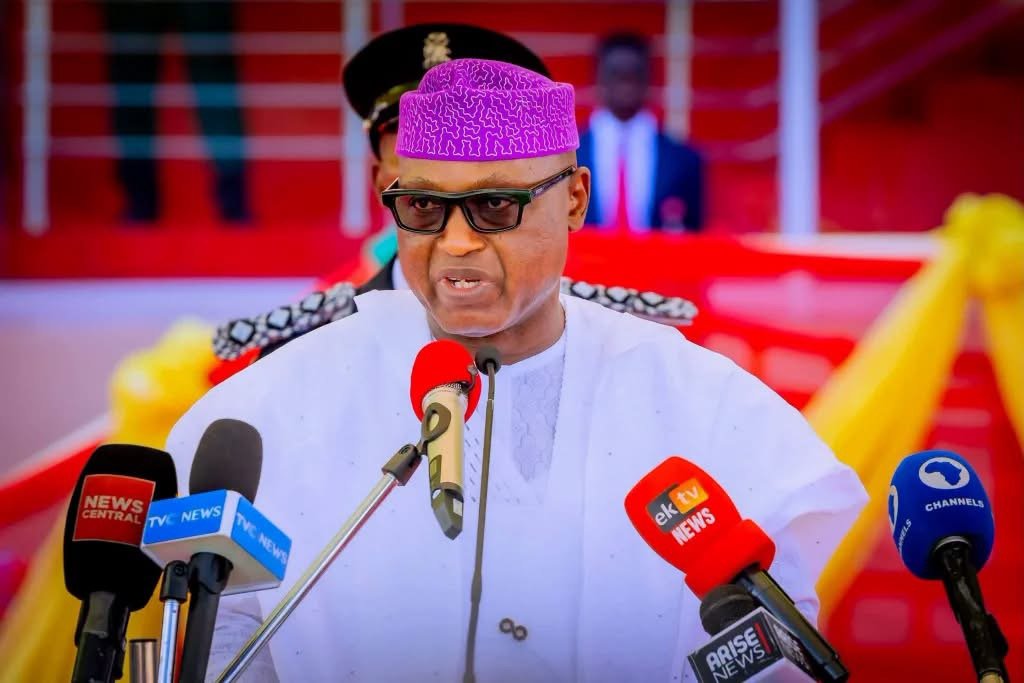
Oyebanji made the commitment during his inauguration ceremony at the Ekiti Parapo Pavilion in Ado-Ekiti, where he called for continued cooperation among citizens and stakeholders to advance the state’s development.
The governor said his renewed mandate offered an opportunity to consolidate the achievements of his first administration, address outstanding challenges and ensure that government policies and investments produced tangible benefits for households and communities across Ekiti State.
According to the Ekiti State Government, the ceremony was attended by Vice-President Kashim Shettima, who represented President Bola Ahmed Tinubu, Senate President Godswill Akpabio, other political leaders, traditional rulers and stakeholders from different sectors.
Oyebanji’s central message was that the next phase of his administration would focus on building upon existing progress while strengthening the connection between public spending, economic productivity and the welfare of ordinary residents.
Oyebanji Promises to Consolidate First-Term Achievements
In his remarks following the inauguration, Oyebanji described his fresh mandate as an opportunity to work harder and deliver more for the people of Ekiti State.
The governor said his administration would build on the progress recorded during his first four years, with the objective of ensuring that the benefits of governance reached more households throughout the state.
His first term began on October 16, 2022, and ended on October 15, 2026. He secured re-election in the June 20, 2026, governorship election, according to information published by the state government and reports on the electoral outcome.
The new term places responsibility on the administration to demonstrate that its development commitments can translate into measurable improvements in employment, infrastructure, education, healthcare and economic opportunities.
The state government has described shared prosperity as a central principle of its development agenda. The concept places emphasis on ensuring that economic growth benefits a broad section of the population rather than remaining concentrated among a limited number of businesses, communities or individuals.
For Ekiti residents, the practical significance of that commitment will depend on how effectively government programmes address the costs of living, access to essential services, rural development and opportunities for young people.
Oyebanji has indicated that continuity will be important to his administration’s approach. However, the second term also presents an opportunity to assess unfinished projects, review areas where progress has been limited and strengthen public accountability for government commitments.
Job Creation, Agriculture and Infrastructure Take Centre Stage
The governor’s second-term development agenda is expected to place considerable emphasis on agriculture, job creation, electricity, infrastructure and skills development.
These priorities were outlined during the inauguration period as the administration set out its plans for the next four years.
According to Channels Television’s report on the inauguration, Oyebanji said government investments must improve the lives of ordinary citizens, including farmers, artisans, entrepreneurs and young people.
The governor’s position reflects the importance of connecting infrastructure development with economic activity.
Road construction, for example, can help farmers transport produce to markets, reduce travel difficulties for rural communities and improve access to schools, healthcare facilities and commercial centres.
Reliable electricity can also support small businesses, reduce dependence on expensive alternative power sources and improve the operating conditions of enterprises seeking to expand production.
For agricultural communities, better roads and access to markets can help reduce transportation barriers and create opportunities for processing and selling farm produce.
However, the economic impact of such investments depends on implementation, maintenance, affordability and the extent to which projects respond to the needs of the communities they are intended to serve.
The administration will therefore face the challenge of ensuring that infrastructure spending is accompanied by effective project supervision, transparent procurement processes and clear measures of public benefit.
Job creation will also require more than the construction of public facilities. Sustainable employment depends on the ability of businesses to grow, access to finance, market opportunities, relevant skills and an economic environment that encourages investment.
For young people entering the labour market, the success of the second term will partly be measured by whether government programmes create practical pathways into employment, entrepreneurship and productive economic activity.
Rural Development and Access to Public Services
Rural development is another important component of the administration’s stated priorities.
Before the inauguration, the state government outlined plans to expand rural road construction and pursue a target of delivering up to 1,500 kilometres of roads through different interventions, including partnerships with development organisations.
The target was announced by the chairman of the second-term inauguration planning committee, Oyeniyi Adebayo, during a press conference in Ado-Ekiti on October 1, according to a statement published on the Ekiti State Government’s website on October 2.
The proposed expansion of rural roads is intended to improve connectivity and support economic activities in communities outside major urban centres.
For residents in rural areas, road access can influence the cost of transporting agricultural products, the time required to reach hospitals and the ability of children to attend school consistently.
Nevertheless, the announced target remains a commitment that will require sustained funding, planning and implementation. Its eventual impact will depend on the number of roads completed, their quality and whether they remain accessible over time.
The administration has also identified healthcare, electricity, water supply, agriculture and human capital development as areas requiring continued attention.
These priorities are closely connected. Inadequate electricity can affect healthcare delivery and business productivity, while poor water access can increase household burdens and create difficulties for schools and health facilities.
Improving these services requires coordination across government departments, local authorities and relevant development partners.
The second term will therefore test the administration’s ability to turn its broad development agenda into coordinated programmes with clearly defined objectives and measurable outcomes.
Education and Human Capital Development
Education and human capital development are expected to remain important elements of Ekiti State’s development strategy.
During preparations for the second-term inauguration, the state government highlighted interventions in education, including financial support for examination fees and access to tertiary education entrance examinations.
Adebayo said the state government had spent ₦2.158 billion on West African Examinations Council examinations for approximately 69,000 students between 2023 and 2026. He also said the government distributed 12,400 free Joint Admissions and Matriculation Board forms between 2023 and 2025, according to Channels Television.
These figures were presented by the inauguration planning committee as part of its account of the administration’s first-term achievements.
Such interventions can help reduce some of the financial barriers facing students and their families. Examination costs can place pressure on households, particularly those supporting several children through secondary school.
However, access to examinations is only one part of educational development. Learning outcomes also depend on teachers, classroom conditions, learning materials, school infrastructure and the ability of students to continue their education after completing examinations.
For the next four years, the wider challenge will be to ensure that educational support translates into improved learning opportunities and stronger prospects for further education, vocational training and employment.
Skills development will also be relevant to the administration’s employment agenda. Training programmes are most effective when they are connected to actual labour-market needs and opportunities for participants to apply what they have learned.
A stronger link between education, vocational training and business development could help young people participate more effectively in agriculture, technology, manufacturing, services and other productive sectors.
The government will need to demonstrate how its education and skills programmes are reaching intended beneficiaries and what outcomes they produce.
Supporting Small Businesses and Agricultural Enterprises
Small businesses and agricultural enterprises are central to the economic prospects of many communities in Ekiti State.
The administration has previously highlighted support programmes aimed at expanding commercial agriculture, providing financial assistance to businesses and encouraging young people to participate in farming.
According to the inauguration planning committee’s account, more than 5,000 young people had been engaged in commercial agriculture through the Bring Back the Youth into Agriculture initiative. The committee also reported that the programme generated more than ₦2 billion in profits.
The committee further said that more than ₦1 billion in credit and operational grants had reached 2,800 beneficiaries, while ₦400 million in loans had been provided to 443 micro, small and medium-sized enterprises.
It also reported that ₦450 million in grants had been provided to 10 agro-processing cooperatives.
These figures represent claims made by the state government during its presentation of first-term achievements. Their broader economic significance depends on factors such as the sustainability of the supported businesses, repayment performance where applicable, employment created and the continued operation of beneficiary enterprises.
For farmers, access to finance can help cover the costs of seeds, equipment, labour and other agricultural inputs. Support for agro-processing can also help businesses add value to agricultural products instead of selling them exclusively in their raw form.
For small businesses, affordable financing can provide resources for purchasing equipment, increasing stock, employing workers or expanding into new markets.
However, financial assistance alone cannot guarantee business success. Entrepreneurs also need reliable infrastructure, predictable regulations, access to customers and support that reflects the realities of their industries.
The administration’s shared prosperity agenda will therefore be judged partly by whether these interventions help businesses remain productive beyond the period of initial government support.
Economic Growth Must Translate into Better Living Conditions
Oyebanji’s renewed commitment to shared prosperity comes amid continuing concerns about the cost of living and the economic pressures facing Nigerian households.
Across the country, families and businesses must make difficult decisions about food, transportation, education, healthcare, energy and other essential expenses.
State governments cannot independently resolve every national economic challenge, but their policies can influence the cost and availability of public services, local infrastructure, agricultural support and business opportunities.
For Ekiti State, this makes the relationship between economic growth and household welfare particularly important.
In an address to the Ekiti State House of Assembly on October 13, Oyebanji said the state’s gross domestic product was heading towards ₦8.8 trillion and highlighted growth in economic activity and internally generated revenue.
The figure and the governor’s assessment were reported by the state government. GDP measures the value of economic activity, but it does not, by itself, establish how income is distributed among residents or whether living standards have improved equally across communities.
Economic growth can provide a stronger foundation for development, particularly when it increases productive activity and expands the resources available for public investment.
However, residents are likely to assess the administration’s progress through more immediate indicators: access to affordable services, employment opportunities, functioning infrastructure, business stability and improvements in household income.
The administration’s challenge will be to demonstrate how its economic policies connect headline growth figures with tangible improvements in people’s daily lives.
This will require reliable public data, transparent reporting on project implementation and regular assessments of whether government programmes are achieving their stated objectives.
Cooperation and Public Accountability
Oyebanji has called for cooperation among residents and stakeholders as his administration begins its second term.
The state government’s pre-inauguration communications also emphasised continued engagement with traditional rulers, community leaders, organised labour, businesses, civil society organisations, young people and women.
Such engagement can help the government identify local priorities, understand the challenges confronting different communities and improve the design of public programmes.
Consultation is particularly important in a state where communities may have different infrastructure needs, economic opportunities and access to essential services.
However, effective participation requires more than meetings and public statements. Residents also need clear information about government decisions, project costs, implementation timelines and the procedures available for raising concerns.
Public accountability is essential to ensuring that development commitments remain connected to citizens’ priorities.
The legislature, civil society, the media and community organisations can contribute by examining public expenditure, reporting on project delivery and asking questions about the results of government programmes.
For the administration, transparent communication can help residents distinguish between completed projects, ongoing work and proposals that have yet to receive full implementation.
It can also provide a basis for constructive criticism and help build public confidence when commitments are supported by verifiable results.
As the new term progresses, regular updates on key projects and development indicators will be important in assessing whether the administration is meeting its promises.
What Happens Next?
Oyebanji’s second term began on October 16, 2026, and is expected to focus on consolidating first-term projects while pursuing additional interventions in infrastructure, agriculture, education, healthcare, electricity and job creation.
The state government’s previously announced priorities include expanding rural road development, strengthening economic opportunities and maintaining stakeholder engagement in the preparation of public policies and budgets.
The administration has also indicated that projects in the second term will be directed towards improving commerce, productivity and sustainable business growth.
The extent to which these objectives are achieved will become clearer through implementation records, budget allocations, project completion reports and evidence of improvements in public services.
Residents will also be watching how the government addresses outstanding challenges, including the accessibility of rural communities, the quality of healthcare and education, electricity supply and opportunities for young people.
The governor’s inauguration marks the formal beginning of a new four-year period of responsibility. It does not, on its own, establish whether the promises made during the ceremony will be fulfilled.
Ultimately, the administration’s performance will depend on its ability to translate policy commitments into projects and services that produce measurable benefits.
For Ekiti residents, shared prosperity will have practical meaning when development reaches communities across the state, businesses can operate more productively, young people have better opportunities and public services respond effectively to the needs of households.
The second term therefore presents both an opportunity for continuity and a test of delivery. The central question is whether the government’s stated ambitions will result in sustainable improvements in living standards across Ekiti State.
Weng Global – stories beyond borders
Sources
- Ekiti State Government — Official report on Governor Biodun Oyebanji’s second-term inauguration, October 16, 2026.
- Ekiti State Government — Report on the second-term inauguration committee’s development priorities, October 2, 2026.
- Ekiti State Government — Report on the governor’s State of the State Address, October 13, 2026.
- Channels Television — Report on Oyebanji’s second-term priorities, October 16, 2026.