Reported by Simon Daniel Yusuph l Journalist at Weng Global
A Nigerian-developed prosthetic innovation, the Ubokobong Bionic Arm, has been recognised among TIME magazine’s Best Inventions of 2026, highlighting the growing contribution of African innovators to assistive technology and the global effort to make prosthetic limbs more accessible.
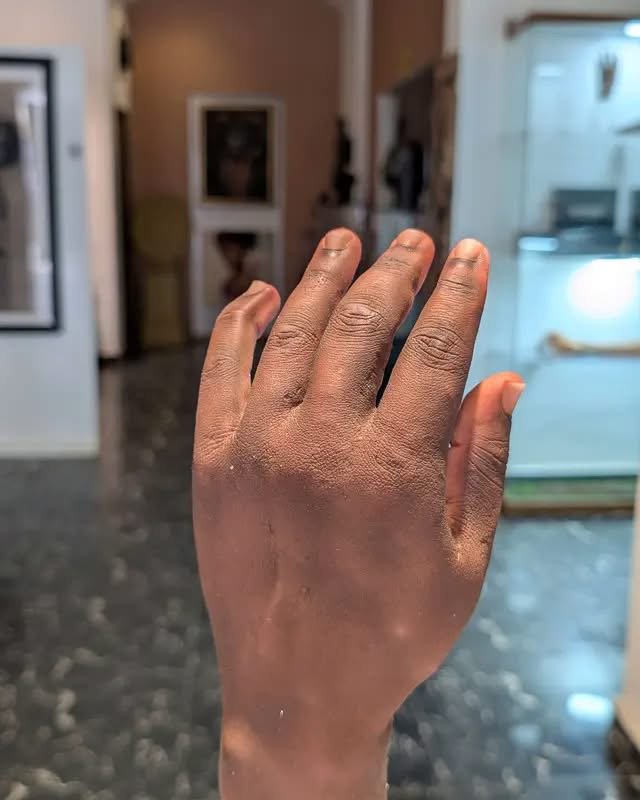
Developed by Nigerian innovators Ubokobong Amanam and his brother, John Amanam, through their work with Immortal Cosmetic Art, the bionic arm combines functional movement with a realistic appearance designed to meet the needs of users with darker skin tones.
The recognition draws attention to an innovation shaped by a challenge that many amputees face: finding prosthetic devices that are not only functional but also affordable, comfortable and suited to their physical characteristics.
Editorial verification note: Reporting by Reuters in August 2025 documented the development of the Ubokobong Bionic Arm and its design for African users. However, the specific claim that TIME included it among its 2026 Best Inventions could not be independently confirmed from the sources available for this report. The recognition should therefore be checked against TIME’s official 2026 list before publication.
A Nigerian Innovation With a Personal Story
The development of the Ubokobong Bionic Arm grew out of a personal experience that exposed limitations in the prosthetic devices available to its intended user.
Ubokobong Amanam lost his fingers in a fireworks accident. The experience left him searching for prosthetics that could address both the practical and aesthetic challenges associated with his injury.
According to Reuters reporting published in August 2025, the available options did not adequately meet his expectations for realistic appearance and functionality.
His brother, John Amanam, brought experience in special-effects artistry and the creation of realistic artificial body parts. That background helped lay the foundation for their work on prosthetics designed to match the skin tone and appearance of African users.
The brothers’ work subsequently expanded beyond cosmetic prosthetics into the development of a functional bionic arm.
Their approach reflects an important principle in assistive technology: medical and mobility devices should be developed around the needs of the people who use them, rather than relying exclusively on products designed for different populations and environments.
For users who struggle to find suitable devices, a prosthetic that combines practical function with a realistic appearance can address several concerns associated with limb loss.
How the Ubokobong Bionic Arm Works
The Ubokobong Bionic Arm uses electromyography-based technology to detect electrical signals associated with muscle activity.
Electromyography, commonly abbreviated as EMG, is a technique used to measure electrical activity produced by muscles. In myoelectric prostheses, sensors can detect signals from remaining muscles and use them to control movements of an artificial limb.
Depending on the system’s design, those signals can be translated into commands that allow the user to open or close a prosthetic hand or operate its fingers.
This approach differs from purely cosmetic prostheses, which are designed primarily to restore the appearance of a missing limb, and from simpler mechanical devices that rely on body movement or other physical mechanisms.
The Ubokobong project seeks to combine functional capabilities with a lifelike exterior.
Its design also considers skin colour, an issue that can be overlooked when assistive devices are developed without sufficient attention to the diversity of their intended users.
However, the precise capabilities of any bionic arm depend on its hardware, control system, fitting and the training provided to the user. Recognition for an invention does not, on its own, establish that it can perform every movement possible with a natural hand.
Clinical evaluation, user experience and reliable technical performance remain important considerations when assessing the practical benefits of prosthetic technology.
Why Skin-Tone Representation Matters in Prosthetics
Prosthetic devices can serve different purposes depending on a user’s needs.
Some are primarily cosmetic, helping restore the appearance of a missing body part. Others are designed to provide functional assistance, while advanced systems attempt to combine both objectives.
For many users, appearance can influence confidence and comfort in social situations.
Prosthetics designed without adequate consideration of darker skin tones may fail to provide a close visual match for African users and other people with similar skin characteristics.
The work of the Amanam brothers seeks to address that gap by incorporating realistic details and skin-tone matching into their prosthetic designs.
These details can include the shape of the fingers, the appearance of nails and the texture of the artificial skin.
John Amanam’s experience in special-effects artistry has been particularly relevant to this aspect of the work, according to reporting on the company.
Nevertheless, realistic appearance is only one part of effective prosthetic care. A device must also fit properly, remain comfortable during use and meet the user’s functional requirements.
Access to professional fitting, maintenance and repairs is equally important, particularly for people living far from specialised healthcare services.
The Ubokobong project illustrates how locally informed design can help identify needs that might receive insufficient attention in international medical technology markets.
The Challenge of Affordable Prosthetics in Nigeria
The innovation comes against the background of significant barriers to accessing assistive technology in Nigeria and other African countries.
Prosthetic limbs can be expensive, particularly when they are imported or require specialised components, fitting and maintenance.
The total cost may extend beyond purchasing the device to include consultations, rehabilitation, replacement parts and follow-up adjustments.
These expenses can make advanced prosthetic technology difficult to obtain for people with limited incomes.
The challenge is not simply whether a device exists, but whether the people who need it can afford it and receive the support required to use it effectively.
A locally developed product could offer advantages by building technical expertise within Nigeria and potentially reducing dependence on imported equipment.
However, local development does not automatically guarantee affordability. Production costs, component availability, manufacturing capacity and the price of specialised electronics can all influence the final cost.
The developers’ ability to increase production while maintaining quality will therefore be important in determining how widely the technology can be used.
Support from healthcare providers, investors, government agencies and development organisations could also influence the project’s capacity to reach more people.
Nigerian Innovation and Africa’s Technology Sector
The Ubokobong Bionic Arm also highlights the potential for African innovators to develop solutions around challenges experienced in their own communities.
Nigeria has a large population, a substantial network of healthcare needs and a growing community of technology entrepreneurs. These conditions create opportunities for locally developed products in areas such as medical devices, rehabilitation, diagnostics and assistive technology.
Yet innovators working in these sectors often face obstacles that extend beyond the technical process of developing a product.
They may need funding for research and development, access to specialised manufacturing equipment, regulatory guidance, clinical testing and reliable supply chains.
Medical technologies also require careful assessment to ensure that they are safe and perform as intended.
For a bionic arm, developers must consider the reliability of its electronic components, the durability of its mechanical parts, the accuracy of its control system and the comfort of the final device.
Manufacturing at scale presents another challenge. A prototype that works under controlled conditions must be supported by a production process capable of delivering consistent quality to different users.
These requirements mean that recognition and public attention are valuable, but they must be accompanied by investment and practical systems that support continued development.
If Nigerian innovators can build sustainable production and distribution networks, their work could contribute to a wider assistive-technology industry serving users across Africa and beyond.
What International Recognition Could Mean
If confirmed by TIME’s official 2026 list, the recognition would provide an opportunity to bring greater international attention to Nigerian medical-device innovation.
Global recognition can help introduce a product to potential investors, healthcare partners, distributors and organisations interested in expanding access to assistive technology.
It may also encourage wider discussion about the role of African-led research in addressing health and disability challenges.
However, an award or inclusion on an inventions list should not be confused with evidence of widespread adoption, clinical effectiveness or affordability.
Those outcomes require separate assessment.
For the Ubokobong Bionic Arm, important indicators would include the number of people who can access the device, its performance during everyday use, the cost of fitting and maintenance, and feedback from users.
Reliable information about these factors would help healthcare providers and prospective users assess whether the technology meets their needs.
What Happens Next?
The next important steps for the Ubokobong Bionic Arm include expanding access, maintaining product quality and establishing sustainable pathways for production and distribution.
The developers’ ability to work with healthcare professionals and rehabilitation specialists could help ensure that the device is appropriately fitted and that users receive the training needed to operate it.
Partnerships with public institutions, private investors and disability-support organisations could also help address financial barriers facing prospective users.
For Nigeria, the project offers an example of how locally developed technology can respond to practical needs while building domestic technical expertise.
The reported TIME recognition would add to the invention’s international visibility, but the longer-term significance of the project will depend on its ability to deliver reliable, accessible and useful prosthetic technology to the people who need it.
Until the 2026 listing is independently verified, Weng Global cannot conclusively confirm that the invention has received that specific distinction.
Weng Global – stories beyond borders
Sources
- Reuters — Reporting on the development of the Ubokobong Bionic Arm, August 21, 2025.
- The Guardian — Reporting on the Amanam brothers’ work to develop prosthetics for African users, March 30, 2026.