Reported by Weng Patrick Atokor l Journalist at Weng Global
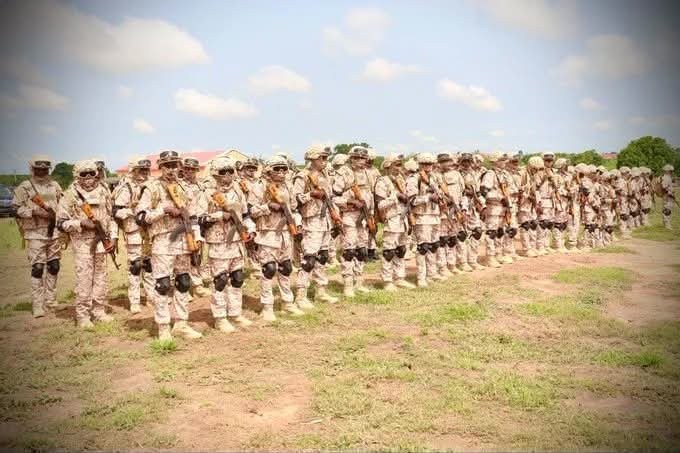
The Nigerian Army has graduated a new Special Forces battalion in Nasarawa State as part of efforts to strengthen counter-terrorism operations and improve its capacity to tackle emerging security threats across the country.
The development comes amid persistent security challenges in Nigeria, including terrorism, insurgency, banditry and kidnapping, which continue to threaten communities and disrupt economic activities in several regions.
The graduation is expected to contribute to the military’s specialised operational capacity, although further details about the battalion’s personnel strength, graduation date and deployment plans require confirmation from an official Army statement.
Nigerian Army Strengthens Special Forces Capacity
Special Forces personnel undergo specialised military training to prepare them for complex operations that require advanced tactical skills, physical endurance, intelligence coordination and rapid responses to security threats.
Their responsibilities may include counter-terrorism missions, reconnaissance, targeted operations against armed groups and other assignments requiring specialised military capabilities.
The graduation of a new battalion would add to the Army’s pool of personnel trained for demanding security operations. However, the effectiveness of the unit will depend on adequate equipment, logistical support, intelligence gathering and coordination with other security agencies.
Nigeria continues to face different security threats across its regions. The North-East has experienced prolonged insurgency, while parts of the North-West and North-Central have faced attacks by armed groups, banditry and kidnapping.
These challenges have increased the importance of specialised military training and coordinated security operations.
Nasarawa’s Role in Special Forces Training
Nasarawa State has become an important location for the Nigerian Army’s Special Forces training activities.
In August 2025, the Federal Ministry of Information and National Orientation reported the relocation of the Army’s Special Forces School from Buni Yadi in Yobe State to Doma, Nasarawa State.
The relocation was intended to strengthen specialised training and improve the military’s ability to prepare personnel for evolving security challenges.
The presence of specialised training facilities in Nasarawa reflects the Army’s efforts to improve its training infrastructure and develop personnel capable of operating in difficult security environments.
However, graduation from a training programme does not automatically establish where a unit will be deployed or which operations it will undertake.
Nigeria’s Persistent Security Challenges
Nigeria continues to confront security threats that have affected lives, livelihoods and economic activities across several parts of the country.
In the North-East, insurgent groups have continued to pose threats to communities and security personnel. In parts of the North-West and North-Central, armed attacks and kidnappings have contributed to displacement, disrupted farming and raised concerns about public safety.
For many affected communities, insecurity has consequences beyond immediate casualties and property damage. Farmers may struggle to access their land, traders may face difficulties transporting goods, and families may be forced to leave their homes.
The deployment of well-trained security personnel could contribute to efforts to contain these threats. However, the real impact will depend on whether improved military capabilities translate into safer communities and a sustained reduction in attacks.
Training Must Be Supported by Equipment and Intelligence
Specialised training is an important part of military readiness, but effective operations also require reliable equipment, intelligence support, communications systems and adequate logistics.
Cooperation among the Nigerian Army, police, intelligence agencies and other security organisations is also essential to identifying threats, sharing information and responding to attacks.
Military personnel must conduct operations in accordance with applicable laws and rules of engagement, with particular attention to civilian protection and accountability.
In a related development, Punch reported in August 2026 that the Nigerian Army graduated 1,182 Special Forces troops from the tenth batch of its Advanced Infantry Training Programme under Exercise Restore Hope X in Kachia, Kaduna State.
The programme was designed to strengthen counter-insurgency and counter-terrorism capabilities. That graduation was a separate development and should not be confused with the new battalion reported to have graduated in Nasarawa.
Why the Graduation Matters
The graduation could strengthen Nigeria’s ability to respond to security threats by expanding the number of personnel trained for specialised military assignments.
For communities affected by violence, the central question is whether additional military capacity will improve protection, reduce attacks and allow residents to return safely to their homes, farms and businesses.
A lasting improvement in security will also require effective intelligence, law enforcement, community cooperation and measures to address the conditions that enable armed groups to operate.
The military’s progress should therefore be assessed not only by the number of troops trained but also by operational effectiveness, civilian safety and measurable improvements in security.
What Happens Next?
Further information from the Nigerian Army is needed to establish the new battalion’s size, command structure, training details and intended operational responsibilities.
Confirmation of its deployment plans would help clarify how the unit will contribute to ongoing security operations.
Until those details become available, claims about specific deployments or operational achievements should be treated cautiously.
The development nevertheless highlights the continuing importance of specialised military training as Nigeria works to address terrorism and other security threats.
For citizens, the ultimate measure of success will be whether these efforts lead to safer communities, protected livelihoods and greater stability across the country.
Weng Global — Stories beyond borders
Sources
- Federal Ministry of Information and National Orientation — Nigerian Army Special Forces School relocation to Nasarawa: https://fmino.gov.ng/nigerian-army-shifts-special-forces-school-to-nasarawa/
- Punch — Report on the graduation of 1,182 Special Forces troops: https://punchng.com/army-boosts-anti-terror-war-graduates-1182-special-forces/
- Nigerian Army — Official website: https://army.mil.ng/