Reported by Weng Patrick Atokor l Journalist at Weng Global
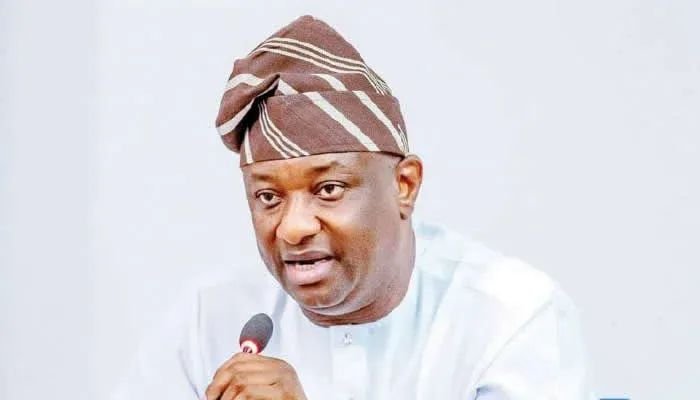
Nigeria’s Minister of Aviation and Aerospace Development, Festus Keyamo, has linked the Federal Government’s ability to raise about $500 million for the reconstruction of the Murtala Muhammed International Airport (MMIA) in Lagos to the removal of the fuel subsidy and subsequent improvements in the country’s liquidity and foreign reserves.
Keyamo made the statement on Monday, October 5, 2026, during the 67th anniversary celebration of Aero Contractors in Lagos, where he defended the economic and infrastructure policies of President Bola Tinubu’s administration.
The minister said the government was able to mobilise the funds for major aviation infrastructure without borrowing, arguing that improved liquidity and foreign reserves created greater capacity to finance strategic projects.
According to Keyamo, the government’s investment in Lagos airport is part of a wider effort to rebuild critical aviation infrastructure and attract investment into Nigeria.
Keyamo says subsidy removal created fiscal space
Keyamo attributed the government’s increased capacity to finance infrastructure partly to the removal of the fuel subsidy, a major economic reform introduced by President Tinubu shortly after taking office in May 2023.
The minister said the administration had been able to raise about $500 million for the Lagos airport project because the country’s liquidity and foreign reserves had improved.
He argued that the government had not borrowed the money for the project and that stronger financial conditions had helped create room for infrastructure investment.
Keyamo also linked stronger reserves and improved macroeconomic conditions to Nigeria’s ability to attract foreign investors.
He said investors would be more willing to commit capital to Nigeria when they see improvements in the country’s economic and financial position.
However, the minister’s explanation represents the government’s assessment of the relationship between the subsidy reform and the infrastructure funding. The specific financing structure and a detailed public breakdown showing that subsidy-removal savings directly funded the $500 million airport project were not provided in the reports reviewed by Weng Global.
Lagos airport reconstruction forms part of wider aviation investment
The $500 million commitment to the Lagos airport is not a new announcement. Keyamo had previously disclosed the investment during an aviation summit in April and again at the Invest Lagos 3.0 summit in June.
In April, Channels Television reported that Keyamo said roughly $500 million in cash had been made available for the modernisation of Lagos International Airport and that contractors had already moved to the site.
The minister said the project was expected to take about 22 months to complete.
In June, Tribune reported that the Federal Government had committed approximately $500 million to reconstruct and modernise the international terminal at MMIA. The government described the project as part of efforts to transform the ageing facility into a world-class aviation gateway capable of handling increasing passenger and cargo traffic.
The project is valued at about ₦712 billion based on figures previously disclosed by the government and reported by Nigerian media.
The scale of the investment makes the Lagos project one of the most significant aviation infrastructure commitments under the Tinubu administration.
Why the Lagos airport project matters
Murtala Muhammed International Airport is Nigeria’s principal international aviation gateway and one of the country’s most important links to global markets.
The condition and capacity of the airport have significant implications for tourism, business travel, trade, foreign investment and Nigeria’s broader aviation industry.
Keyamo has argued that upgrading the facility is necessary if Nigeria is to compete with other African aviation hubs.
At the Aero Contractors anniversary event, the minister said the government was rebuilding what he described as the country’s major aviation gateway.
The investment also comes at a time when Nigeria is seeking to expand its aviation sector and increase the role of air transport in economic development.
A modern and efficient airport can reduce passenger-processing bottlenecks, improve the experience of international travellers, increase cargo-handling capacity and strengthen connections between Nigeria and other markets.
The government has also presented aviation infrastructure as part of a broader strategy for attracting investment and creating employment.
Rail connection planned for Lagos airport
The airport reconstruction is being accompanied by plans to improve surface transportation connections to the airport.
Earlier in June, Keyamo announced plans to extend the Lagos rail network towards the airport terminals, including connections involving the General Aviation Terminal, MMA2 and the international terminal.
The proposed connection is intended to improve access to the airport and integrate aviation with Lagos’ wider transport system.
The combination of airport reconstruction and improved rail connectivity could have wider economic implications if the projects are completed as planned.
For passengers, a direct rail connection could provide an alternative to road transportation and potentially reduce travel-time uncertainty associated with traffic congestion in Lagos.
For businesses, improved connectivity could make the airport more attractive as part of a larger logistics and commercial network.
Government also targets Abuja airport runway
Keyamo used Monday’s event to highlight another major aviation infrastructure project.
He said President Tinubu had approved the return of China Civil Engineering Construction Corporation, CCECC, to the project for the construction of a second runway at the Nnamdi Azikiwe International Airport in Abuja.
The minister said the runway project had been delayed for years partly because of disagreements over its cost and funding.
According to Keyamo, an earlier estimate of about ₦45 billion had faced resistance, while the cost has increased substantially after years of delay.
Punch reported that the minister said the project could now cost close to ₦500 billion.
BusinessDay, reporting on the same remarks, put the current estimate at more than ₦400 billion and highlighted the increase as an example of how delays can raise infrastructure costs.
The Abuja runway is strategically important because Nnamdi Azikiwe International Airport serves Nigeria’s capital and is one of the country’s major aviation gateways.
Aero Contractors calls for stronger aviation policy
Keyamo’s remarks came during Aero Contractors’ 67th anniversary celebration, where the airline called for stronger government policies to support the aviation sector.
Aero Contractors Managing Director, Captain Ado Sanusi, said the airline had survived several difficult periods and urged the government to ensure that aviation became a stronger driver of tourism, trade, employment and foreign investment.
Tribune reported that Sanusi warned Nigeria risked falling behind other countries that are investing heavily in airports, maintenance facilities and other aviation infrastructure.
He argued that Nigeria needed a clear aviation strategy capable of supporting airlines and other businesses across the sector.
The anniversary also highlighted the role of Aero Contractors in Nigeria’s aviation history. The airline began operations in 1959 and later expanded into scheduled passenger services, charter operations, rotary-wing services, maintenance and training.
Aviation investment comes amid economic debate
The Federal Government’s aviation spending is taking place against a wider debate over the economic consequences of the Tinubu administration’s reforms.
The removal of the petrol subsidy has significantly altered Nigeria’s public finances and the cost environment facing households and businesses.
Supporters of the reform have argued that ending the subsidy removed a major fiscal burden and created greater room for investment and other government priorities.
Critics, however, have focused on the immediate consequences for Nigerians, including higher transportation costs, increased living expenses and pressure on household incomes.
Keyamo defended the government’s position at the Aero Contractors event, arguing that macroeconomic stability, investment and infrastructure were necessary for long-term job creation.
The minister said jobs were created through investment and infrastructure rather than government announcements alone.
The debate therefore extends beyond the Lagos airport itself. It raises a broader question about how savings or fiscal resources generated through major economic reforms are converted into visible public benefits.
For Nigerians, the effectiveness of the airport investment will ultimately depend not only on the amount committed but also on the quality of construction, transparency in procurement, completion within the promised timeframe and the facility’s ability to deliver measurable improvements.
Transparency remains important
The size of the Lagos airport project makes transparency particularly important.
Earlier reports have noted public questions surrounding the relationship between the approximately ₦712 billion project figure and the $500 million investment repeatedly announced by the government. Pulse reported that the renewed funding announcement generated questions about how it related to earlier airport allocations and commitments.
BusinessDay has also reported calls for greater disclosure around the cost, scope and procurement of the project.
These questions do not establish wrongdoing, but they underline the importance of publishing clear information about project financing, contracts, scope, timelines and implementation.
For a project funded with public resources, regular disclosure can help citizens, lawmakers, industry stakeholders and investors assess whether the promised improvements are being delivered.
What happens next
The immediate focus will be on the execution of the Lagos airport reconstruction and the government’s wider aviation infrastructure programme.
The government has previously indicated that the Lagos project is expected to take about 22 months.
The proposed rail connection to the airport will also require further planning and implementation before passengers can benefit from it.
Meanwhile, the Abuja second-runway project is expected to move forward following the reported presidential approval for CCECC to return to the project.
Other projects cited by Keyamo include runway work in Kaduna, Kano, Port Harcourt and Akure, as well as the proposed rail connection to Lagos airport.
The success of the aviation programme will ultimately be measured by completed infrastructure, improved passenger experience, stronger airline operations, increased connectivity and the ability of Nigeria’s airports to support trade and investment.
For now, Keyamo’s latest argument is that the economic reforms of the Tinubu administration, particularly the removal of the fuel subsidy, helped create the financial conditions for the government to commit about $500 million to the rebuilding of Lagos airport.
Whether that investment delivers the broader economic benefits promised by the government will depend on implementation, accountability and the quality of the completed infrastructure.
Weng Global – Stories beyond borders
Sources
- Punch Newspapers — Keyamo on subsidy removal and Lagos airport funding
- Nigerian Tribune — FG commits $500m to Lagos airport reconstruction
- Channels Television — FG invested about $500m in Lagos airport modernisation
- BusinessDay — Keyamo on subsidy reforms and aviation infrastructure
- Nigerian Tribune — Aero Contractors anniversary and Keyamo’s aviation remarks