Reported by Weng Patrick Atokor l Journalist at Weng Global
Islamic State-linked fighters have killed at least 44 civilians in a series of attacks in the northeastern Democratic Republic of the Congo (DR Congo), highlighting the worsening security crisis in the country’s eastern region, where armed violence continues to threaten civilian lives and humanitarian operations.
The attacks add to a growing wave of violence attributed to the Allied Democratic Forces (ADF), an armed group affiliated with the Islamic State organisation. The group has repeatedly targeted communities in eastern DR Congo, particularly in areas close to the Ugandan border.
However, casualty figures from separate attacks reported in recent days vary, and the available reports do not establish that all the reported deaths belong to one incident. The figures must therefore be treated separately rather than combined.
New Attacks in Ituri Leave at Least 22 Dead
In a separate wave of attacks reported on November 11, fighters from the ADF struck eight communities in Mambasa territory, Ituri Province, killing at least 22 civilians and abducting at least 10 others, according to civil society and human rights monitoring organisations.
The attacks took place in remote communities close to the Ugandan border, where insecurity has made it difficult for residents to access protection and for authorities to establish the full extent of the violence.
Marie-Noelle Anatobe, coordinator of the Civil Society of Congo in Mambasa territory, said the reported death toll remained provisional. She also reported that homes and motorcycles had been set on fire during the attacks.
Rams Malikidogo, coordinator of the Association for the Protection and Defence of Vulnerable Children and Women in Mambasa territory, condemned the killings and expressed concern about the situation facing affected communities.
The attacks demonstrate the continuing vulnerability of civilians in parts of eastern DR Congo, despite military operations aimed at weakening armed groups operating in the region. ABC News +1
Earlier Attack Killed 33 Civilians in North Kivu
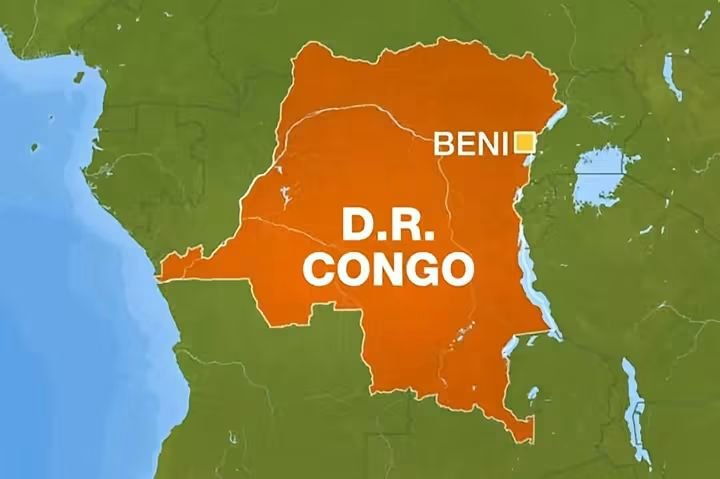
The latest violence follows another deadly assault in North Kivu Province, where suspected ADF fighters attacked communities in Beni territory during the night of November 5 into November 6.
According to Reuters, at least 33 bodies were recovered following the attack around Cantine-Aloya, approximately 50 kilometres west of Beni.
Beni territorial administrator Colonel Charles Omeonga attributed the assault to the Allied Democratic Forces and said the attackers burned houses during the operation.
Local civil society leader Tchetche Aliamini said many victims had suffered gunshot wounds, while others were killed with machetes or burned.
The attack also created a serious public health concern because it occurred in an area affected by the ongoing Ebola outbreak. Investing.com +1
Africa CDC Confirms 66 Deaths in Cantine-Aloya Attack
The humanitarian impact of the violence became clearer following an update from the Africa Centres for Disease Control and Prevention (Africa CDC).
On November 12, Africa CDC officials reported that the November 5 attack in Cantine-Aloya had killed 66 civilians, including three health workers.
The revised figure makes the assault one of the most serious recent attacks against civilians in the region.
The violence also affected three health facilities, which were looted and burned, according to information provided by the World Health Organization (WHO).
The attack has created additional difficulties for medical teams working to contain the Ebola outbreak, particularly in communities where access to healthcare is already limited.
WHO Director-General Tedros Adhanom Ghebreyesus warned that insecurity had become one of the greatest obstacles to the Ebola response in the country.
He said the violence was restricting humanitarian access, disrupting operations and making it harder for medical teams to reach affected communities.
The WHO also reported that more than 1,000 contacts had been lost to follow-up, while three confirmed Ebola cases remained unaccounted for following the attack. 11 November 2026 +2
ADF’s Longstanding Presence in Eastern DR Congo
The Allied Democratic Forces originated in Uganda and established a presence in eastern DR Congo after being pushed across the border by military operations.
The organisation has operated in the region for years, carrying out attacks against civilians, abducting residents and targeting communities in remote areas.
The group pledged allegiance to the Islamic State organisation and is recognised as an affiliate of its Central Africa Province.
Its continued operations have made it a major security threat in Ituri and North Kivu, where communities face repeated attacks despite efforts by regional military forces to contain its activities.
Congolese and Ugandan forces have conducted joint military operations against the ADF since 2021. However, the group has continued to launch attacks against civilian communities.
A United Nations Group of Experts report published in 2026 identified the ADF as one of the most violent Islamic State affiliates globally and documented its continued expansion and attacks against civilians. Flygtningenævnet +1
Ebola Outbreak Faces Additional Challenges
The latest attacks have intensified concerns about the relationship between insecurity and public health in eastern DR Congo.
The country is battling a major Ebola outbreak that has placed considerable pressure on hospitals, medical personnel and emergency response organisations.
According to Reuters’ November 12 report, Congolese government figures showed that the outbreak had recorded 11,114 infections and 5,433 deaths.
Africa CDC official Wessam Mankoula also reported four armed attacks, 16 assaults on health responders and 11 incidents involving health facilities that were burned or otherwise targeted.
These developments threaten essential public health activities, including patient treatment, disease surveillance, contact tracing and the monitoring of people who may have been exposed to the virus.
When health facilities are attacked, patients may avoid seeking treatment, while medical workers face greater difficulties reaching communities.
The displacement of residents also makes it harder for health authorities to maintain contact with suspected cases and monitor the spread of infection.
The WHO has warned that continued insecurity could reverse progress made in the Ebola response. Daily Nation +2
Regional Security Concerns
The continuing ADF attacks also raise questions about the effectiveness of regional security cooperation.
The Democratic Republic of the Congo and Uganda share a long border, making cross-border security cooperation important in efforts to prevent armed groups from operating freely.
Although joint military operations have targeted ADF positions, the group’s ability to attack isolated communities demonstrates the difficulty of providing sustained civilian protection across large and difficult-to-access territories.
The situation also has implications for humanitarian organisations operating in the region.
Aid agencies and healthcare workers require safe access to affected communities to provide emergency assistance, support displaced families and maintain disease-control operations.
Without improved security, communities could face simultaneous threats from armed violence, displacement, food insecurity and infectious diseases.
What Happens Next?
Congolese authorities and regional security forces face continued pressure to strengthen civilian protection and prevent further attacks.
The immediate priorities include improving security around vulnerable communities, investigating reported killings, supporting displaced residents and restoring access to damaged health facilities.
Public health organisations must also work to reconnect with people lost to Ebola contact-tracing programmes and locate confirmed patients who remain unaccounted for.
Africa CDC has called for the protection of civilians, patients, healthcare workers and medical facilities, alongside safe and sustained humanitarian access.
The situation remains serious, with further security and public health developments expected as authorities continue responding to the violence and Ebola outbreak.
The latest attacks underline the growing challenge facing eastern DR Congo, where armed violence is threatening not only civilian security but also essential healthcare services.
Weng Global – Stories beyond borders
Sources
- Africa Centres for Disease Control and Prevention (Africa CDC) – Statement on the Attack in North Kivu, November 8, 2026. Africa CDC
- World Health Organization (WHO) – Director-General’s Remarks on the Ebola Outbreak in DR Congo, November 11, 2026. 11 November 2026
- Reuters – Attacks on Health Workers Hamper Congo Ebola Fight, Africa CDC Warns, November 12, 2026. Daily Nation
- Associated Press – Islamic State Group-Affiliated Rebels Kill at Least 22 in Congo’s Eastern Region, November 11, 2026. ABC News
- Reuters – Islamist Militants Force Ebola Patients to Flee in Deadly Congo Raid, November 6, 2026. Investing.com
- United Nations Group of Experts – Final Report on the Democratic Republic of the Congo, 2026. Flygtningenævnet