Reported by Simon Daniel Yusuph l Journalist at Weng Global
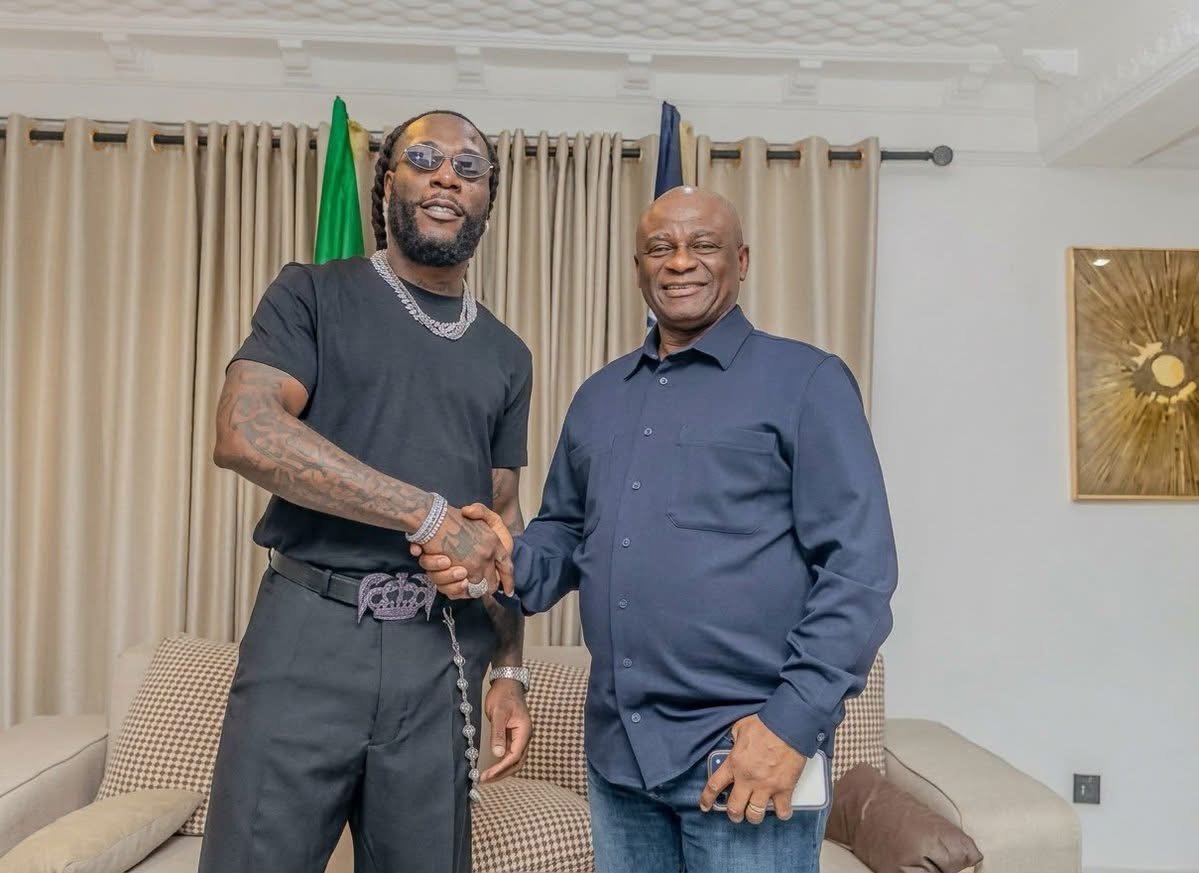
The Inspector-General of Police, Olatunji Rilwan Disu, has met Grammy-winning Nigerian singer Damini Ogulu, popularly known as Burna Boy, in Lagos to discuss how Nigeria’s creative industry could contribute to rebuilding public trust in the Nigeria Police Force, particularly among young Nigerians.
The meeting took place at Police House in Lagos on Saturday, October 3, 2026, as the police leadership seeks to deepen engagement with stakeholders outside the traditional security sector. Reports on the meeting said discussions focused on the influence of entertainment, music and popular culture in shaping public conversations and improving relationships between police officers and the communities they serve.
Burna Boy expressed support for the direction being pursued by the Inspector-General and indicated his willingness to contribute to efforts aimed at strengthening relations between the police and Nigerians, especially younger people.
Main Development
The engagement forms part of Disu’s broader approach to rebuilding public confidence in the police through partnerships with different sections of Nigerian society.
According to reports from the meeting, Disu highlighted the considerable influence of Nigeria’s creative industry among young people and said that influence could be used to shape conversations, build bridges and encourage better understanding between police officers and citizens.
The Inspector-General also drew attention to the potential of Nigeria’s Orange Economy, which encompasses creative sectors such as music, film, fashion, publishing, digital content, advertising, gaming, tourism, heritage and the arts.
For the police, the engagement represents an attempt to look beyond conventional policing methods when addressing the challenge of public confidence.
The meeting does not, however, amount to a formal police reform agreement or establish a specific programme between Burna Boy and the Nigeria Police Force. As of October 4, no detailed joint programme or implementation framework arising from the meeting had been publicly announced.
Why Burna Boy’s Involvement Matters
Burna Boy is one of Nigeria’s most internationally recognised musicians and has a substantial following among young Nigerians at home and abroad.
That reach gives the artist an unusual platform for influencing public conversations, particularly among the demographic the police have identified as important to their efforts to rebuild trust.
The police appear to be seeking to use that cultural influence to open new channels of communication with young Nigerians.
The approach reflects a recognition that public confidence in law enforcement is influenced not only by police operations but also by how citizens perceive, discuss and experience the institution.
However, public trust cannot be established through public relations efforts alone. It also depends on how police officers conduct themselves, how complaints are handled, whether citizens’ rights are protected and whether institutions are held accountable when misconduct occurs.
That distinction will be important if the latest engagement is to produce lasting results.
Disu’s Wider Community-Policing Approach
The meeting with Burna Boy fits into a broader emphasis by Disu on community engagement.
In May 2026, the Nigeria Police Force said Disu had directed Commissioners of Police to strengthen community policing through regular town-hall engagements with traditional rulers, religious leaders and community groups.
The Force also said commissioners were to make their contact details accessible to community leaders to improve communication and public trust.
Earlier in April, during the 2026 National Police Day activities, Disu described a more accountable, intelligence-driven and community-focused police force as part of his leadership priorities.
The police said the nationwide activities included community service, public sensitisation and other initiatives aimed at strengthening police-community relations.
The Burna Boy meeting therefore forms part of a wider effort to engage Nigerians through multiple channels rather than relying exclusively on conventional law-enforcement communication.
Police and the Creative Economy
The meeting also comes shortly after Disu proposed a specialised security and intellectual-property coordination structure for Nigeria’s creative economy.
In September, the Inspector-General proposed an Orange Economy Security and Intellectual Property Coordination Desk within an appropriate existing structure of the Nigeria Police Force.
The proposal was presented during a lecture at the National Institute for Policy and Strategic Studies in Kuru, Plateau State, where Disu discussed the relationship between security, entrepreneurship and the growth of Nigeria’s creative industries.
The proposed desk is intended to improve coordination in dealing with crimes affecting creative businesses, including piracy, counterfeiting, cyber-enabled fraud and other intellectual-property-related offences.
Disu also called for stronger cooperation between the police, the Nigerian Copyright Commission and other relevant institutions.
The proposal suggests that the police leadership is viewing the creative economy not only as a cultural sector but also as an area requiring specialised security and regulatory attention.
The Orange Economy and Young Nigerians
Nigeria’s creative industries have become an increasingly important part of the country’s economic and cultural identity.
Music, film, fashion, digital content and other creative activities provide income and employment opportunities for millions of Nigerians directly and indirectly.
The sector also has an especially strong connection with young Nigerians, who form a major part of Nigeria’s population and consume much of the country’s music, film and digital content.
Disu has argued that legitimate opportunities for young people to convert talent into income can contribute to crime prevention by reducing vulnerability to criminal activity.
This gives the creative economy a dual significance for the police: it can be an area requiring protection from crime, while also providing a platform for communication and engagement with young people.
The meeting with Burna Boy brings both dimensions into the same conversation.
Burna Boy’s Support for the Initiative
Burna Boy expressed support for the direction being pursued by Disu and indicated that he was willing to contribute to efforts aimed at improving the relationship between the police and Nigerians.
Reports said the singer’s support was particularly directed towards improving relations with younger Nigerians.
No specific role or formal appointment for Burna Boy was announced.
It is therefore important to distinguish his stated willingness to support the initiative from any suggestion that he has formally joined a police programme or accepted an official position.
The significance of the encounter at this stage lies primarily in the willingness of two influential institutions and individuals to discuss the challenge of police-public trust.
Nigeria’s Police-Youth Trust Challenge
Relations between Nigerian police officers and young citizens have remained an important public issue for years.
The issue gained particular prominence during the #EndSARS protests of 2020, when young Nigerians demonstrated against police brutality and demanded reforms in policing.
Although the current meeting was not presented as a discussion specifically about the #EndSARS protests, the broader question of how to rebuild confidence among young Nigerians remains relevant to any police-community engagement strategy.
For the police, improving public confidence requires more than changing the way the institution communicates.
It requires citizens to see improvements in professionalism, accountability, respect for human rights and responsiveness to complaints.
The Force itself has said its reform priorities include professionalism, discipline, human-rights compliance and public accountability.
Creative Voices as a Bridge
The police’s engagement with Burna Boy reflects a broader recognition that popular culture can influence how institutions are understood by the public.
Musicians, filmmakers, actors, influencers and other creative professionals regularly communicate with audiences that government agencies may struggle to reach directly.
For a police institution seeking to improve its relationship with younger Nigerians, working with respected cultural figures could therefore provide additional channels for dialogue.
But such partnerships are most likely to have lasting value if they are connected to measurable institutional improvements.
Creative voices can help explain reforms, encourage dialogue and amplify messages, but they cannot independently resolve structural problems within law enforcement.
The responsibility for policing standards remains with the police institution and the government.
Reactions and Wider Significance
The meeting has generated attention because of the contrasting public roles of the participants.
Disu is responsible for leading Nigeria’s national police organisation, while Burna Boy has built a global music career and a significant following among young Nigerians.
The engagement consequently brings together law enforcement and popular culture around a shared objective of improving police-public relations.
For the creative sector, the discussion could also signal greater recognition by security authorities of the industry’s economic and social influence.
For the police, it provides an opportunity to communicate directly with an influential figure whose audience includes many young Nigerians.
The success of the approach, however, will ultimately depend on whether engagement translates into practical improvements that citizens can see and experience.
Why It Matters
Public trust is central to effective policing.
Citizens who have confidence in law-enforcement institutions are more likely to communicate information, report crimes, cooperate with investigations and participate in community-safety initiatives.
When trust is weak, those relationships can become more difficult, potentially limiting the ability of police to work effectively with the communities they serve.
This makes the police’s attempt to engage influential figures outside government relevant beyond a single meeting.
The Burna Boy engagement is also significant because it recognises the changing nature of public communication in Nigeria.
Young Nigerians increasingly consume news, entertainment and political information through digital platforms and popular culture.
Building effective communication with that audience requires institutions to understand how those platforms and cultural networks operate.
At the same time, credibility will remain essential. Public trust cannot be sustained by messaging that is not matched by institutional conduct.
What Happens Next
As of October 4, 2026, neither the police nor Burna Boy had publicly announced a detailed programme resulting from the meeting.
It remains unclear whether the engagement will lead to structured youth forums, creative-industry partnerships, public-awareness campaigns or other initiatives involving the entertainment sector.
The immediate significance is therefore the opening of a conversation between the police leadership and a prominent Nigerian creative figure.
The next test will be whether that conversation develops into concrete initiatives capable of improving communication and trust between police officers and young Nigerians.
The Nigeria Police Force is also expected to continue its broader community-policing and reform efforts, including stakeholder engagement and its proposed approach to protecting the creative economy.
For Burna Boy and other creative professionals, any future involvement would likely depend on the specific initiatives eventually developed.
For the public, the key measure will be whether these engagements contribute to more professional, accountable and responsive policing.
WENG Global — stories beyond borders
Sources
- Nigeria Police Force
- AIT Live
- TVC News
- TheCable
- Premium Times