Reported by Simon Daniel Yusuph l Journalist at Weng Global
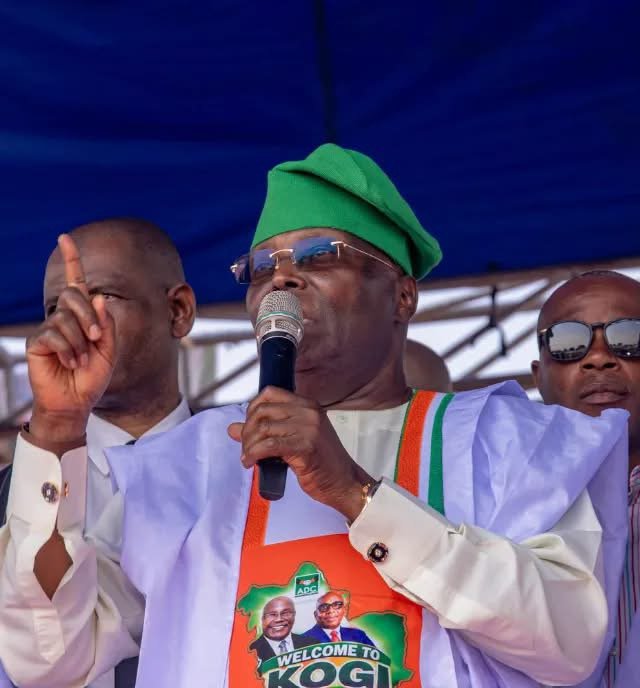
Former Vice-President Atiku Abubakar has pledged to revive the long-abandoned Ajaokuta Steel Mill, develop the Idah River Port and address major infrastructure challenges across Kogi State if elected president in the 2027 general elections.
Atiku made the promises on Tuesday, November 24, 2026, during his African Democratic Congress (ADC) presidential campaign rally in Lokoja, the Kogi State capital, where he outlined development proposals targeting the state’s three senatorial districts.
The former vice-president said his proposed interventions would focus on industrial development, transportation, agricultural productivity, employment generation and improved economic opportunities for residents.
His campaign message placed particular emphasis on the need to transform Kogi State’s strategic geographical position and natural resources into tangible economic benefits for its population.
Atiku Promises to Resuscitate Ajaokuta Steel Mill
One of the major highlights of Atiku’s campaign promises was his commitment to revive and complete the Ajaokuta Steel Mill in Kogi Central.
The former vice-president described the project as an important industrial asset capable of contributing significantly to Nigeria’s economic development if successfully restored to full operation.
He said a functional steel industry would create employment opportunities, strengthen domestic manufacturing capacity and support the development of other industrial sectors.
Atiku maintained that the project should no longer remain an unfulfilled national ambition, particularly given the economic opportunities it could provide for communities in Kogi State and the wider country.
The Ajaokuta Steel Company, established as one of Nigeria’s major industrialisation projects, has remained largely inactive for decades despite successive government commitments to complete and operationalise the facility.
Its revival has been a recurring issue in Nigeria’s political and economic discussions, with successive administrations facing challenges involving funding, infrastructure, technical capacity and investment arrangements.
Atiku’s latest pledge therefore places the steel project back at the centre of the 2027 presidential campaign debate over industrialisation and economic diversification.
Idah River Port Development Targets Kogi East
In addressing the development needs of Kogi East, Atiku promised to develop the Idah River Port to improve transportation, facilitate agricultural trade and expand commercial activities across the region.
He identified difficulties associated with moving agricultural produce from rural communities to markets as one of the challenges confronting farmers and businesses in the area.
According to the campaign proposals, developing the river port would provide additional transportation opportunities and help farmers reach wider markets.
The project could also strengthen commercial connections between Kogi East and other parts of Nigeria, particularly if supported by adequate road infrastructure and efficient inland water transportation services.
Atiku also promised improvements in rural roads and water supply, describing these facilities as essential to improving living conditions and supporting economic activities.
Kogi State’s location around the River Niger and River Benue confluence gives it geographical advantages for inland water transportation.
However, converting that advantage into a functional commercial transportation network would require substantial investment in port facilities, navigational infrastructure, cargo handling and supporting transport connections.
The proposed Idah River Port development would therefore need to be accompanied by a practical implementation strategy to deliver the economic benefits outlined during the campaign.
Kabba-Egbe Road Also Features in Atiku’s Kogi Development Plans
For residents of Kogi West, Atiku pledged to complete the Kabba-Egbe road, which he identified as an important infrastructure project requiring attention.
He said improving the road network would make transportation easier, strengthen trade and reduce difficulties experienced by communities along the route.
The former vice-president also linked the proposed infrastructure improvements to broader efforts to expand economic opportunities and improve access to essential services.
Road development remains an important issue across Kogi State, where communities depend on reliable transportation networks for agricultural distribution, commercial activities, education and healthcare.
The proposed completion of the Kabba-Egbe road would therefore form part of Atiku’s broader campaign commitment to addressing infrastructure challenges across the state’s three senatorial districts.
Atiku Outlines Wider Economic Proposals
Beyond the projects specifically targeted at Kogi State, Atiku also presented wider economic proposals involving transportation infrastructure and fuel affordability.
He pledged to pursue the dredging of the River Niger and the development of Baro Port in Niger State as part of efforts to strengthen inland water transportation.
The proposal, according to his campaign message, is intended to expand commercial transportation opportunities and create economic connections between northern Nigeria and other parts of the country.
Atiku also reiterated his position on fuel affordability, proposing targeted support for fuel refined in Nigeria as part of his broader economic agenda.
His campaign has argued that reducing production and transportation costs could improve the affordability of essential goods and services.
However, the implementation of such proposals would depend on the policy framework, financing arrangements and economic conditions under which a future administration operates.
Ajaokuta’s Long History of Unfulfilled Industrial Expectations
The Ajaokuta Steel Mill remains one of Nigeria’s most prominent examples of an industrial project that has struggled to achieve its original objectives.
The project was conceived as a major component of Nigeria’s industrial development strategy, with the expectation that domestic steel production would support infrastructure development, manufacturing and employment.
However, decades after its establishment, the facility has yet to operate as the fully integrated steel complex originally envisioned.
Its prolonged inactivity has attracted criticism from industrial stakeholders, economic analysts and successive political administrations.
Atiku has previously made similar commitments concerning the facility.
During the 2023 presidential campaign, when he contested under the Peoples Democratic Party (PDP), he promised to address the challenges surrounding Ajaokuta and develop inland port infrastructure in Kogi State.
The renewed commitment during his 2027 campaign raises questions about the specific measures that would distinguish his latest proposal from previous political promises.
For residents of Kogi State and Nigerians interested in industrial development, the central issue remains whether a future administration can overcome the longstanding financial, technical and administrative challenges preventing the facility from becoming operational.
Why the Promises Matter to Kogi State and Nigeria
The projects outlined by Atiku have implications beyond electoral politics.
A functional Ajaokuta Steel Mill could potentially strengthen Nigeria’s domestic industrial capacity, reduce dependence on imported steel products and support industries involved in construction, manufacturing and infrastructure development.
Similarly, developing the Idah River Port could create additional opportunities for agricultural transportation and commercial activities in Kogi East.
Improved roads could also strengthen connections between rural communities, urban markets and neighbouring states.
For Nigeria, these proposals touch on broader economic challenges involving industrialisation, unemployment, infrastructure deficits and the need to diversify revenue sources.
Nevertheless, the economic benefits of such projects would depend on effective planning, transparent procurement, sustainable financing and consistent implementation.
Political commitments alone cannot guarantee successful project delivery.
A clear implementation framework, realistic timelines and accountability mechanisms would be necessary to ensure that the proposed projects translate into measurable improvements in people’s lives.
What Happens Next?
With the 2027 general elections approaching, Atiku’s campaign promises are expected to remain part of the political conversation surrounding economic development and infrastructure investment.
The proposals will require further clarification on their projected costs, funding sources, implementation timelines and the institutions responsible for delivering them.
The legal and political developments surrounding the ADC’s leadership and presidential candidacy also remain relevant to the wider 2027 electoral process.
For voters in Kogi State, the important consideration will be how the promises compare with previous commitments and whether the candidate can present credible plans for achieving them.
Ultimately, the revival of Ajaokuta, development of Idah River Port and completion of major roads represent longstanding development expectations among communities in the state.
Whether those expectations will be fulfilled will depend on the outcome of the electoral process and the ability of any incoming administration to turn campaign commitments into practical results.
Weng Global – stories beyond borders
Sources
- Vanguard Newspaper – Reporting on Atiku’s November 24, 2026, campaign promises in Kogi State.
- The Sun Newspaper – Coverage of Atiku’s ADC campaign rally in Lokoja.
- The Cable – Background reporting on Atiku’s previous Ajaokuta Steel Mill and inland port commitments.
- Voice of Nigeria – Historical reporting on the Ajaokuta Steel Mill and Kogi inland port proposals.