Reported by Simon Daniel Yusuph l Journalist at Weng Global
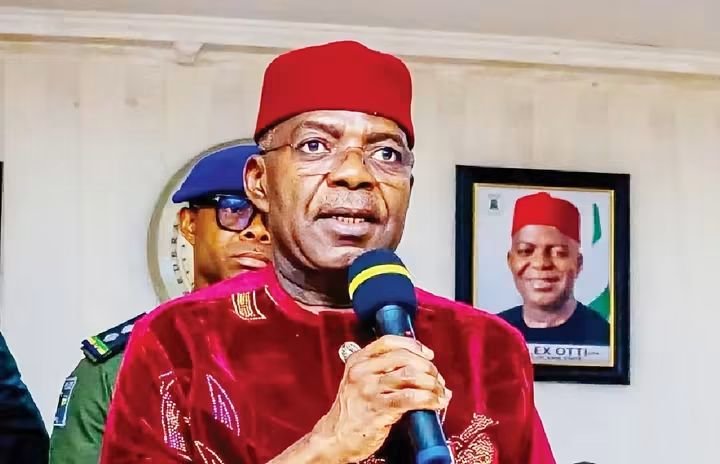
The Royal Moroccan Football Federation (FRMF) has reportedly approached the Court of Arbitration for Sport (CAS) over an alleged telephone conversation between Senegalese Football Federation president Abdoulaye Fall and one of the arbitrators handling Senegal’s appeal in the disputed 2025 Africa Cup of Nations (AFCON) final.
The development emerged on Tuesday, November 24, 2026, just hours before CAS was expected to deliver its decision on Senegal’s challenge against the Confederation of African Football’s (CAF) decision to overturn the original result of the final and award the championship to Morocco.
According to Reuters, citing a source with direct knowledge of the proceedings, the Moroccan federation alleged that Fall spoke by telephone on Sunday with one of the three arbitrators appointed to examine the case.
The source, who was not authorised to discuss the proceedings publicly, said Morocco had reported the alleged incident to the Lausanne-based sports tribunal.
However, Reuters said it could not independently establish whether the telephone conversation actually took place or determine what was discussed.
The allegation has introduced another layer of controversy into an already contentious dispute between the two football federations, with questions emerging about the independence and impartiality expected of arbitrators handling international sports disputes.
Senegal has strongly rejected the allegation, describing the reported telephone conversation as imaginary.
Senegal Football Federation Rejects Morocco’s Allegation
The Senegalese Football Federation has dismissed the accusation, insisting that its president did not communicate with any member of the CAS arbitration panel.
The federation’s secretary-general, Abdoulaye Seydou Sow, reportedly rejected the allegation in comments circulated by Senegalese media.
Sow maintained that Fall did not know the arbitrators handling the dispute and had not attended the October 8 hearing in Lausanne.
He questioned how the Senegalese federation president could have established the alleged contact with an arbitrator he did not know.
The secretary-general also suggested that the timing of the allegation raised questions, particularly because the tribunal was already preparing to announce its decision.
According to reports from Senegalese media, Sow argued that the decision had already been reached following the panel’s deliberations approximately two weeks earlier.
His response effectively challenged the suggestion that a conversation allegedly held on Sunday could have influenced the tribunal’s decision.
The Senegalese federation’s position, however, does not independently establish whether the alleged telephone conversation occurred. The circumstances surrounding the accusation remain unresolved.
What Morocco Reportedly Submitted to CAS
The Moroccan federation’s reported complaint centres on the possibility of direct communication between a party involved in the dispute and a member of the arbitration panel.
Arbitrators appointed to resolve international sports disputes are expected to maintain independence and impartiality throughout proceedings.
Any established unauthorised communication involving an arbitrator and a party to a case could raise procedural concerns, depending on the circumstances, the nature of the conversation and the applicable arbitration rules.
Morocco’s reported action therefore places additional attention on the conduct of the proceedings as the tribunal prepares to publish its ruling.
French sports broadcaster RMC Sport also reported that Moroccan legal representatives had contacted CAS over the alleged incident.
However, the precise contents of the reported communication, the evidence submitted and the tribunal’s response had not been officially established in the available reports.
Reuters reported that CAS was not immediately available to comment on Morocco’s complaint.
There has also been no publicly established finding of misconduct against Abdoulaye Fall or any member of the arbitration panel.
It is therefore important to distinguish Morocco’s allegation from an established breach of arbitration rules.
Background: How Senegal and Morocco’s AFCON Dispute Began
The latest controversy is connected to the dramatic final of the 2025 Africa Cup of Nations, played between Senegal and hosts Morocco at the Prince Moulay Abdellah Stadium in Rabat on January 18, 2026.
The match became one of the most controversial finals in the competition’s history following a series of disputed incidents during the closing stages.
Senegal appeared to have taken the lead through Ismaila Sarr in stoppage time, but the goal was disallowed after the referee awarded Morocco a free kick for a foul.
Tensions escalated further when Morocco were awarded a penalty following a video assistant referee review.
The decision angered Senegal’s players and coaching staff, with head coach Pape Thiaw instructing his team to leave the pitch in protest.
The interruption lasted approximately 14 minutes before Senegal’s players returned to continue the match.
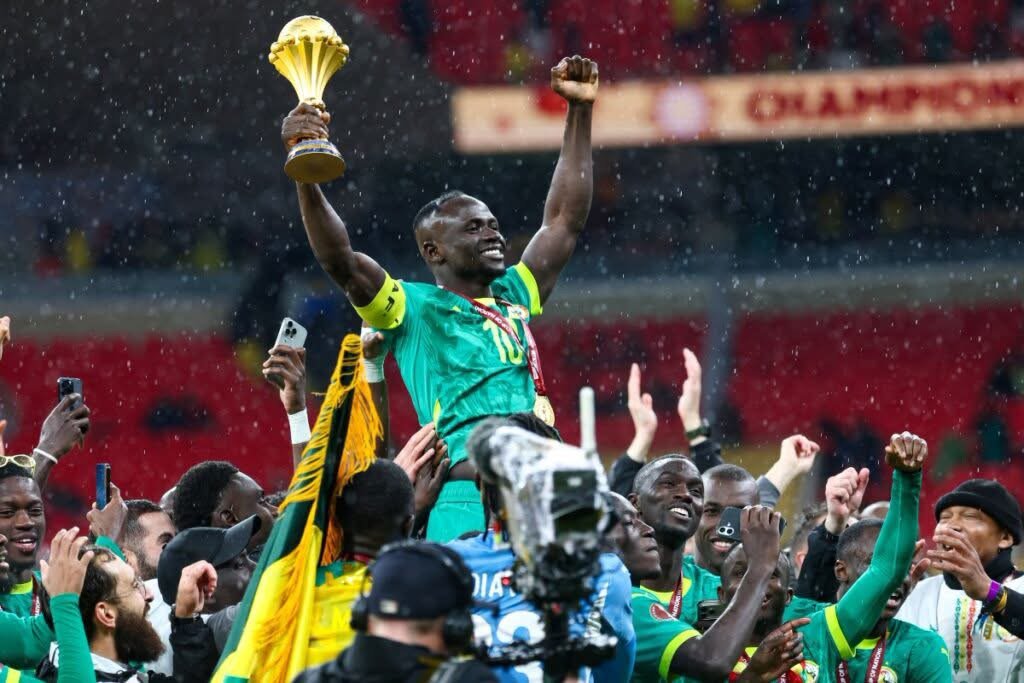
Sadio Mane played an important role in encouraging his teammates to resume the game.
Morocco subsequently failed to convert the penalty, with Brahim Diaz missing his attempt.
The match proceeded into extra time, where Pape Gueye scored the decisive goal to give Senegal a 1-0 victory.
Senegal celebrated what appeared to be its second AFCON championship, having previously won the competition in 2021.
However, the result later became the subject of a major disciplinary dispute after Morocco challenged the circumstances surrounding the match.
CAF Awards Morocco the AFCON Title
On March 17, 2026, CAF’s Appeal Board overturned Senegal’s victory and awarded Morocco a 3-0 win by forfeit.
The governing body relied on Articles 82 and 84 of the AFCON regulations, ruling that Senegal’s decision to withdraw its players from the pitch amounted to a forfeiture of the match.
The decision effectively removed the championship from Senegal and recognised Morocco as the official winner of the 2025 tournament.
Senegal strongly opposed the ruling, arguing that the match had resumed and been completed under the referee’s authority.
The Senegalese Football Federation subsequently challenged CAF’s decision before CAS on March 25, 2026.
The appeal sought to overturn the disciplinary ruling and restore Senegal’s original 1-0 victory.
The dispute has since developed into a significant legal battle involving the two national football federations and CAF.
CAS Prepares to Deliver Its Decision
The Court of Arbitration for Sport confirmed on November 23 that the parties involved had been notified that its decision would be delivered on Tuesday, November 24, during the afternoon.
The announcement followed a closed-door hearing held in Lausanne, Switzerland, on October 8, where the tribunal considered arguments relating to Senegal’s appeal.
CAS explained that the parties had been informed of the decision date and that further communication with the media would be suspended until the ruling was formally announced.
The tribunal also emphasised that only information released through its official communication channels should be treated as authoritative.
The announcement placed both Senegal and Morocco on alert as the football world awaited a decision capable of determining the official outcome of the disputed championship.
Morocco’s latest complaint has now added another issue to the final stages of the proceedings.
Nevertheless, there was no official confirmation that the reported incident had delayed the scheduled announcement or changed the tribunal’s position.
Why the Allegation Matters
The controversy raises broader questions about transparency, independence and confidence in international sports arbitration.
CAS plays an important role in resolving disputes involving football federations, athletes, clubs and international sporting organisations.
Its decisions can have significant consequences for national teams, competition results, sporting records and the credibility of governing institutions.
For Senegal and Morocco, the case involves more than the ownership of a continental trophy. It also concerns the interpretation and enforcement of competition regulations.
If unauthorised contact between an arbitrator and a party were established, the circumstances could require examination under the applicable procedural rules.
However, an allegation alone does not establish misconduct or automatically invalidate an arbitration proceeding.
The tribunal would need to consider the available evidence and determine whether any relevant rules had been breached.
The latest development therefore makes the official response from CAS particularly important.
What Happens Next?
Attention remains focused on CAS as it prepares to publish its decision on Senegal’s appeal.
The tribunal is expected to determine whether CAF’s decision to award Morocco a 3-0 victory should stand or whether Senegal’s original 1-0 triumph should be restored.
The Moroccan federation’s reported complaint and Senegal’s categorical denial have created additional uncertainty surrounding the dispute.
However, neither side’s public position should be mistaken for the tribunal’s eventual findings.
CAS has not publicly established that the alleged telephone conversation occurred, while Reuters has acknowledged that it could not independently verify the reported contact.
The tribunal’s official announcement will therefore be crucial in determining the next stage of the dispute.
For African football, the outcome could have lasting implications for the enforcement of competition regulations and the credibility of disciplinary and arbitration processes.
Until CAS publishes its decision and any relevant procedural findings, the allegation involving Abdoulaye Fall remains contested.
The central question remains whether Senegal’s appeal will succeed in restoring the title it won on the pitch or whether Morocco will retain the championship awarded by CAF.
Weng Global – stories beyond borders
Sources
- Reuters – Report on Morocco’s complaint concerning alleged contact between Senegal’s football federation president and a CAS arbitrator, November 24, 2026.
- Court of Arbitration for Sport (CAS) – Official press release confirming the November 24 decision date.
- Senegalese Football Federation – Denial attributed to Secretary-General Abdoulaye Seydou Sow, as reported by Senegalese media.
- Seneweb – Coverage of Senegal’s response to Morocco’s allegation, November 24, 2026.
- RMC Sport – Reporting on Morocco’s reported communication with CAS.
- Reuters – Background reporting on Senegal’s appeal against CAF’s decision to award Morocco the 2025 AFCON title.