Reported by Simon Daniel Yusuph l Journalist at Weng Global
The Association of Senior Civil Servants of Nigeria (ASCSN) initially suspended its nationwide industrial action over the proposed concession of King’s College, Lagos, after the Federal Government agreed to review the arrangement and establish a joint committee to examine concerns raised by organised labour.
The development followed an emergency high-level meeting between representatives of the unions and the Federal Ministry of Education in Abuja, chaired by Education Minister Tunji Alausa.
The agreement was expected to pave the way for the resumption of academic activities across Nigeria’s Federal Unity Colleges after the dispute disrupted the opening of the 2026/2027 academic session.
However, the suspension later became the subject of a fresh dispute after an ASCSN faction rejected the government’s announcement and maintained that the industrial action remained in force.
Dispute Over King’s College Concession
The dispute centres on a proposed 35-year Public-Private Partnership arrangement involving King’s College, Lagos, and the King’s College Old Boys Association (KCOBA).
The Federal Government has maintained that the arrangement is a management concession rather than a sale of the historic institution. The government has also said that ownership of King’s College would remain with the Federal Government.
The concession nevertheless triggered strong opposition from workers and some parent groups, who raised concerns about the future management of the school and the possible implications for other Federal Unity Colleges.
The workers feared that the arrangement could create a precedent for similar concessions involving other government-owned Unity Colleges.
The controversy intensified as the new academic session approached, with unions directing workers not to resume duties until the government addressed their concerns.
115 Unity Colleges Affected
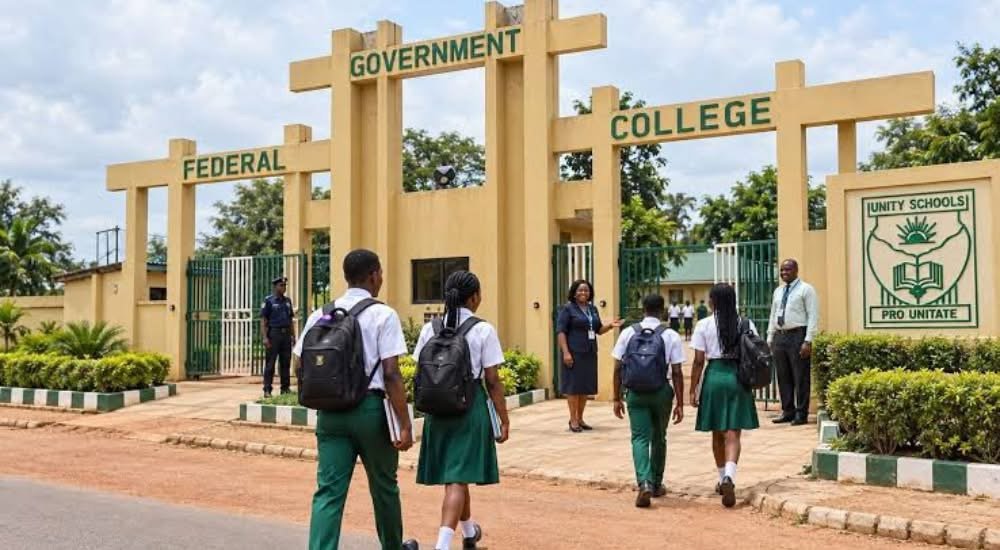
Nigeria has 115 Federal Unity Colleges, institutions established to provide secondary education to students from different parts of the country.
The industrial action disrupted the reopening of many of the schools at the beginning of the 2026/2027 academic session.
Reports on September 14 indicated that 112 of the 115 colleges remained affected by the workers’ boycott, leaving thousands of students unable to begin the new school term as scheduled.
The disruption also created uncertainty for parents and students who had travelled to schools for resumption.
At the time, the unions maintained that there would be no resumption until the concerns surrounding the King’s College concession were satisfactorily addressed.
Government Agrees to Review Arrangement
Following negotiations with organised labour, the Federal Government agreed to suspend implementation of the King’s College concession for two weeks while outstanding issues were reviewed.
A seven-member committee was proposed to examine the concession document and make recommendations on areas of concern.
The committee was to include representatives of the Federal Ministry of Education, the Federal Ministry of Labour and Employment, the Trade Union Congress and the King’s College Old Boys Association.
The agreement was intended to provide a formal channel for labour representatives to review the terms of the arrangement rather than continue the dispute through industrial action.
TheCable reported that the government said the proposed arrangement was intended to mobilise additional resources for the rehabilitation and modernisation of King’s College while retaining government ownership of the institution.
Education Minister Tunji Alausa also said the Federal Government did not intend to extend the concession arrangement to other Unity Colleges.
ASCSN Announces Suspension
Following the negotiations, ASCSN announced the suspension of its industrial action.
The association said the suspension was conditional on the review process addressing the concerns raised by labour representatives.
Reports published on September 16 and 17 said the union agreed to suspend the action after the emergency meeting with the Federal Ministry of Education.
The union warned that the strike could be reactivated if the review committee failed to adequately address its concerns within the agreed period.
The development initially raised hopes that students in the affected Unity Colleges would return to classrooms and that normal academic activities would resume.
On September 18, The Guardian reported that ASCSN directed teachers under its fold to return to classrooms and resume academic activities.
Resumption Order Triggers Fresh Disagreement
The apparent resolution, however, did not end the dispute.
By September 20, an ASCSN faction rejected the claim that the strike had been suspended, arguing that the recognised leadership of the union had not authorised such an announcement.
Reports published on September 22 said staff at Federal Unity Colleges continued to remain away from work despite the Federal Government’s instruction that schools should reopen.
The disagreement means that the situation cannot be described simply as a fully resolved strike.
While the Federal Government and some labour representatives announced a suspension and called for academic activities to resume, another ASCSN position maintained that the industrial action remained active until the government addressed outstanding concerns.
Why the Dispute Matters
The disagreement has consequences beyond King’s College because the dispute has affected a large network of government-owned secondary schools.
The Federal Unity Colleges serve students from different states and regions, making any prolonged disruption capable of affecting families across the country.
For parents, uncertainty over whether schools are officially open creates practical difficulties involving transportation, boarding arrangements, school expenses and academic planning.
For students, prolonged disruption could also affect the academic calendar if the disagreement continues.
The dispute has additionally raised broader questions about how public educational institutions should be rehabilitated and managed when government funding is considered insufficient to meet infrastructure needs.
The Federal Government has argued that partnerships with external organisations can help mobilise resources for institutions facing significant infrastructure challenges.
Labour groups and some parent representatives, however, have expressed concern about the implications of transferring management responsibilities to private or alumni-backed organisations.
These competing positions remain central to the ongoing discussion.
Government Maintains It Will Not Sell Unity Colleges
The Federal Government has repeatedly stated that it does not intend to sell Nigeria’s Federal Unity Colleges.
The Ministry of Education has also maintained that the King’s College arrangement should not be interpreted as a transfer of ownership of the institution.
The government’s position is that the proposed partnership is intended to improve the school’s infrastructure and management while preserving public ownership.
That position has not, however, eliminated concerns among workers and some parents over the practical consequences of the concession.
The disagreement has therefore shifted from simply whether King’s College should receive additional private or alumni-backed investment to questions about the terms of the arrangement, the protection of public ownership and the future management of Federal Unity Colleges.
What Happens Next
The immediate focus is on the review process and whether the parties can reach an agreement on the outstanding issues.
The joint committee was expected to examine the concession document and consider concerns raised by labour representatives before making recommendations.
The suspension announced by ASCSN was presented as conditional, meaning the industrial action could return if the union concluded that the review process had failed to address its concerns.
At the same time, the conflicting positions within the labour structure mean that the status of the strike remains an important issue for parents, students and school authorities.
The Federal Ministry of Education has continued to push for academic activities to resume, while reports from September 22 indicated that workers in several Unity Colleges were still refusing to return to their duties.
The outcome of the review of the King’s College concession, and the ability of the Federal Government and labour representatives to reach a common position, will determine whether the affected schools can return to a stable academic calendar.
Weng Global – stories beyond borders
Sources
- The Guardian Nigeria — reporting on the King’s College concession dispute and ASCSN’s industrial action.
- TheCable — reporting on the Federal Government’s two-week suspension of the King’s College concession implementation.
- Premium Times/other Nigerian media reports — reporting on the ASCSN suspension and subsequent developments.
- Politics Nigeria — reporting on the continued strike position among Unity College workers.
- Federal Ministry of Education — statements and directives concerning the King’s College concession and resumption of Federal Unity Colleges.