Reported by Simon Daniel Yusuph l Journalist at Weng Global
American lifestyle entrepreneur and television personality Martha Stewart has issued a second apology after facing widespread criticism over a Halloween costume depicting a person experiencing homelessness, acknowledging that her decision was insensitive and inappropriate.
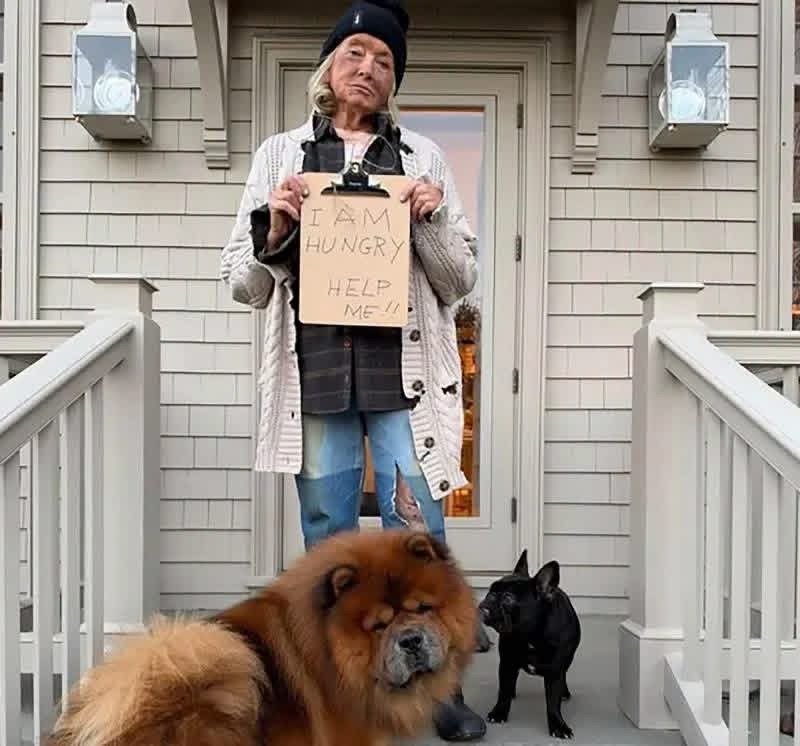
The 85-year-old businesswoman sparked controversy after sharing a photograph of herself dressed in torn clothing, with makeup designed to make her face appear dirty, while holding a cardboard sign reading, “I AM HUNGRY HELP ME!!”
The photograph, which appeared on her Instagram account on October 31, 2026, attracted criticism from social media users who accused the lifestyle personality of making light of poverty and turning the difficult circumstances faced by homeless people into entertainment.
The image was subsequently deleted following the negative reactions.
Stewart initially defended her intentions, explaining that the costume was meant to draw attention to homelessness, which she described as one of the most serious social challenges facing the United States.
However, her first response generated further criticism, with some commentators arguing that she had failed to acknowledge the insensitivity of the costume or directly apologise to people affected by homelessness.
Hours later, she issued another statement admitting that her earlier response had not gone far enough and expressing regret over the decision.
Halloween Photograph Triggers Public Backlash
The controversy began when Stewart shared the photograph as part of a series of images on Instagram.
In the picture, she wore ripped jeans, a distressed outfit and a beanie, with dark makeup applied to her face to create the appearance of dirt. She also held a handwritten cardboard sign suggesting that she was hungry and seeking assistance.
The accompanying caption promoted her QVC candle collection, adding another dimension to the criticism because the homelessness-themed costume appeared alongside commercial product promotion.
Several social media users questioned the decision to portray homelessness as a Halloween costume, particularly at a time when many households continue to experience economic difficulties and housing insecurity.
Critics argued that the image risked reducing a serious social and economic problem to a visual joke.
For people experiencing homelessness, the circumstances represented by the costume are not temporary disguises or seasonal entertainment. They involve real challenges, including the absence of stable accommodation, limited access to essential services, financial insecurity and social exclusion.
The controversy consequently developed into a broader discussion about how public figures should approach sensitive social issues when creating entertainment content for large audiences.
Although some users defended Stewart and argued that Halloween costumes should be interpreted within the context of humour and creative expression, others maintained that homelessness was an inappropriate subject for such a portrayal.
Stewart’s First Response Says Costume Was Intended to Raise Awareness
Following the criticism, Stewart released an initial statement addressing the controversy.
In the statement, she expressed distress that her Halloween appearance had offended people, insisting that her intention was to generate awareness about homelessness rather than ridicule individuals experiencing it.
She also referred to her previous involvement in charitable activities supporting organisations working to address the problem.
Stewart maintained that homelessness remained a major challenge in the United States and said she cared deeply about the issue.
She further indicated that she intended to continue supporting efforts aimed at assisting affected communities.
Her initial explanation, however, did not satisfy everyone.
Some critics interpreted the response as an attempt to justify the costume rather than acknowledge why the portrayal had been considered offensive.
The disagreement highlighted the distinction between intending to raise awareness about a social problem and choosing an approach that people directly affected by that problem may consider disrespectful.
For many commentators, the central concern was not simply that Stewart had selected an unconventional Halloween costume, but that the portrayal appeared to use the visible signs of poverty as a source of entertainment.
The fact that the image was associated with the promotion of a commercial product also attracted attention.
Second Apology Acknowledges Insensitivity
Stewart subsequently issued a more direct apology on November 1, 2026, acknowledging that her earlier statement had failed to address the concerns adequately.
In her follow-up message, she admitted that the decision was a mistake and recognised that many people were experiencing serious economic difficulties.
She wrote: “It’s hard to admit when you’ve really screwed up. My earlier statement didn’t go far enough.”
She continued: “I know many people are economically struggling. Wearing a costume like I did was insensitive and not funny. I’m very sorry.”
The second statement represented a clearer acknowledgement of the criticism, moving away from an explanation centred primarily on her intentions towards an admission that the costume itself was inappropriate.
Her apology also recognised the economic realities facing people who struggle to secure stable housing and meet their basic needs.
Nevertheless, the controversy continued to generate reactions online, demonstrating that public apologies do not necessarily bring immediate resolution to disagreements surrounding celebrity conduct and social responsibility.
Some supporters welcomed her willingness to acknowledge the mistake, while critics maintained that public figures should exercise greater consideration before using the experiences of vulnerable communities as entertainment material.
Homelessness Remains a Major Challenge in the United States
The controversy has also drawn attention to the wider homelessness crisis in the United States, where housing affordability, economic insecurity and access to social support remain significant public policy concerns.
According to the US Department of Housing and Urban Development’s 2024 Annual Homelessness Assessment Report, approximately 771,480 people experienced homelessness on a single night in January 2024.
The figure represented the highest number recorded in the country’s annual point-in-time homelessness assessment at the time.
The report indicated that the number represented approximately 23 people for every 10,000 residents in the United States.
It also identified several factors contributing to the increase, including the country’s affordable housing challenges, inflation, stagnant wages among lower-income households and pressure on homelessness assistance programmes.
The report further recorded a significant increase in homelessness among families with children.
Approximately 150,000 children experienced homelessness on the night covered by the 2024 assessment, representing a substantial increase compared with the previous year.
These figures illustrate the scale of the challenge confronting American authorities and organisations providing housing assistance.
Homelessness is not limited to people sleeping on streets or occupying public spaces. It can also involve individuals and families living in emergency shelters, temporary accommodation or other arrangements without stable and secure housing.
The circumstances differ from one individual to another, with some experiencing homelessness following job losses, rising housing costs, family breakdown, domestic violence, health challenges or other economic and personal difficulties.
The figures also demonstrate why public discussions about homelessness require sensitivity and an understanding of the experiences of affected individuals.
While Stewart’s costume controversy is primarily an entertainment story, the reactions have brought renewed attention to a social issue that affects hundreds of thousands of people across the United States.
Martha Stewart’s Public Profile and Influence
Stewart’s position as one of America’s most recognisable lifestyle personalities has contributed to the attention surrounding the incident.
Over several decades, she has built a major business and media brand associated with cooking, home decoration, gardening, entertaining, publishing and lifestyle advice.
Her career developed significantly following the publication of her book Entertaining in 1982.
She later established Martha Stewart Living, which began in 1990 and became an important part of her growing media business.
Her television programmes, books, magazines and commercial partnerships helped establish her as an influential figure in American popular culture.
According to her official biography, Stewart has authored numerous lifestyle books and developed a broad range of consumer products and media projects.
Her influence has extended beyond traditional television and publishing into social media and commercial collaborations.
That public visibility means her decisions can attract attention well beyond her immediate audience.
For celebrities and business personalities with large platforms, public communication increasingly carries implications for their professional reputations and relationships with consumers.
The incident also demonstrates how social media can rapidly transform a personal decision into a wider public debate.
A photograph shared for entertainment or promotional purposes can attract criticism, be circulated beyond its original audience and become the subject of international media coverage within hours.
Debate Over Celebrity Responsibility and Social Sensitivity
Beyond Stewart’s apology, the incident has raised broader questions about the responsibility of influential personalities when representing vulnerable groups.
Halloween traditionally encourages people to experiment with costumes, fictional characters and unusual appearances.
However, the freedom to express creativity does not necessarily remove the need to consider how particular representations may affect other people.
Costumes based on poverty, disability, homelessness or other difficult social circumstances can generate criticism when they appear to turn genuine human suffering into entertainment.
The issue becomes particularly sensitive when the person wearing the costume is a wealthy public figure portraying circumstances that millions of people experience as an everyday reality.
Critics of Stewart’s costume argued that the portrayal failed to recognise the dignity of people experiencing homelessness.
Others questioned whether a more constructive approach to raising awareness could have involved highlighting the work of homelessness charities, sharing information about housing insecurity or supporting organisations providing emergency accommodation.
Such approaches can bring attention to social challenges without necessarily reproducing the appearance of suffering as a costume.
However, the incident also reflects a wider disagreement about intention, humour and public interpretation.
An individual may believe a particular action is harmless or intended to communicate a positive message, while audiences may interpret it differently because of the subject’s social significance.
In Stewart’s case, her subsequent apology acknowledged that her intention did not remove the insensitivity of the decision.
Why the Controversy Matters
The reaction to Stewart’s Halloween costume highlights the growing importance of social awareness in celebrity culture, commercial communication and public relations.
Public figures increasingly operate in an environment where their personal decisions, promotional activities and public statements are scrutinised by audiences across different countries and social backgrounds.
For businesses and personalities whose reputations depend heavily on public trust, controversies involving vulnerable communities can have consequences beyond temporary online criticism.
The episode also illustrates the importance of distinguishing between raising awareness about a problem and using the appearance of that problem as entertainment.
Homelessness involves real people whose circumstances are shaped by economic conditions, housing policies, employment opportunities and access to social support.
A meaningful public conversation about the issue requires attention to those realities rather than focusing exclusively on the appearance associated with homelessness.
Stewart’s apology may help address some of the criticism, but the wider discussion is likely to remain centred on how influential personalities can communicate about social challenges without undermining the dignity of the people affected.
For African audiences, the issue also has relevance beyond the United States.
Homelessness, housing insecurity and urban poverty affect communities across different parts of the world, including African countries where rising living costs, unemployment, inadequate housing infrastructure and population growth create additional pressures.
Although the causes and scale of homelessness vary between countries, the broader principle remains that people facing housing insecurity should be treated with dignity and respect.
The controversy therefore provides an opportunity to consider how entertainment, public influence and social responsibility intersect in an increasingly connected world.
What Happens Next?
As of November 2, 2026, Stewart has publicly acknowledged the insensitivity of her costume and apologised for the decision.
Her second statement represents the clearest expression of regret since the controversy began.
However, there has been no confirmed announcement in the available reporting of a specific new charitable donation or additional homelessness initiative directly connected to the incident.
Whether the apology will bring an end to the criticism remains uncertain.
The episode may also influence discussions surrounding Stewart’s public image, particularly given her long-established association with lifestyle advice, home management and commercial branding.
For now, the central development is her acknowledgement that the costume was inappropriate and her expression of regret to those offended by it.
The incident serves as a reminder that public awareness campaigns and entertainment choices involving vulnerable communities require careful consideration.
While public figures have considerable freedom to express themselves, their influence also brings responsibility to recognise the dignity and experiences of people whose circumstances are being represented.
Weng Global – stories beyond borders
Sources
- Martha Stewart’s official website – Career background and biography.
- US Department of Housing and Urban Development – 2024 Annual Homelessness Assessment Report.
- The Guardian – Reporting on Martha Stewart’s apology and Halloween costume controversy, November 2, 2026.
- Associated Press reporting carried by RTÉ – Coverage of Stewart’s apology, November 2, 2026.
- PEOPLE – Coverage of Stewart’s initial response and subsequent apology, November 2, 2026.
- The Independent – Reporting on the public reaction to the Halloween costume.
Meta Description: Martha Stewart has apologised after facing widespread criticism for dressing as a homeless person for Halloween, admitting that her costume was insensitive and inappropriate.
Tags: Martha Stewart, Halloween Costume Controversy, Homelessness in America, Celebrity News, Entertainment News
Would you like a shorter breaking-news version or a more detailed feature-style rewrite?