Reported by Simon Daniel Yusuph l Journalist at Weng Global
A United States-based pastor, Israel Ford, has defended his decision to take a second wife, arguing that the belief that a man should have only one wife is not supported by biblical teaching. His announcement has renewed debate about Christian interpretations of marriage, biblical authority and the relationship between religious beliefs and civil law.
Ford, associated with LifeWorks Church in Ohio, publicly introduced his second wife, Shakayla Ford, during a church service on Sunday, October 25, 2026. His first wife, Lydia Ford, who also serves in the church’s leadership, introduced Shakayla to the congregation and described their family arrangement as a polygynous marriage.
The announcement attracted attention after Ford shared a post on his Facebook page defending his position and challenging the widely held Christian understanding that marriage should involve one man and one woman.
In the post, Ford argued that the teaching that a man should have only one wife was a belief passed down through society rather than a requirement established by Scripture.
He wrote that he had no intention of prioritising public approval over what he believed God had revealed to him. He also acknowledged that some people might disagree with his position and choose to distance themselves from him.
First Wife Introduces Shakayla Ford to Congregation
The announcement took place during a church service at LifeWorks Church, where Lydia Ford presented Shakayla Ford to the congregation as her husband’s second wife.
According to reports covering the service, Lydia described the relationship as a polygynous marriage, a term used to describe a marriage in which one man has more than one wife.
She presented the arrangement as a family relationship in which the women were not competing against each other but were participating in a shared household structure.
Shakayla also addressed the congregation, explaining that she was not seeking to replace Lydia or take her position within the church. She described herself as a minister who intended to serve alongside the existing leadership.
The public introduction brought an arrangement that had reportedly remained private for nearly three years into the open. During the service, Israel Ford indicated that he and Shakayla were approaching their third wedding anniversary.
The disclosure has drawn attention partly because the relationship involves individuals who hold visible positions in a Christian ministry. Their decision has prompted questions about how church leaders interpret biblical teachings on marriage and whether those interpretations align with the expectations of the congregations they lead.
However, the public announcement alone does not establish whether every member of the church supports the arrangement. Nor does it provide a complete picture of how the relationship developed before it became public.
Why Ford Says Monogamy Is Not Biblically Required
Ford’s argument centres on his interpretation of passages in the Bible that refer to men having more than one wife.
In his public statement, he challenged the belief that a man should have only one wife, describing that position as unbiblical. He also cited Exodus 21:10, a passage that addresses a man’s responsibilities to a wife when he takes another wife.
The verse states that the first wife’s food, clothing and marital rights must not be diminished.
Ford’s use of the passage reflects his argument that the Bible acknowledges the existence of polygynous marriages and sets out responsibilities for men who enter such arrangements.
However, the interpretation of biblical passages concerning marriage differs among Christian denominations, theologians and individual believers.
Some Christians point to examples of men with multiple wives in the Old Testament, including figures such as Abraham, Jacob, David and Solomon, as evidence that polygyny existed among people whose lives are recorded in Scripture.
Others distinguish between biblical accounts describing a practice and biblical teachings establishing a standard for Christian marriage.
For these Christians, the presence of polygamy in biblical narratives does not necessarily mean that the practice should be adopted as a model for contemporary Christian households.
The distinction is central to the debate surrounding Ford’s position. A passage describing or regulating a particular arrangement may be interpreted differently from a passage understood to establish a religious ideal.
Consequently, the debate cannot be settled simply by identifying biblical figures who had multiple wives. It also requires examining the context of the relevant passages, the purpose of the teachings and how different Christian traditions understand them.
Ford has presented his decision as a matter of religious conviction. His position, however, should not be understood as representing the views of all Christian churches or believers.
Biblical Passages Used in the Debate
Several passages are frequently discussed in Christian debates about monogamy and polygyny.
Genesis 2:24 describes a man leaving his father and mother, joining his wife and becoming one flesh with her. Many Christians interpret this passage as presenting a foundational picture of marriage between two people.
In the New Testament, Matthew 19:4-6 records Jesus referring to the creation of male and female and reiterating the principle that a husband and wife become one flesh. Many churches understand this teaching as support for monogamous marriage.
First Timothy 3:2 also states that an overseer should be the husband of one wife. The passage is frequently cited in discussions about the marital expectations placed on church leaders.
Some interpreters understand the phrase as requiring church overseers to maintain monogamous marriages. Others debate its precise meaning and historical application.
Meanwhile, Exodus 21:10 addresses a situation involving a man taking another wife and specifies obligations concerning the existing wife’s provision and marital rights.
These passages address different aspects of marriage, leadership and family responsibilities. Their interpretation depends partly on how readers understand biblical law, historical context and the relationship between Old and New Testament teachings.
The existence of different interpretations helps explain why Ford’s announcement has become a subject of discussion beyond his own congregation.
It is important, however, to distinguish between reporting Ford’s religious argument and declaring that his interpretation is the universally accepted Christian position. The available reports establish what he has said, but they do not establish a consensus among Christian scholars or churches on the question.
The Difference Between Polygyny and Polygamy
The terms used in discussions about multiple marriages are sometimes treated as interchangeable, but they have distinct meanings.
Polygamy is a general term for marriage involving more than two spouses. Polygyny specifically refers to one man having multiple wives, while polyandry describes one woman having multiple husbands.
The arrangement described by the Fords is polygyny because the relationship involves one man and two wives.
Understanding this distinction helps clarify the nature of the announcement and the broader discussion about marriage structures.
It also matters when considering questions of equality, consent, family responsibilities and the treatment of spouses within a household.
Religious communities that debate polygyny may disagree not only about whether it is permitted but also about the conditions under which a marriage arrangement can be considered ethical, responsible or consistent with their faith.
Such questions extend beyond the existence of biblical examples. They involve the obligations of each spouse, the welfare of children where applicable, financial responsibilities, emotional well-being and the ability of everyone involved to make informed decisions.
The public statements made during the LifeWorks Church service presented the arrangement positively. However, the available reporting does not independently establish every aspect of the family’s private circumstances, and broader conclusions about their household should therefore be avoided.
Religious Belief and the Law in the United States
Ford’s announcement also raises a separate question: the difference between a religiously recognised relationship and a marriage legally recognised by the state.
Religious beliefs and civil marriage laws do not always operate according to the same rules. A church may hold particular views about marriage, but those views do not automatically determine whether a union is legally valid under state law.
Polygamous marriage is not legally recognised in Ohio, where LifeWorks Church is based. Ohio law also addresses bigamy, which involves entering a marriage while already legally married to another person.
However, reports about Ford’s announcement do not, by themselves, establish the precise legal status of his relationships or whether any offence has occurred. That would require verified information about the marriages and their legal circumstances.
It is therefore important not to assume that a public declaration of a second wife proves that two legally recognised marriages exist.
The distinction is especially relevant in the United States, where religious communities may have differing teachings about marriage but remain subject to applicable state laws.
Ford’s stated religious justification and the legal status of the relationship are separate matters. His interpretation of Scripture does not, on its own, determine the position under Ohio law.
No conclusion about criminal liability should be drawn solely from the announcement.
Reaction and Debate Within Christian Communities
The announcement has generated discussion online, with reactions ranging from criticism of Ford’s interpretation of Scripture to interest in the theological arguments behind his decision.
Some critics have questioned whether his position is consistent with New Testament teachings about marriage, particularly the passages concerning church leaders.
Others have focused on the distinction between biblical accounts of polygynous households and the standards that many contemporary Christian denominations establish for marriage.
The public discussion also reflects a broader challenge faced by religious leaders when personal convictions differ from the beliefs of their congregations or the traditions of their denominations.
Ford acknowledged that some people might reject his position and distance themselves from him. He nevertheless maintained that public approval would not determine his decision.
The available reports do not establish the full extent of the congregation’s response or demonstrate that the church as a whole has adopted Ford’s interpretation as official doctrine.
It would therefore be inaccurate to present the announcement as evidence of a wider change in Christian teaching.
Instead, the case illustrates how a personal decision by a religious leader can trigger wider questions about biblical interpretation, leadership responsibilities and the expectations placed on those who teach religious doctrine.
Why the Announcement Matters Beyond One Church
The discussion surrounding Ford’s marriage has implications beyond the private affairs of one family because religious leaders often influence how their followers understand marriage, family life and moral responsibility.
When a pastor presents a controversial personal decision as a biblical position, members of the congregation may look to Scripture, church tradition and their leaders for guidance on how to evaluate the claim.
This makes clarity and accountability important, particularly where religious teaching intersects with civil law and family welfare.
For Christian communities in Nigeria and elsewhere in Africa, the debate may also be familiar in a different context. Polygyny has existed in several African societies, although its cultural, customary, religious and legal status varies widely between communities and countries.
Some African Christians distinguish between customary marriage practices and the expectations of their churches. Others regard monogamy as a central requirement of Christian marriage. Views also differ among denominations, families and individual believers.
Ford’s position may therefore prompt discussion among readers who are familiar with different marriage traditions. Nevertheless, the experience of an American church should not be treated as representative of all Christian communities in the United States, Africa or elsewhere.
The central issue is how religious teachings are interpreted and applied, and how those interpretations relate to the responsibilities individuals have towards their spouses and families.
The debate also demonstrates why reporting on religious controversies requires care. A pastor’s interpretation should be attributed to him rather than presented as an uncontested statement of biblical fact.
Similarly, criticism of a religious practice should be reported accurately without stereotyping an entire faith community.
What Happens Next?
Ford said he wanted his followers to watch a sermon explaining his position in greater detail, indicating that he intended to elaborate on the biblical reasoning behind the decision.
The sermon could provide additional information about how he interprets relevant passages and how he responds to objections from Christians who hold different views.
However, the publication and contents of that sermon would need to be confirmed before its arguments could be assessed.
Further developments may also clarify how the church intends to address questions from members and the public. At the time of the reports cited for this article, there was insufficient independently verified information to establish whether the announcement had led to any formal action by a church body or legal authority.
For now, the established development is that Israel Ford has publicly defended having a second wife, while his first wife has presented the arrangement to their congregation as a polygynous marriage.
The wider theological debate remains unresolved among Christians who interpret biblical passages on marriage differently.
Ultimately, understanding the controversy requires separating Ford’s personal conviction from the diversity of Christian teaching and distinguishing religious claims from questions of civil law.
Weng Global – stories beyond borders
Sources
- Punch Newspapers — Report on Israel Ford’s announcement and defence of his second marriage.
- Vanguard Newspapers — Report on Ford’s biblical argument and the church announcement.
- TimesLIVE — Report on the introduction of Shakayla Ford and the public reaction.
- The Christian Post — Report on Ford’s marriage and the debate over biblical interpretations of polygyny.
- ChurchLeaders — Report on the announcement and the relevant Christian debate about marriage.
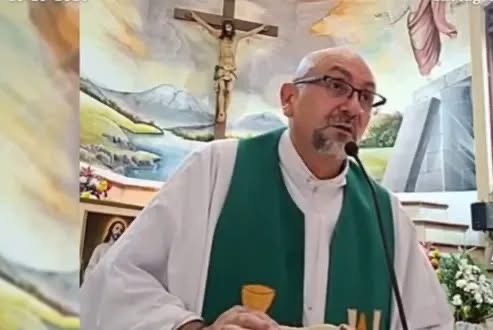
Image Description: Pastor Israel Ford pictured alongside his first wife, Lydia Ford, and second wife, Shakayla Ford, during the public announcement of their polygynous marriage at a church service in Ohio.
Image Caption: Israel Ford’s public defence of his second marriage has renewed discussion about biblical interpretations of marriage and the legal distinction between religious beliefs and civil marriage.
Image ALT Text: Israel Ford with Lydia Ford and Shakayla Ford during a church announcement about their polygynous marriage in Ohio.
Meta Description: US pastor Israel Ford defends taking a second wife, arguing that monogamy is not biblically required, prompting debate over Christian marriage teachings and Ohio law.
Tags: Israel Ford, Christian Marriage, Biblical Interpretation, Polygyny, United States Religion