Reported by Simon Daniel Yusuph l Journalist at Weng Global
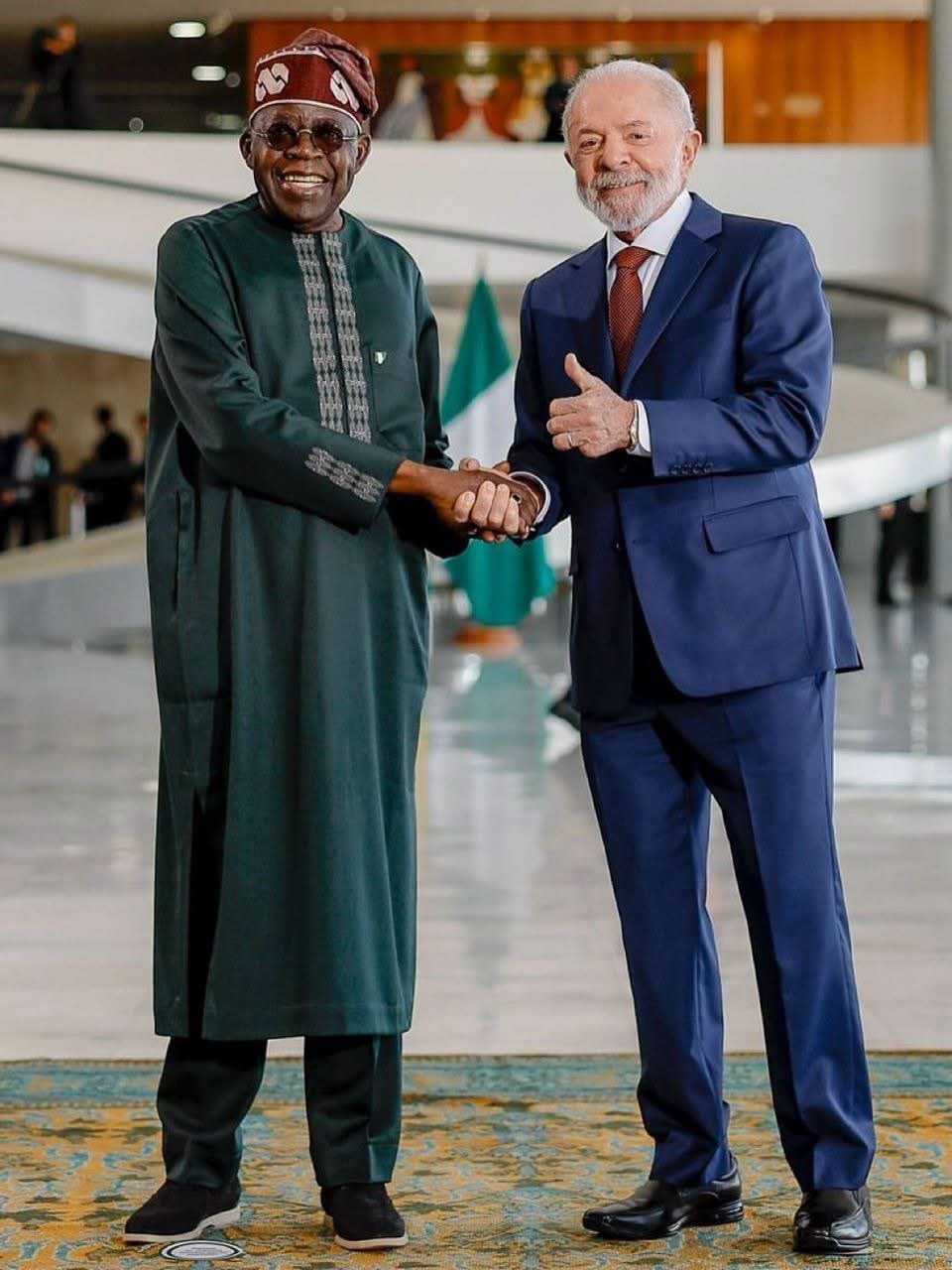
Nigerian President Bola Ahmed Tinubu has congratulated Brazilian President Luiz Inácio Lula da Silva on his re-election for an unprecedented fourth presidential term, expressing Nigeria’s readiness to strengthen bilateral relations with Brazil across trade, investment, agriculture, energy, education and technology.
In a congratulatory message issued from the State House in Abuja on October 26, 2026, Tinubu described Lula’s renewed mandate as an opportunity to deepen the longstanding friendship between Nigeria and Brazil and expand cooperation between the two countries.
The Nigerian president also called for stronger economic integration and closer collaboration between the two countries, describing Nigeria and Brazil as leading nations of the Global South with shared interests in an increasingly complex international environment.
Tinubu’s message comes after Lula secured victory in Brazil’s presidential election on Sunday, October 25, defeating Senator Flávio Bolsonaro in a closely contested runoff to win another four-year term.
According to Brazil’s Superior Electoral Court, Lula received 64,256,232 votes, representing 51.79 per cent of valid ballots, while Bolsonaro secured 59,826,041 votes, or 48.21 per cent. The result makes Lula the first person to be elected president of Brazil four times through the democratic process. (Tribunal Superior Eleitoral)
Tinubu Highlights Nigeria-Brazil Historical Relations
In his congratulatory message, Tinubu emphasised the importance of the historical relationship between Nigeria and Brazil, expressing confidence that Lula’s new mandate could create opportunities for stronger diplomatic and economic engagement.
The Nigerian president said the renewed leadership mandate offered both countries an opportunity to build on their existing relationship and pursue shared development objectives.
He also stressed the importance of cooperation between major countries in the Global South as they respond to changing economic conditions, international political developments and the need for a more inclusive global order.
Nigeria and Brazil occupy influential positions in their respective regions. Nigeria is one of Africa’s largest economies and most populous countries, while Brazil is the largest country in South America and a major agricultural, industrial and energy producer.
Their respective economic strengths create opportunities for cooperation in areas including agricultural production, food processing, industrial development, energy, aviation, education and scientific research.
Tinubu’s message signals Nigeria’s intention to use its diplomatic relationship with Brazil to advance economic interests and expand engagement with South American countries.
However, the congratulatory statement did not announce a new bilateral agreement, financial commitment or specific implementation timetable for the proposed areas of cooperation.
Trade and Investment Among Nigeria’s Priorities
Tinubu identified trade and investment as important areas in which Nigeria and Brazil could expand their partnership.
Stronger commercial relations could create opportunities for businesses in both countries to explore new markets, develop partnerships and increase the movement of goods and services.
For Nigeria, deeper engagement with Brazil could support efforts to diversify its international economic relationships, attract investment and strengthen domestic production across several sectors.
Brazil’s large consumer market and industrial capacity offer potential opportunities for Nigerian exporters and businesses seeking partnerships in South America.
Similarly, Nigeria’s population, regional market access and position within Africa could provide Brazilian companies with opportunities to explore commercial activities across the continent.
Nevertheless, converting diplomatic goodwill into measurable economic benefits would require practical measures, including improved business engagement, transparent investment arrangements, efficient trade procedures and stronger private-sector participation.
Tinubu did not provide figures for current bilateral trade or outline specific targets for increasing commercial exchanges in his October 26 message.
The scale of future progress will therefore depend on the actions taken by both governments and businesses to identify opportunities and address obstacles to cross-border trade.
Agriculture and Food Security in Focus
Agriculture and food security were among the sectors Tinubu specifically identified for expanded cooperation.
The issue is particularly relevant to Nigeria, where improving agricultural productivity, reducing post-harvest losses, expanding food processing and strengthening supply chains remain important development priorities.
Brazil has substantial experience in commercial agriculture, agricultural research and the production of commodities for domestic consumption and international markets.
Closer cooperation could create opportunities for knowledge exchange, research partnerships, agricultural technology development and investment in food processing.
Potential areas of engagement include improved farming methods, mechanisation, livestock production, storage facilities, seed development and agricultural value chains.
For Nigeria, the objective would be to ensure that international partnerships contribute to domestic production, create employment and improve the availability and affordability of food.
Cooperation could also help businesses in both countries identify opportunities in agricultural trade and processing.
However, the specific programmes that might emerge from the proposed partnership have not been announced. Any assessment of their likely impact would depend on the details of future agreements and the extent to which they address the needs of farmers, businesses and consumers.
Energy and Oil and Gas Cooperation
Tinubu also identified energy, oil and gas as priority areas for stronger Nigeria-Brazil relations.
Both countries have significant energy interests, although their production structures, infrastructure requirements and domestic market conditions differ.
Nigeria’s oil and gas industry remains central to its export earnings and public finances, while the country continues to pursue improvements in energy supply, infrastructure and the development of its broader energy sector.
Brazil has developed significant offshore oil production capabilities and has also invested in renewable energy, including biofuels and hydropower.
These different experiences could provide a basis for technical exchanges, investment discussions and cooperation on energy development.
Potential areas of mutual interest include offshore operations, energy infrastructure, research, technical training and the development of more diversified energy systems.
The reference to energy cooperation in Tinubu’s statement also creates room for discussions extending beyond conventional oil and gas activities.
Nevertheless, the Nigerian president did not announce a new energy project, identify participating companies or disclose any investment commitments associated with the proposed cooperation.
The next steps would require both governments and relevant industry stakeholders to establish the specific areas in which collaboration could deliver practical benefits.
Manufacturing, Science and Technology
Manufacturing, science and technology also featured in Tinubu’s proposed areas of cooperation.
For Nigeria, strengthening domestic manufacturing remains important to economic diversification, job creation and reducing dependence on imported finished products.
Partnerships with Brazilian companies and institutions could provide opportunities for industrial investment, technical training, research collaboration and knowledge transfer.
Scientific and technological cooperation could also support innovation and the development of solutions to shared economic and social challenges.
Possible areas for discussion include industrial research, agricultural technology, engineering, digital innovation and technical education.
However, meaningful technology partnerships require more than diplomatic declarations. They depend on investment, institutional cooperation, skills development and policies that encourage local participation.
Nigeria would need to ensure that any future arrangements support the development of domestic capacity rather than merely increasing imports or creating commercial opportunities without substantial local benefits.
Tinubu’s message establishes these sectors as areas of interest but does not specify particular projects or implementation arrangements.
Education, Aviation and Cultural Exchange
The Nigerian president also expressed interest in expanding cooperation in education, aviation and cultural exchange.
Educational partnerships could provide opportunities for academic collaboration, research, student exchanges and professional development.
Such engagement could help universities and research institutions in both countries establish relationships and share expertise in areas of mutual interest.
Aviation cooperation could also form part of broader efforts to improve connectivity and facilitate commercial, diplomatic and cultural exchanges between Nigeria and Brazil.
However, the congratulatory message did not announce a new direct air route, aviation agreement or student exchange programme.
Any future development in these areas would depend on further discussions, institutional arrangements and the decisions of the relevant authorities.
Cultural exchange could provide another avenue for strengthening relations between the two countries.
Nigeria and Brazil share historical connections shaped by the movement of people across the Atlantic and the enduring influence of African heritage in Brazilian society.
Brazil is home to a large population of African descent, and African cultural traditions have contributed significantly to its music, food, religion, language and wider cultural identity.
Nigeria’s diverse cultural traditions offer opportunities for exchanges involving music, literature, film, festivals, academic research and heritage preservation.
Such engagement could complement economic diplomacy by encouraging greater public understanding and people-to-people connections.
Nigeria and Brazil’s Shared Interests in the Global South
Tinubu’s message placed the proposed bilateral partnership within the broader context of cooperation among countries of the Global South.
The term generally refers to developing countries across Africa, Latin America, Asia and other regions that seek greater economic opportunities, stronger international representation and a more equitable role in global decision-making.
Nigeria and Brazil have interests in international trade, development financing, food security, energy transition and reform of multilateral institutions.
Closer coordination could provide opportunities for both countries to exchange views and pursue areas of common interest in international forums.
Tinubu said Nigeria remained committed to working with Brazil to strengthen multilateral cooperation and advance shared priorities in Africa, South America and across the Global South.
The statement reflects Nigeria’s interest in maintaining diplomatic relationships beyond its immediate region and developing partnerships that support its economic and international objectives.
For Brazil, stronger engagement with Nigeria could also provide opportunities to deepen relations with Africa’s largest population and one of its major diplomatic and economic actors.
However, cooperation between the two countries will depend on their ability to identify shared priorities while recognising differences in their domestic policies, economic circumstances and international interests.
What Happens Next?
Tinubu’s congratulatory message establishes a diplomatic foundation for further engagement but does not confirm that new agreements have been concluded.
The next stage would involve determining how the proposed cooperation in trade, agriculture, energy, manufacturing, education, aviation and technology could be translated into specific initiatives.
Government agencies, diplomatic representatives, businesses and relevant institutions could play important roles in identifying opportunities and developing proposals for cooperation.
For Nigeria, the effectiveness of the relationship will ultimately depend on whether it produces measurable outcomes, including increased trade, productive investment, technology transfer, employment opportunities and stronger institutional partnerships.
The same principle applies to Brazil, where expanded relations with Nigeria could create commercial and diplomatic opportunities in Africa.
Tinubu concluded his message by wishing Lula success in his new term on behalf of the Nigerian people.
Lula’s fourth presidential term presents an opportunity for both countries to review their existing relationship and identify practical ways to strengthen cooperation.
Whether that opportunity produces substantial economic and diplomatic gains will depend on the decisions and agreements that follow the congratulatory exchange.
Sources
- Brazil’s Superior Electoral Court
- Agência Gov, Brazilian Government News Agency
- Agência Brasil
- Federal Government of Nigeria, State House, Abuja