Reported by Simon Daniel Yusuph l Journalist at Weng Global
Four Nigerians — industrialist Aliko Dangote, World Trade Organization Director-General Ngozi Okonjo-Iweala, media entrepreneur Mo Abudu and Afrobeats star Burna Boy — have been named among 15 influential personalities featured in Forbes Africa’s inaugural Icons list for 2026.
The selection appears in the magazine’s October–November 2026 anniversary edition, marking 15 years of Forbes Africa covering the continent’s business leaders, cultural figures and influential personalities.
The list brings together individuals whose work has contributed to Africa’s economic development, international visibility, cultural influence and public life. It spans business, entertainment, music, literature, sports and leadership, reflecting the different ways African personalities have influenced the continent and reached audiences around the world.
Nigeria’s four representatives illustrate the country’s presence across several fields, from industrial development and international economic leadership to film production and global music.
Four Nigerians Represent Business, Leadership and Entertainment
The inclusion of Dangote, Okonjo-Iweala, Abudu and Burna Boy highlights four distinct areas of Nigerian influence.
Although their careers differ considerably, each has established a prominent position within their respective field, contributing to Nigeria’s visibility in continental and international affairs.
Aliko Dangote: Advancing African Industrial Development
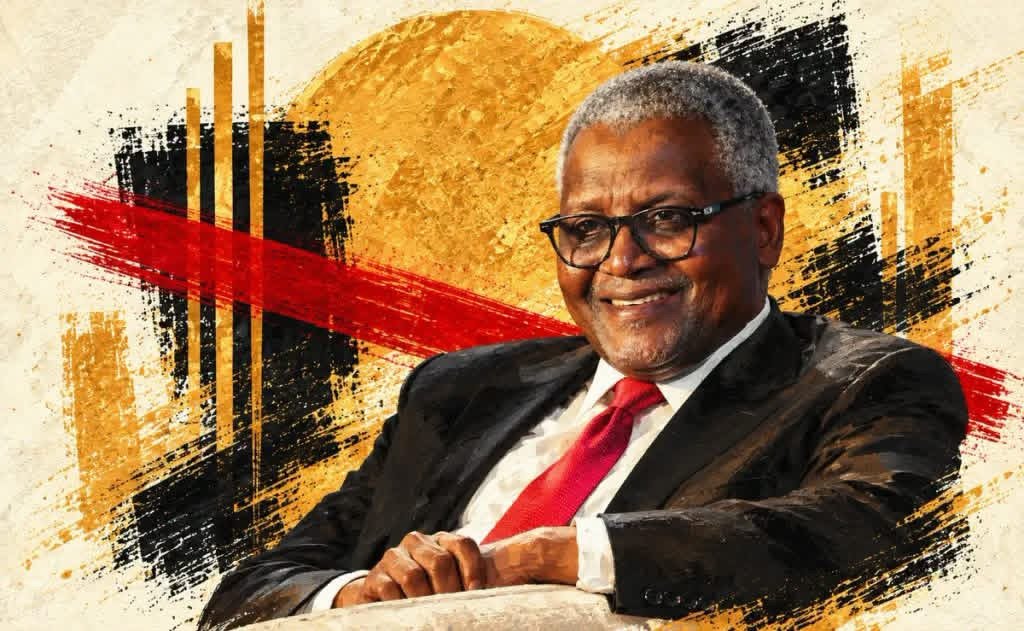
Aliko Dangote, president of the Dangote Group, is one of Africa’s most prominent industrialists. His business interests span several sectors, including cement, sugar, fertiliser and petroleum refining.
Dangote’s inclusion reflects the role of large African-owned enterprises in expanding industrial capacity, creating employment and developing businesses capable of serving markets beyond their home countries.
One of the most significant projects associated with his business group is the Dangote Petroleum Refinery in Lagos State. The facility represents a major private-sector investment in Nigeria’s downstream petroleum industry and forms part of broader efforts to increase domestic refining capacity.
Nigeria has historically depended heavily on imported refined petroleum products despite being one of Africa’s leading crude oil producers. Expanding domestic refining capacity is therefore relevant to discussions about energy security, foreign exchange demand, industrial development and the structure of the Nigerian economy.
However, the long-term benefits of large industrial investments depend on factors including production reliability, market conditions, distribution infrastructure and the wider economic environment.
Dangote’s recognition places African industrial entrepreneurship among the areas highlighted by Forbes Africa as part of its anniversary celebration.
Ngozi Okonjo-Iweala: Nigeria’s Influence in Global Economic Affairs
Ngozi Okonjo-Iweala, Director-General of the World Trade Organization (WTO), represents Nigeria’s contribution to international economic leadership.
A former Nigerian finance minister, Okonjo-Iweala has built a career spanning public finance, international development and global trade policy.
She became the WTO’s first woman and first African director-general in March 2021, bringing an African perspective to an institution responsible for overseeing international trade rules and providing a forum for negotiations among member economies.
Her position places her at the centre of discussions involving trade barriers, global supply chains, economic cooperation and the participation of developing economies in international commerce.
For African countries, these issues have practical consequences. Access to international markets can influence agricultural exports, manufacturing, investment, job creation and opportunities for businesses seeking to expand beyond national borders.
The continent’s ability to benefit from international trade also depends on infrastructure, financing, industrial capacity and the removal of barriers that make it difficult for African producers to compete.
Okonjo-Iweala’s inclusion in the Icons list highlights the significance of African representation in international institutions and the contribution of professionals whose work connects national economic priorities with global policymaking.
Mo Abudu: Expanding African Film and Television
Mo Abudu, founder and chief executive of EbonyLife Group, is recognised for her contribution to African media, film and television.
Through EbonyLife, Abudu has developed projects across entertainment and media production, helping bring Nigerian stories and creative talent to broader audiences.
The Nigerian film industry, commonly known as Nollywood, has become an important part of the country’s creative economy. Its output reaches audiences across Africa and the diaspora, while digital distribution has created additional opportunities for African productions to find international viewers.
Media entrepreneurs such as Abudu operate in a sector with considerable potential for employment, investment and cultural exchange. Film and television production can support actors, writers, directors, editors, technical crews, marketing professionals and other workers across the creative value chain.
The industry also gives African creators opportunities to present local experiences, languages, histories and contemporary social issues to audiences outside the continent.
Nevertheless, sustainable growth requires investment in production quality, distribution, intellectual property protection and the development of reliable revenue models.
Abudu’s recognition places African creative enterprise alongside business and public leadership in Forbes Africa’s anniversary selection.
Burna Boy: Taking Afrobeats to International Audiences
Burna Boy, whose real name is Damini Ebunoluwa Ogulu, represents Nigeria’s expanding influence in global music.
The Grammy-winning singer has built an international career through recorded music, live performances and collaborations, helping introduce Nigerian sounds and contemporary African musical influences to wider audiences.
His rise has coincided with the growing international visibility of Afrobeats, a broad musical movement shaped by Nigerian and other West African sounds and influences.
African music has increasingly reached listeners through streaming platforms, international festivals, major concert venues and collaborations across different markets.
This expansion has created opportunities for artists, producers, songwriters, managers, promoters and other professionals working in the music business.
It has also strengthened the commercial and cultural visibility of Nigerian music, although the benefits are not distributed equally across the industry. Independent artists and smaller creative businesses continue to face challenges involving financing, distribution, marketing and access to international markets.
Burna Boy’s inclusion recognises the influence of an artist whose career has helped carry Nigerian music beyond its domestic audience.
His presence on the list also illustrates how entertainment can contribute to a country’s international profile alongside more traditional measures of influence, such as economic output, industrial investment and diplomatic representation.
Full List: Forbes Africa’s 15 Icons for 2026
The inaugural selection features 15 personalities from different African countries and professional backgrounds.
According to the published list, the honourees are presented as influential figures rather than competitors in a numerical ranking. Their inclusion reflects their contributions across business, public service, culture, sports and other fields.
The full list comprises:
- Aliko Dangote — Nigeria: Industrialist and president of the Dangote Group.
- Ngozi Okonjo-Iweala — Nigeria: Director-General of the World Trade Organization and former Nigerian finance minister.
- Mo Abudu — Nigeria: Media entrepreneur and founder and chief executive of EbonyLife Group.
- Burna Boy — Nigeria: Grammy-winning Nigerian singer recognised for his international music career.
- Patrice Motsepe — South Africa: Businessman, mining entrepreneur and president of the Confederation of African Football.
- Strive Masiyiwa — Zimbabwe: Entrepreneur associated with telecommunications and technology businesses.
- Ellen Johnson Sirleaf — Liberia: Former Liberian president and Nobel Peace Prize laureate.
- Adrian Gore — South Africa: Businessman and founder of Discovery Group.
- Abdulrazak Gurnah — Tanzania-born: Nobel Prize-winning novelist whose literary work has received international recognition.
- Haile Gebrselassie — Ethiopia: Former long-distance running champion and one of Africa’s celebrated athletics figures.
- Didier Drogba — Côte d’Ivoire: Former international footballer known for his career with Chelsea and the Ivorian national team.
- Johann Rupert — South Africa: Businessman associated with the Richemont luxury goods group.
- Lupita Nyong’o — Kenya: Kenyan-Mexican actress recognised internationally for her film career.
- Trevor Noah — South Africa: Comedian, writer and former host of The Daily Show.
- Angélique Kidjo — Benin: Internationally acclaimed singer recognised for her contribution to African and world music.
The list brings together established business leaders, cultural figures, athletes, a former head of state and individuals whose work has influenced international institutions.
Their achievements differ in scale, purpose and impact, but the selection places them within a wider conversation about Africa’s contribution to global economic, cultural and social development.
Why Nigeria’s Four Representatives Matter
Nigeria’s representation is notable because the four personalities come from different sectors rather than a single industry.
Dangote’s work is associated with industrial investment and large-scale enterprise. Okonjo-Iweala represents international economic governance. Abudu’s career reflects the development of African media and entertainment businesses, while Burna Boy represents the international reach of Nigerian music.
Together, they demonstrate the breadth of Nigeria’s contributions to business, public service and cultural production.
The recognition also draws attention to the relationship between individual achievement and the wider systems needed to sustain progress.
For industrialists, long-term success depends partly on infrastructure, access to capital, policy consistency and the ability to compete in regional and international markets.
For professionals in international institutions, influence depends on expertise, diplomacy and the capacity to work within complex multilateral systems.
For the creative industries, international recognition can create opportunities, but sustained growth requires investment, effective copyright protection, fair compensation and access to distribution networks.
These distinctions matter because an individual’s recognition does not automatically mean that the wider sector or country has resolved its structural challenges.
Nigeria continues to face economic and development pressures, including infrastructure gaps, employment needs and the task of creating more opportunities for its growing population.
The achievements of prominent Nigerians can provide examples of what is possible, but converting individual success into broader public benefits requires effective institutions, investment and policies that support wider participation.
Forbes Africa Marks 15 Years of Covering the Continent
The Icons list forms part of Forbes Africa’s 15th-anniversary edition.
The magazine’s anniversary feature looks beyond conventional business rankings to recognise people whose ideas, innovations and public influence have helped shape Africa’s past, present and future.
Its selection of personalities from different countries and sectors reflects the diversity of African achievement, extending from enterprise and public leadership to sport, literature and entertainment.
The inclusion of figures from different generations and professional backgrounds also offers a broader view of influence. Some honourees are known primarily for building businesses, while others have achieved prominence through public service, artistic work or sporting accomplishments.
This approach places cultural influence alongside economic and institutional leadership in discussions about Africa’s place in the world.
It also reflects the growing international attention paid to African businesses, creative industries and professionals operating across national borders.
However, the list should be understood as an editorial recognition of selected individuals, not a comprehensive measurement of all African achievement or a definitive ranking of the continent’s most influential people.
Africa’s development involves millions of people working in less visible roles, including researchers, teachers, healthcare workers, entrepreneurs, farmers, public servants and community leaders.
Recognising prominent personalities can help bring attention to particular achievements, but the continent’s broader progress depends on contributions from across society.
What the Recognition Means for African Industries
The presence of business leaders, entertainers, athletes and public figures on one list highlights the variety of ways Africa engages with the global economy and international culture.
Business leaders can influence industrial capacity, investment and employment. Cultural figures can shape how audiences understand African experiences, while athletes and entertainers can create international platforms for African talent.
These forms of influence can complement one another, particularly when international recognition helps attract investment, expand markets or create new opportunities for younger professionals.
For Nigeria, the four honourees provide examples of achievements in sectors that have different economic structures but share an international dimension.
The country’s industrial and creative sectors face different challenges, yet both can benefit from stronger infrastructure, skills development, financing and institutions that allow businesses and individuals to operate sustainably.
For other African countries, the wider list offers examples of achievements emerging from different national circumstances.
It does not suggest that every country should follow the same development model. Rather, it illustrates that African influence can emerge through many routes, including enterprise, international leadership, artistic expression, sport and literature.
What Happens Next?
The publication of the 2026 Icons list places the 15 honourees in Forbes Africa’s anniversary coverage.
The recognition itself does not establish a new government policy, financial award or formal development programme. Its immediate significance lies in highlighting individuals whose work the magazine considers influential in shaping Africa’s past, present and future.
For the four Nigerians, their inclusion adds another international platform for the business, public service and creative work associated with their careers.
The broader question is how recognition of prominent Africans can contribute to sustained opportunities for businesses, institutions and emerging talent across the continent.
For Nigeria, that means creating conditions in which industrial investment can support productive capacity, international expertise can strengthen economic engagement, and the creative industries can provide sustainable livelihoods for a wider pool of professionals.
The Forbes Africa selection offers a snapshot of prominent African achievement in 2026. Its significance ultimately rests not only on the names included, but also on the wider conversations it encourages about African enterprise, leadership, creativity and global influence.
Weng Global – stories beyond borders
Sources
- Forbes Africa, October–November 2026 anniversary edition, The Icons feature.
- Voice of Nigeria, report on Burna Boy’s inclusion in the Forbes Africa Icons list, October 11, 2026.
- Streamdorm, report on the 15 personalities named in Forbes Africa’s 2026 Icons selection, October 10, 2026.