Reported by Simon Daniel Yusuph l Journalist at Weng Global
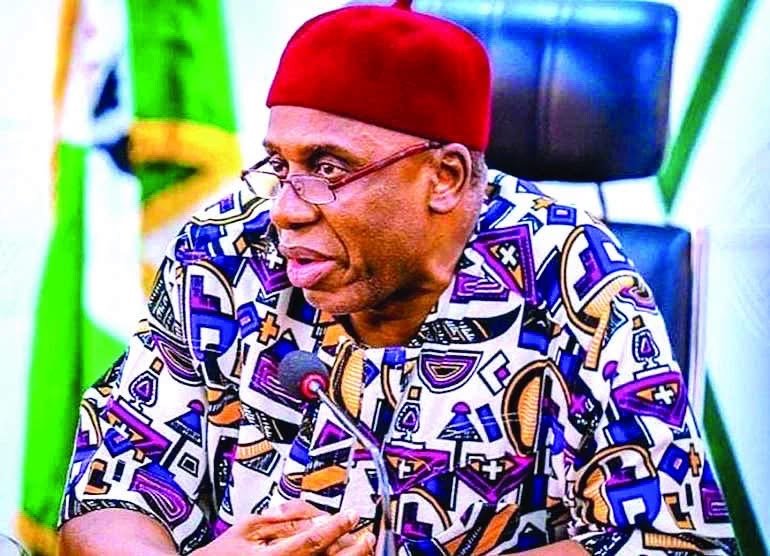
African Democratic Congress (ADC) vice-presidential candidate Rotimi Amaechi has pledged to prioritise the proposed Gelegele Seaport in Edo State if the party wins Nigeria’s 2027 presidential election, saying an ADC-led administration would also pursue other planned deep seaport projects across the country.
Amaechi made the commitment on Thursday, October 8, 2026, during an ADC stakeholders’ meeting in Edo State, where he discussed the prospects of developing Gelegele to a standard comparable with the Lekki Deep Seaport in Lagos.
The former minister of transportation also claimed that he oversaw the Lekki port project from its early construction stages through to completion. He accused President Bola Tinubu and Lagos State Governor Babajide Sanwo-Olu of receiving credit for a project he said he had supervised under former President Muhammadu Buhari.
His remarks have brought renewed attention to the proposed Gelegele port, a long-discussed infrastructure project intended to strengthen Edo State’s access to maritime trade, support exports and attract investment.
However, the pledge remains a campaign commitment. Delivering a functioning seaport would require clear project planning, financing, regulatory approvals, construction and supporting transport infrastructure.
Amaechi Says Gelegele Port Would Be a Priority
According to reports of the stakeholders’ meeting published by Nigerian media organisations, Amaechi was responding to a question about whether an ADC government would develop the proposed Gelegele Seaport to match the capacity and standard of the Lekki Deep Seaport.
He said the party would pursue the project if it assumed power after the 2027 election, adding that he would raise the proposal with the president for approval if elected vice-president.
Amaechi’s position places the proposed Edo State port within a broader infrastructure agenda that he says an ADC administration would pursue. He also referred to planned deep seaport projects in Bonny, Akwa Ibom and Warri, arguing that they could help expand Nigeria’s maritime infrastructure and improve the movement of goods.
The former Rivers State governor said the Buhari administration had approved several port projects, although funding difficulties prevented some from progressing as intended.
He maintained that an incoming ADC government would work towards completing or reviving the proposed developments.
Amaechi also estimated that between $400 million and $500 million could be sufficient to begin constructing the proposed seaports, with further expansion undertaken later.
That estimate was presented as his assessment of the potential cost. It should not be treated as an independently verified budget for Gelegele or the other proposed ports. The cost of each project would depend on its design, dredging requirements, access infrastructure, cargo-handling facilities, financing arrangements and construction schedule.
Lekki Deep Seaport: Amaechi’s Claim and the Project’s Documented History
A central part of Amaechi’s remarks concerned his role in the development of the Lekki Deep Seaport, one of Nigeria’s major maritime infrastructure projects.
He claimed that he built the port from the beginning to completion while serving as transportation minister under Buhari. He said he had resigned to contest the presidency before the facility was commissioned and alleged that Tinubu and Sanwo-Olu subsequently received credit for its development.
These statements represent Amaechi’s account of his contribution and his political criticism of the two leaders. His assertion that he built the port should be distinguished from the documented ownership, financing and construction arrangements of the project.
Information published by the Nigerian Ports Authority shows that the concept of the Lekki Deep Seaport received presidential endorsement on February 27, 2002, during the administration of former President Olusegun Obasanjo.
The project subsequently passed through further approval and concession processes. The Federal Executive Council approved it in May 2014, while the concession agreement was executed in December 2018.
The authority’s published project information identifies the port as a public-private partnership involving Lekki Port LFTZ Enterprise Limited, the Nigerian Ports Authority and the Lagos State Government. The listed equity structure allocates 75 per cent to the private investor or manager, five per cent to the Federal Government through the Nigerian Ports Authority and 20 per cent to the Lagos State Government.
The authority also identifies China Harbour Engineering LFTZ Enterprise as the engineering, procurement and construction contractor. Early works began in December 2017, while the presidential flag-off for the project took place on March 29, 2018.
The project’s estimated total cost was put at $1.34 billion in the Nigerian Ports Authority’s published information.
These records show that the Lekki port developed through a process involving multiple administrations, public institutions, private investment and construction contractors. They also demonstrate why responsibility for a major infrastructure project cannot automatically be reduced to a single individual’s claim.
Amaechi served as transportation minister during a significant period of the project’s development and has said he supervised its construction. The available project records, however, describe a longer institutional history beginning before the Buhari administration and a financing and construction structure involving several parties.
The dispute over political credit does not, by itself, establish that any of the individuals involved acted improperly. Nor does it remove the importance of distinguishing government approvals, ministerial oversight, private-sector investment and actual construction work.
For voters assessing the competing claims, the key questions are what each administration approved, what each institution contributed and how the project moved from planning to operation.
Gelegele Seaport Has Been Discussed for Years
The proposed Gelegele Seaport is not a new idea introduced by Amaechi during the current political campaign.
Edo State has pursued plans to develop a port around Gelegele and the Benin River area for several years. The state government has previously described the project as a potential driver of trade, employment, industrial development and agricultural exports.
In September 2018, the Edo State Government announced that it had signed an investment agreement with China Harbour Engineering Company for the development of the Benin River Port in the Gelegele area. That announcement formed part of wider efforts to attract investment into the state’s infrastructure and industrial sectors.
The project has also been discussed in terms of creating a port linked to access roads, an industrial park and other facilities needed to move cargo efficiently between maritime transport and inland markets.
In a separate update published in 2022, the Edo State Government announced that the federal and state governments had commenced a bidding process for the development of the Benin River Port. The proposed project included a container terminal designed for a stated capacity of 300,000 twenty-foot equivalent units annually, alongside cargo handling, warehousing and related port services.
The state government said the arrangement was intended to attract a private-sector partner with the technical expertise and financial capacity to design, build, finance, operate, maintain and eventually transfer the relevant infrastructure under the proposed arrangement.
These announcements demonstrate that the project has previously moved through planning, investment discussions and procurement-related processes. They do not, on their own, establish that the port has reached full construction or operational status.
An Edo State Government public-private partnership project pipeline published in 2025 also listed the Benin Inland Container/Gelegele Seaport concession at the concept stage, with an estimated capital investment of approximately $500 million.
That entry is particularly relevant to the cost estimate cited by Amaechi. It indicates that a figure in that range has also appeared in state planning material, but it does not prove that the estimate covers precisely the same scope of work or that the money has been secured.
The project’s present status, final cost, financing commitments and construction timetable would need to be confirmed through updated official records before any definitive claims could be made about when the port will be completed.
Why Gelegele Could Matter to Edo State and Nigeria
A functioning seaport in Edo State could offer economic opportunities beyond the immediate port location. Its potential value would depend on whether it could attract sufficient cargo, operate competitively and connect effectively with production centres and markets.
Agricultural producers, manufacturers and traders need reliable ways to move goods from farms and factories to domestic and international buyers. A port supported by effective road links, storage facilities and cargo-handling services could help reduce some logistical barriers faced by businesses.
For Edo State, a viable port could also encourage investment in warehousing, freight services, processing industries and other businesses that depend on the movement of goods.
The benefits would not be automatic. A port needs shipping services, efficient customs processes, dependable electricity, secure transport routes, sufficient cargo volumes and competitive operating costs. Without these supporting conditions, even a major infrastructure investment may struggle to deliver the expected economic returns.
The project would also need to account for the interests of host communities. Land use, environmental safeguards, access to fishing and other local livelihoods, compensation where applicable, and the distribution of employment opportunities are important considerations for a development of this scale.
The Edo State Government has previously described the Benin River Port as part of a wider development plan that includes access roads and industrial facilities. That wider approach matters because ports work best when they are connected to productive economic activity rather than operating as isolated infrastructure.
If developed effectively, the project could provide another route for moving cargo and support efforts to diversify economic activity in the state. But its actual contribution would depend on commercial viability, implementation and long-term management.
Other Proposed Deep Seaports
Amaechi also referred to planned deep seaport projects in Bonny, Akwa Ibom and Warri, saying an ADC administration would work to revive or develop them.
He argued that the projects had been approved under Buhari but faced financial constraints. He cited an estimated depth of 18 metres for the proposed Bonny port and said the proposed Akwa Ibom location had a natural depth of between 17 and 18 metres.
He also said a port in the Warri area had been considered partly to support the transportation of iron ore from northern Nigeria.
The technical details and current status of each proposal would need to be checked separately. Port depth alone does not determine whether a project is commercially viable. Developers must also consider dredging, navigation channels, coastal conditions, cargo demand, land access, environmental impacts and the cost of connecting the facility to the national transport network.
A commitment to develop multiple ports would therefore require a project-by-project assessment rather than treating the proposals as a single undertaking.
It would also require a clear explanation of which projects are ready for construction, which remain at the planning stage and which would need additional feasibility studies or approvals.
Funding, Accountability and the 2027 Election
Amaechi’s pledge comes as political parties and candidates prepare to present their infrastructure and economic development plans ahead of the 2027 general election.
Infrastructure commitments can be important to voters because ports, roads and rail links can affect employment, trade costs, regional development and the competitiveness of Nigerian businesses.
However, campaign promises should be assessed against practical details. For Gelegele, those details include the proposed ownership and concession structure, the amount of financing required, the readiness of the project design, the status of federal approvals and the timeline for construction.
Amaechi’s estimate of $400 million to $500 million for beginning construction also raises questions about what the initial funding would cover and how subsequent phases would be financed. The state government’s earlier project pipeline estimate provides useful context, but it is not a substitute for a current, approved financial plan.
If the ADC wins the election, implementation would depend on decisions by the incoming federal administration, cooperation with the Edo State Government, regulatory approvals and the participation of investors or contractors under the eventual project structure.
A vice-president cannot independently guarantee that a port will be built. Such a project would require decisions and coordinated action by the president, relevant federal ministries and agencies, state authorities, regulators and private-sector participants.
The same scrutiny should apply to Amaechi’s claims about Lekki. Public records provide a way to assess the project’s history and institutional arrangements without relying exclusively on political statements from any side.
What Happens Next?
The next important development for Gelegele is a clear, updated account of its project status from the Edo State Government and the relevant federal authorities.
That account should establish whether the project has completed the required feasibility and environmental assessments, whether a private-sector partner has been selected under a valid process, what financing has been committed and when construction could realistically begin.
The government should also clarify the proposed scope of the port, including its capacity, access roads, navigation channel, supporting industrial facilities and arrangements for host communities.
If the ADC makes the project part of its formal election programme, voters will be able to assess the pledge more effectively if the party publishes a detailed plan identifying its funding strategy, delivery timetable and expected economic outcomes.
For now, Amaechi has made a political commitment to place Gelegele and other proposed ports on the agenda of a possible ADC administration. The promise has renewed attention on an infrastructure project that Edo State has pursued for years, but the pledge itself does not establish that construction will begin or that funding has been secured.
The central test will be whether political commitments are translated into a viable, transparent and adequately financed project capable of delivering lasting benefits to Edo State and Nigeria.
Weng Global – stories beyond borders
Sources
- Nigerian Ports Authority — official project information on the Lekki Deep Seaport, including its development history, concession arrangements, equity structure and estimated project cost.
- Edo State Government — official announcements on the Benin River Port, Gelegele Seaport development plans and the 2022 bidding process.
- Edo State Government — 2025 Public-Private Partnership Pipeline Projects document.
- Vanguard — reporting published on October 8, 2026, on Amaechi’s statements about the Lekki Deep Seaport and his pledge concerning Gelegele.
- News Central Television — reporting published on October 9, 2026, on Amaechi’s remarks and his account of the Lekki project.