Reported by Simon Daniel Yusuph l Journalist at Weng Global
A new Yiaga Africa survey has found that 84 per cent of Nigerians are likely or very likely to vote in the 2027 general elections, but the willingness to participate is being tempered by concerns over insecurity, declining confidence in the electoral commission and the growing influence of money in politics.
The findings are contained in the third edition of Yiaga Africa’s National Voting Intentions Survey, known as NVIS 3.0, which examined voter intentions and attitudes ahead of Nigeria’s 2027 elections.
The survey, conducted in September 2026, involved 2,470 Nigerians aged 18 and above across the 36 states and the Federal Capital Territory. Yiaga Africa said the latest exercise used telephone interviews and, for the first time in the series, face-to-face interviews in rural communities.
The survey presents a mixed picture for Nigeria’s next general election: many citizens remain willing to vote, but a significant proportion remain uncertain about candidates, fearful of electoral violence or unconvinced that electoral institutions will deliver a credible process.
84% Express Willingness to Vote
According to Yiaga Africa, 84 per cent of respondents said they were either “likely” or “very likely” to vote in the 2027 elections.
The figure represents an increase from the 77 per cent recorded in the first National Voting Intentions Survey in December 2025 and the 73 per cent recorded in the second round in March 2026.
However, the organisation cautioned that the headline figure should not be interpreted as evidence that all those expressing an intention to vote are firmly committed to doing so.
The share of respondents describing themselves as very likely to vote has fallen gradually, from 52 per cent in the first survey to 48 per cent in the second and 47 per cent in the latest survey.
Yiaga Africa also found that only 41 per cent of respondents were both likely to vote and certain about the candidate they intended to support.
This suggests that willingness to participate does not necessarily translate into a settled voting decision.
For political parties and candidates, the findings point to a large pool of voters who remain open to persuasion as the election approaches.
Insecurity Remains the Biggest Barrier
Security emerged as one of the strongest concerns in the survey.
Yiaga Africa reported that 61 per cent of respondents said fear of violence could prevent them from voting in 2027.
The concern was considerably higher in the North-East, where 78 per cent of respondents identified fear of violence as a possible barrier to participation.
At the same time, 83 per cent said improved security would make them more likely to vote.
The findings place election security at the centre of efforts to improve voter participation.
Nigeria continues to face different forms of insecurity across parts of the country, including terrorism, banditry, communal violence and other threats that can affect movement and public gatherings.
For voters, an election may therefore involve more than deciding which candidate to support. It can also depend on whether citizens believe they can travel to polling units and return home safely.
Yiaga Africa’s findings suggest that confidence in physical security will be an important factor in determining whether expressed willingness to vote becomes actual turnout.
Confidence in INEC Has Fallen
The survey also identified concerns about public trust in the Independent National Electoral Commission.
Only 34 per cent of respondents said they were confident that INEC would conduct credible elections, according to the latest findings.
That represents a decline from 45 per cent recorded in both of the previous two rounds of the survey.
Meanwhile, 39 per cent said they were not confident in INEC.
The level of distrust was particularly pronounced in parts of southern Nigeria, with 62 per cent of respondents in the South-East and 57 per cent in the South-South expressing a lack of confidence, according to Yiaga Africa.
The findings do not establish that INEC will conduct an uncredible election. Rather, they measure citizens’ perceptions ahead of the polls.
Those perceptions matter because confidence in the electoral management body can influence whether voters believe participating is worthwhile.
Voters Trust Electoral Technology More Than Institutions
One of the more notable findings concerns the relationship between citizens and electoral technology.
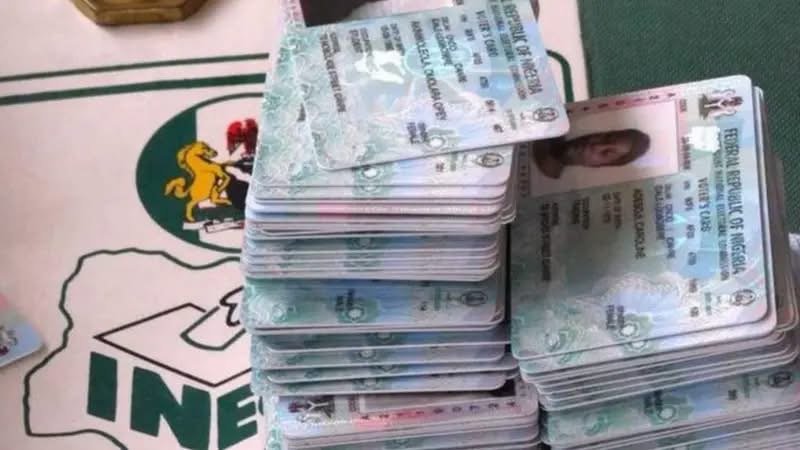
Yiaga Africa reported that 49 per cent of respondents expressed trust in the use of the Bimodal Voter Accreditation System and the INEC Result Viewing Portal for accreditation and results transmission.
At the same time, confidence in INEC as an institution was considerably lower.
Yiaga Africa also said awareness of recent electoral reforms had increased substantially, from 24 per cent in December 2025 to 62 per cent in the latest survey.
The distinction is important.
It indicates that some voters may have confidence in specific technological mechanisms intended to strengthen the electoral process without necessarily having the same level of confidence in the institution responsible for managing that process.
For INEC, the challenge is therefore not simply deploying technology but demonstrating that the systems are reliable, transparent and consistently implemented.
Economy and Security Could Shape Voting Decisions
The survey suggests that Nigerians are likely to approach the 2027 elections with practical concerns about leadership and living conditions.
Yiaga Africa found that the desire for a change in leadership was the leading motivation for voting, cited by 49 per cent of respondents.
The economy and jobs followed at 38 per cent, while security was identified by 36 per cent.
The findings indicate that voters are likely to assess candidates partly on their ability to address issues affecting everyday life.
Economic conditions, employment opportunities and personal security are not abstract campaign themes for many Nigerians. They directly influence household finances, access to opportunities and perceptions of government performance.
Yiaga Africa reported that 54 per cent of respondents disapproved of the President’s performance, while 71 per cent rated the economy as poor or very poor.
These are survey responses rather than independent assessments of government performance.
Nevertheless, they provide an indication of the issues that could influence voter preferences when citizens make decisions at the ballot box.
Young Nigerians Show Weaker Voting Intentions
The survey also highlighted a significant generational difference.
According to Yiaga Africa, only 40 per cent of young respondents said they were very likely to vote, compared with 64 per cent among respondents aged 61 and above.
Young respondents also reported greater fear of electoral violence, lower confidence in INEC and heavier reliance on social media for election information.
The findings are particularly significant for Nigeria because young people represent a substantial part of the country’s voting-age population.
If younger citizens remain less committed to voting than older generations, the pattern could influence overall turnout and the issues that receive attention during campaigns.
It also places greater responsibility on electoral institutions, political parties, civil society groups and the media to provide credible information that can reach younger voters.
Many Voters Have Not Chosen Candidates
Despite the high overall intention to vote, the survey found that many Nigerians have not yet decided who they will support.
Only 41 per cent were described as likely to vote and already certain about their candidate choice.
TheCable reported that about 44 per cent of eligible voters surveyed had yet to settle on a candidate.
This creates a potentially significant group of undecided voters ahead of the election.
It also means that early campaign narratives may not necessarily determine the final outcome.
Candidates and political parties will have an opportunity to compete for voters who are currently undecided, particularly on issues such as security, the economy, employment and governance.
However, the survey does not predict which candidate will win the 2027 election.
It measures voter intentions and perceptions at the time the research was conducted.
Concerns Over Vote Buying and Monetisation
Yiaga Africa also identified the monetisation of politics as another threat to meaningful electoral participation.
The organisation’s latest findings suggest that some Nigerians are willing to participate but remain concerned about the influence of money on political competition.
Vote buying has remained a recurring issue in Nigerian elections, with civil society organisations and election observers repeatedly calling for stronger enforcement against electoral inducement.
The challenge extends beyond individual voters accepting money.
The wider concern is whether financial inducement can distort political competition, influence voter choices and weaken citizens’ confidence in the principle that elections should be determined by informed choices.
Yiaga Africa has therefore called for political parties and candidates to sign and honour an enforceable anti-vote-buying pledge.
Judiciary Also Faces Public Confidence Challenge
The survey identified concerns beyond INEC and security agencies.
Yiaga Africa reported that 63 per cent of respondents had little or no confidence that the judiciary would resolve electoral disputes fairly.
The figure rose to 81 per cent in the South-South.
The finding is significant because courts play an important role in resolving disputes arising from elections.
Where citizens do not believe electoral disputes will be fairly determined, confidence in the broader democratic process can be weakened.
However, the survey measures public perception and should not be interpreted as a judicial assessment of the Nigerian courts.
The findings nevertheless raise questions about the importance of public communication, timely resolution of electoral cases and confidence in institutions responsible for resolving disputes.
Yiaga Africa Calls for Urgent Action
Yiaga Africa has urged government institutions and other election stakeholders to respond to the concerns identified in the survey before voting begins.
The organisation called on the Federal Government and security agencies to publish a threat-based national election security plan through the Inter-Agency Consultative Committee on Election Security by November 2026.
It said the plan should prioritise areas facing heightened security risks while focusing on protecting voters as well as election materials.
Yiaga Africa also urged INEC to make a public commitment to real-time uploading of polling-unit results to IReV and to publish and test its results-management protocol.
It called for targeted confidence-building measures in the South-East and South-South.
The organisation further asked the judiciary to resolve pre-election candidacy disputes before ballot papers are printed and to publish clear timelines for election petitions.
Political parties and candidates were urged to compete with costed plans addressing security and economic concerns while respecting electoral peace commitments.
Election Security Will Be Crucial
The findings reinforce a central challenge for the 2027 election: Nigerians may be willing to vote, but that willingness can be undermined by conditions surrounding the election.
Security is one of the clearest examples.
If voters fear violence, they may choose not to travel to polling units even if they strongly support the democratic process.
Yiaga Africa’s finding that 83 per cent of respondents would be more likely to vote if security improved therefore carries practical significance.
Election security will require coordination between security agencies, INEC, political parties, community leaders and other stakeholders.
It will also require authorities to communicate clearly about security arrangements so voters understand what measures are being taken to protect them.
What the Survey Does — and Does Not — Show
The Yiaga Africa survey provides a snapshot of voter attitudes in September 2026.
It does not determine actual turnout in January 2027, nor does it predict the winner of the presidential election.
Voter intentions can change as campaigns intensify, candidates emerge, political alliances shift and new economic or security developments occur.
The 84 per cent figure should therefore be understood as an indication of current willingness rather than a guarantee that 84 per cent of registered voters will appear at polling units.
The gap between intention and participation remains one of the central issues identified by the survey.
Why the Findings Matter
The latest Yiaga Africa findings present a paradox for Nigeria’s 2027 elections.
On one hand, a large majority of surveyed Nigerians say they are likely to vote.
On the other hand, fear of violence, weak institutional trust and uncertainty about the credibility of the electoral process could prevent some of those citizens from turning up.
That makes the period before the election especially important.
Political parties must convince voters through credible programmes rather than relying solely on mobilisation.
INEC must demonstrate that electoral technology, voter information and results management systems can operate transparently.
Security agencies must create conditions in which citizens can vote without fear.
The judiciary must maintain public confidence in its ability to resolve disputes according to the law.
Civil society organisations and the media also have a role in providing accurate voter information and countering misinformation.
The survey therefore goes beyond measuring whether Nigerians intend to vote. It highlights the conditions that could determine whether that intention becomes actual participation.
What Happens Next?
The 2027 election campaign will continue to take shape as political parties and candidates intensify their engagement with voters.
For INEC, the focus will include preparations for the election, voter information, technology, logistics and results management.
For security agencies, preparations will need to address areas identified as vulnerable to violence and intimidation.
For political parties, the large number of undecided voters represents an opportunity to present their policies and persuade citizens on the issues they consider most important.
For voters, the period ahead will provide further opportunities to assess candidates, compare policies and decide who deserves their support.
The most important test will ultimately come on election day, when the willingness measured in the survey is translated into actual participation.
Until then, the 84 per cent figure should be viewed as an encouraging indication of democratic interest — but one accompanied by significant warnings about security, institutional trust and the credibility of the electoral process.
Weng Global — Stories beyond borders
Sources
- Yiaga Africa
- Independent National Electoral Commission (INEC)
- TheCable
- THISDAY
- Premium Times