Reported by Simon Daniel Yusuph l Journalist at Weng Global
Governors of Nigeria’s six North-East states have raised ₦10.8 billion in counterpart funding for the proposed North-East Air Shuttle, a regional aviation initiative designed to improve connectivity, reduce travel difficulties and strengthen economic links across the sub-region.
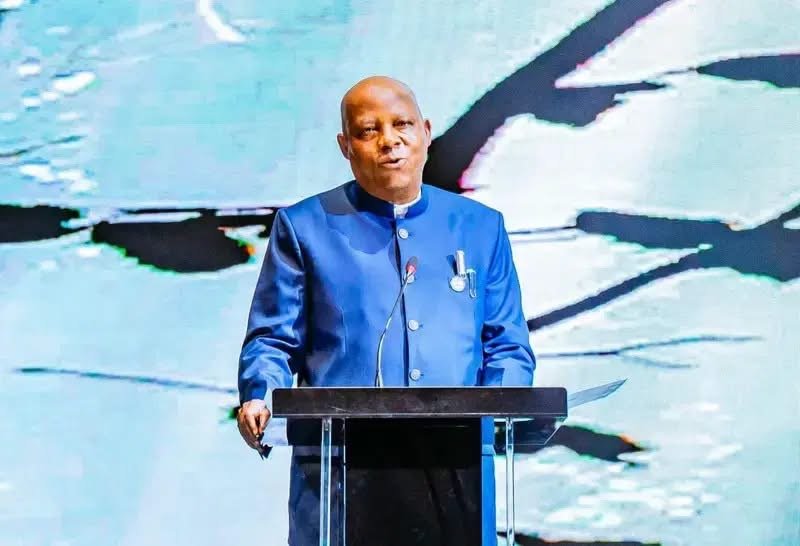
Borno State Governor and Chairman of the North-East Governors’ Forum (NEGF), Babagana Zulum, disclosed the development on Friday, October 2, 2026, during the opening of the forum’s 10th meeting in Maiduguri, Borno State.
Zulum said the remaining counterpart contributions were expected to be remitted before the end of October, with the governors working towards the commencement of flight operations.
Regional Air Shuttle Moves Closer to Take-Off
The North-East Air Shuttle has been discussed by the six states for several years as a possible response to persistent transportation and connectivity challenges affecting the region.
The participating states are Adamawa, Bauchi, Borno, Gombe, Taraba and Yobe.
According to Zulum, ₦10.8 billion has so far been realised from the governors as counterpart contributions towards the establishment of the regional air shuttle.
He said the governors would continue working together to ensure that the outstanding contributions are received within the stated timeframe and that the project progresses towards actual flight operations.
“The establishment of the North East Air Shuttle is a significant step towards improving connectivity within the sub-region, and we look forward to the commencement of these operations soon,” Zulum said, according to reporting from the meeting.
The announcement represents a further development in a project that has previously faced questions around financing, aircraft acquisition and the practical arrangements required to establish a regionally owned airline.
A Plan That Dates Back Several Years
The current funding effort follows earlier decisions by the six states to establish a joint regional airline.
In December 2025, Gombe State disclosed that its government had approved ₦5 billion as its contribution to the proposed shuttle. The plan at that time was for each of the six states to contribute ₦5 billion, producing a combined ₦30 billion fund for the acquisition of two aircraft.
The Gombe State Commissioner for Finance and Economic Development, Muhammad Gambo Magaji, said the initiative had originated in 2020, when the six states jointly paid ₦69 million in consultancy fees connected with establishing the regional shuttle.
The earlier financing arrangement contemplated two options: borrowing about $20 million for aircraft acquisition or having the states contribute directly. The governors opted for contributions from the six states.
The proposed airline was expected to operate between cities in the North-East while also connecting the region with other parts of Nigeria.
The latest announcement of ₦10.8 billion therefore indicates that funding for the project is progressing, although the total financing previously discussed by the states has not yet been fully realised.
Why Air Connectivity Matters to the North-East
The six North-East states cover a large geographical area, making efficient transportation important for commerce, government administration, education, healthcare, tourism and movement of people.
Road transport remains the dominant form of inter-state movement for many residents, but long distances and the condition of some major transportation corridors can make journeys time-consuming.
The governors have previously raised concerns about road and rail infrastructure linking the region with other parts of Nigeria.
At their 10th meeting in Bauchi in May 2024, the North-East Governors’ Forum said the Enugu-Maiduguri road corridor was in poor condition and that the railway linking Enugu to Maiduguri had been destroyed. The governors argued that the corridor was important for regional trade, integration and national unity.
A regional air service would not replace road or rail infrastructure. Instead, its intended role would be to provide another transportation option for passengers travelling between major cities and commercial centres.
For residents travelling long distances within the sub-region, a functioning regional air service could potentially reduce journey times, although the eventual effect on ticket prices will depend on operational costs, aircraft capacity, route frequency, airport charges and other commercial factors.
Earlier Funding Commitment
The latest ₦10.8 billion figure should be understood alongside the ₦30 billion financing framework announced earlier in 2026.
In January, reports based on statements from Gombe officials said the six governors had agreed to contribute ₦5 billion each to acquire two aircraft.
The proposal was intended to create a regionally owned airline capable of serving the six states and destinations elsewhere in Nigeria.
At the time, officials argued that a regional carrier could provide more stable air connectivity because commercial airlines had previously entered the North-East market and subsequently withdrawn services.
That concern remains relevant to the latest plan. A regionally backed carrier would be intended to provide continuity of service rather than relying entirely on private airlines to determine which North-East routes are commercially attractive.
However, establishing an airline involves more than purchasing aircraft. The project will require appropriate regulatory approvals, qualified personnel, maintenance arrangements, airport infrastructure, safety systems, route planning and a sustainable operating model.
Regulatory and Operational Questions Remain
The financial commitment announced by the governors represents one part of the process.
Earlier reporting by aviation specialist publication ch-aviation noted that details concerning the aircraft to be acquired and regulatory timelines had not been disclosed. It also reported that the Nigeria Civil Aviation Authority (NCAA) had not received a licence application from the proposed North-East Air Shuttle at the time of its January 2026 report.
That information is important because raising funds does not by itself authorise an airline to begin commercial passenger operations.
Before flights can commence, the proposed carrier will need to satisfy the applicable Nigerian aviation regulatory requirements.
The precise timetable for obtaining those approvals and launching commercial services has not been fully detailed in the latest announcement.
Zulum, however, said the governors were looking toward the commencement of operations after the outstanding counterpart funds are received.
The Six States and Their Shared Interest
The North-East Air Shuttle is a joint initiative involving Adamawa, Bauchi, Borno, Gombe, Taraba and Yobe.
The six states have different economic profiles and transport needs, but they share geographical proximity and common regional challenges.
Agriculture remains important across the sub-region, while livestock, trade, education, government activities and emerging investment opportunities generate regular movement between states.
Improved air connectivity could therefore serve business travellers, government officials, professionals, students and other passengers who need to move quickly across long distances.
The proposed regional carrier could also provide connections from the North-East to major Nigerian cities outside the zone, depending on the final route structure.
Wider Regional Development Agenda
The air-shuttle project was discussed during the wider 10th meeting of the North-East Governors’ Forum, where regional security and economic development were also major issues.
Zulum used the meeting to highlight several initiatives aimed at strengthening the region’s economy and infrastructure.
Among them was the planned development of 10-megawatt solar power plants in each of the six states.
The forum also discussed livestock development, agricultural production, post-harvest management and regional economic recovery.
Zulum further highlighted the Federal Government’s planned $1 billion Household Prosperity and Economic Social Protection Project for the North-East and developments around oil exploration in Bauchi State.
The air-shuttle project is therefore being pursued as part of a broader regional development strategy rather than as an isolated aviation initiative.
Security Remains Central to Connectivity
Security is another factor affecting transportation and economic activity in the North-East.
The region has experienced more than a decade of insurgency and related humanitarian and economic disruptions, particularly in parts of Borno and neighbouring states.
At the latest governors’ meeting, Zulum acknowledged improvements in security while stressing that continued attention was necessary.
He attributed progress to the efforts of security agencies, cooperation among states and non-kinetic programmes, while warning against complacency.
For the proposed airline, maintaining safe airport operations and secure transportation corridors will remain essential.
A functioning regional aviation network could provide an alternative means of movement when road journeys are difficult, but its success will ultimately depend on the ability of the operators and relevant authorities to maintain reliable and safe services.
The Question of Travel Costs
The stated objective of improving connectivity comes as residents and businesses across Nigeria continue to face transportation-cost pressures.
However, while the proposed shuttle is intended to improve regional transportation, the available announcement does not establish specific future ticket prices or quantify how much passengers will save compared with existing airlines or road transport.
Those costs will depend on several factors, including aircraft type, fuel prices, maintenance, staffing, airport charges, route frequency and the level of government support available to the carrier.
The governors have presented the project primarily as a means of strengthening regional connectivity and ensuring a more stable aviation service.
Whether that translates into lower fares will become clearer once the airline’s operational structure, routes and pricing model are announced.
What Happens Next
The immediate priority for the North-East Governors’ Forum is to complete the outstanding counterpart contributions.
Zulum said the remaining funds would be received before the end of October, after which the states intend to move toward actualising the North-East Air Shuttle.
The project will then have to progress through the technical and regulatory stages required for commercial aviation operations.
These are expected to include decisions on aircraft acquisition, operating structure, routes, staffing, maintenance, regulatory certification and airport arrangements.
The governors will also need to demonstrate how the airline will be financially sustained after its initial capital investment.
For the residents of Adamawa, Bauchi, Borno, Gombe, Taraba and Yobe, the key issue will ultimately be whether the project delivers regular, safe and accessible flights between the region’s major destinations.
Why the Project Matters
The proposed North-East Air Shuttle represents an attempt by the six states to jointly address a longstanding regional connectivity challenge.
Its significance extends beyond aviation because transportation is closely linked to commerce, investment, education, healthcare, tourism and movement of labour.
The project also reflects a broader effort by the North-East states to pursue regional solutions to shared development problems.
For now, the latest milestone is the ₦10.8 billion already realised in counterpart funding, with the governors expecting the remaining contributions before the end of October.
The next major test will be whether the funding commitment can be converted into the aircraft, regulatory approvals and operational infrastructure required to put the regional shuttle into service.
If those stages are completed, the North-East could gain an additional transport network linking its six states and potentially connecting the region more efficiently with other parts of Nigeria.
Weng Global – stories beyond borders
Sources
- Premium Times
- BusinessDay
- Voice of Nigeria
- Peoples Gazette
- ch-aviation
- The Guardian Nigeria