Reported by Weng Patrick Atokor l Journalist at Weng Global
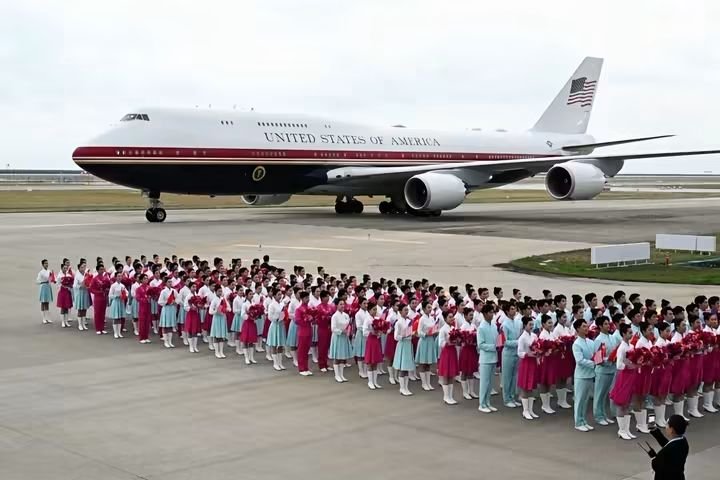
Journalists travelling with United States President Donald Trump were subjected to unusual mobile phone restrictions aboard Air Force One following his visit to China, with White House officials collecting devices used during the trip and placing them in signal-blocking bags over cybersecurity concerns.
The precaution was introduced on Thursday, November 19, 2026, as the presidential aircraft prepared to depart Shenzhen, China, following Trump’s meetings with Chinese President Xi Jinping and Russian President Vladimir Putin.
The development highlighted the security challenges surrounding presidential travel, particularly concerns about electronic surveillance, intelligence gathering and the protection of sensitive communications during international engagements.
According to reports from journalists travelling with the presidential press pool, officials collected several mobile phones when reporters boarded Air Force One for the journey back to the United States.
The devices were placed in special protective containers designed to prevent wireless signals from reaching or leaving the phones.
The measure was described to journalists as a cybersecurity precaution against potential spying attempts.
Why Were the Reporters’ Phones Collected?
The restrictions were linked to concerns that mobile devices used during the China visit could potentially expose sensitive information to surveillance or unauthorised data collection.
China is a major international technology and geopolitical power, and cybersecurity remains an important consideration during high-level diplomatic engagements involving countries with competing strategic interests.
Mobile phones can contain sensitive information, including contact details, emails, location records, photographs, messaging histories and access credentials. They also communicate through wireless networks, creating potential security risks if compromised.
Although the specific threat that prompted the restrictions was not publicly identified, the precaution was intended to reduce the possibility of electronic surveillance.
The measure did not establish that Chinese authorities had intercepted, accessed or compromised any journalist’s device.
According to reporting by The Straits Times, citing Agence France-Presse, journalists were instructed to keep phones used in China inside protective bags until the aircraft landed in the United States. The Straits Times +1
What Are Faraday Bags and How Do They Work?
The protective containers used during the journey are known as Faraday bags.
They are specially designed enclosures that use conductive materials to block electromagnetic signals from reaching or leaving electronic devices.
When a phone is placed inside a properly functioning Faraday bag, it is generally prevented from communicating through cellular networks, Wi-Fi, Bluetooth and other wireless connections.
The technology is based on the Faraday cage principle, named after British scientist Michael Faraday, whose work helped establish the scientific understanding of electromagnetic shielding.
Such protective equipment is used in different security environments, including digital forensics, law enforcement and the protection of sensitive electronic devices.
For government officials and journalists travelling internationally, the bags can help reduce the risk of remote communication with devices while they are being transported.
However, signal-blocking bags do not automatically remove malicious software, erase stored information or repair a compromised device. They primarily provide protection against wireless communication while the device remains properly enclosed.
The restrictions therefore formed part of a broader precautionary approach to protecting electronic communications during presidential travel.
White House Staff Also Used Temporary Phones
The restrictions were not limited to journalists.
A separate video pool report indicated that a presidential aide collected temporary mobile phones, commonly known as burner phones, used by White House personnel during the China visit.
The devices were collected for disposal or data wiping, according to the reporting.
Burner phones are temporary devices used for specific assignments or periods of travel rather than relying on regular personal or official phones.
Their use can help limit exposure of sensitive information stored on everyday devices.
Journalists and photographers travelling with Trump had also taken precautions before arriving in China on November 18.
Many had left their regular work and personal phones, laptops and smartwatches inside protective bags aboard Air Force One before entering the country.
This meant that reporters who used temporary phones during the visit could return to their regular devices for the flight home, while those who had used their regular phones in China had to surrender them temporarily.
The collected devices were returned to journalists after Air Force One landed in the United States. The Straits Times +1
Trump Responds to Questions About the Restrictions
The unusual decision attracted attention among White House correspondents, particularly because collecting journalists’ phones is not a routine procedure during ordinary presidential travel.
According to The Advocate, NBC News White House correspondent Gabe Gutierrez contacted Trump to ask about the reason for the restrictions.
The president defended the precaution without identifying a specific intelligence threat.
Trump said:
“Well, we want to be careful, and we didn’t want to have people have phones when they shouldn’t have phones, so we were very careful.”
His response reinforced the administration’s stated emphasis on caution but did not provide further details about the security assessment behind the decision. Advocate.com
The White House had not publicly provided a detailed explanation of the specific threat, the intelligence behind the precaution or whether any devices were suspected of being compromised.
Why the Move Was Unusual
The decision was particularly noteworthy because journalists travelling aboard Air Force One perform an important role in communicating presidential activities to the public.
The White House press pool consists of selected journalists who accompany the president and provide reports to news organisations that do not have their own correspondents travelling with him.
Their responsibilities include reporting on presidential movements, public appearances, meetings and significant developments during official trips.
Access to communication devices is therefore important for transmitting information to newsrooms, particularly during international assignments.
The phone restrictions temporarily limited that communication for journalists who had used their regular devices during the China visit.
The move also attracted comparisons with Trump’s earlier departure from Beijing in May 2026, when reporters were not subjected to the same phone collection procedure, according to Fox News correspondent and White House Correspondents’ Association president Jacqui Heinrich.
The difference between the two trips raised questions about what had changed in the administration’s security assessment.
However, the available reporting does not establish that the November restrictions resulted from a newly identified espionage operation or a confirmed security breach. Advocate.com +1
The Wider Cybersecurity Implications
The incident highlights a growing challenge facing governments, businesses, journalists and other professionals who travel internationally with electronic devices.
Mobile phones have become important repositories of personal and professional information. A compromised device can potentially expose confidential communications, sensitive contacts, documents and location information.
For government delegations, the risks can extend beyond personal privacy to national security, diplomatic communications and intelligence protection.
Journalists also face particular risks because their devices may contain confidential source information, unpublished material, sensitive interviews and communications with individuals who could face danger if their identities were exposed.
Consequently, cybersecurity precautions during international assignments can have implications for both government officials and independent media organisations.
The use of temporary devices, secure communications systems and signal-blocking equipment represents one approach to reducing potential exposure.
Nevertheless, such measures must be considered alongside other safeguards, including software updates, strong authentication, encryption and careful management of sensitive information.
The Air Force One incident demonstrates how cybersecurity considerations can affect even routine aspects of presidential travel, including the ability of journalists to communicate with their newsrooms.
What Happens Next?
The immediate restrictions ended after Air Force One landed in the United States, when journalists received their phones back.
There was no confirmed public indication that the devices had been compromised or that investigators had identified a specific spying operation connected to the China visit.
The episode nevertheless raises broader questions about how the White House manages electronic security during overseas presidential engagements and how those precautions affect press access.
Further clarification from the administration would help establish whether the restrictions were based on a general security policy, a specific intelligence assessment or circumstances particular to the November visit.
For now, the reported phone collection remains a notable example of the security precautions surrounding Trump’s international engagements and the increasing importance of protecting digital information during diplomatic travel.
Weng Global – Stories beyond borders
Sources
- The Straits Times – Reporters face rare phone restrictions on Air Force One (November 20, 2026; AFP).
- The Advocate – Reporters give up phones on Air Force One after China summit (November 19, 2026).
- The Japan Times – White House took reporters’ phones as Trump departed China (November 20, 2026; Bloomberg).
- The Independent – White House press pool phone restrictions following Trump’s China visit.