Reported by Weng Patrick Atokor l Journalist at Weng Global
US President Donald Trump’s repeated public campaign for the Nobel Peace Prize has become an unusual backdrop to this year’s award, with experts suggesting that the Norwegian Nobel Committee is facing heightened scrutiny as it prepares to announce the 2026 laureate.
The 2026 Nobel Peace Prize will be announced on Friday, October 9, at the Norwegian Nobel Institute in Oslo. The award will be decided by the five-member Norwegian Nobel Committee, whose deliberations remain confidential.
Trump has openly argued that he deserves the prestigious international award and has repeatedly highlighted his diplomatic efforts as part of his case. His campaign has attracted considerable international attention, particularly because the Nobel Committee is expected to make its decision while facing public discussion about the influence that political pressure and lobbying can have on the prize.
According to reporting by Reuters and AFP, Nobel experts believe Trump’s campaign could form part of the wider political environment surrounding this year’s decision, even though the committee has its own established procedures for assessing candidates.
The situation has also drawn attention because last year’s Nobel Peace Prize went to Venezuelan opposition leader María Corina Machado, who subsequently gave her Nobel medal to Trump, saying he deserved the recognition.
That development has added another unusual element to an already closely watched Nobel season.
How the Nobel Peace Prize selection actually works
Despite the intense public speculation surrounding possible winners, the identities of current Nobel Peace Prize nominees are not publicly disclosed by the Norwegian Nobel Committee.
The committee says it cannot confirm or deny whether a particular person has been nominated until 50 years have passed. Public claims that someone has been nominated can therefore come from people who say they submitted a nomination, rather than from the Nobel Committee itself.
For the 2026 prize, the Norwegian Nobel Institute registered 287 candidates — 208 individuals and 79 organisations.
The nomination deadline was January 31, 2026. Following the submission period, the committee reviewed the nominations and began the process of narrowing the field.
The Nobel Committee also receives assessments from experts with specialist knowledge of the areas in which candidates are active. According to the Nobel Institute, these assessments form part of a broader examination of candidates before the committee makes its final decision.
The committee consists of five members appointed by the Norwegian Parliament.
Its deliberations are confidential, and the committee does not publish a shortlist before the announcement.
This means that many names appearing in media reports or public discussions should not be treated as officially confirmed finalists.
Why Trump’s campaign has attracted attention
Trump’s interest in the Nobel Peace Prize is not new.
During the previous Nobel cycle, he made public appeals for the award and supporters also promoted his candidacy. His unusually direct campaign for the prize attracted attention from Nobel observers because candidates normally do not have an official application process through which they can seek the award.
The Nobel Committee’s rules make clear that individuals cannot apply for the prize themselves. Instead, nominations must come from people who meet established eligibility criteria.
Reuters reported on October 1 that experts believe Trump’s chances of receiving the 2026 award remain limited, while also suggesting that his relationship with international institutions could affect the political context in which the committee makes its decision.
AFP similarly reported that Trump’s previous campaign has left the committee under significant public attention ahead of the announcement.
Kristian Berg Harpviken, secretary of the Norwegian Nobel Committee, told AFP that lobbying for candidates is not new and that the committee is accustomed to attempts to influence attention around the prize.
That distinction is important.
There is a difference between lobbying or public campaigning for a candidate and evidence that the committee has changed its decision because of that pressure. The former is documented; the latter cannot be established while the committee’s deliberations remain confidential.
The unusual 2025 development involving María Corina Machado
Another reason this year’s prize has attracted particular attention is what happened after the 2025 Nobel Peace Prize was awarded to María Corina Machado.
Machado, a Venezuelan opposition leader, received the prize in 2025. She later gave her Nobel medal to Trump, saying that he deserved the honour.
The development created an unusual connection between a previous Nobel laureate and Trump’s long-running public campaign for the award.
AFP reported that the episode has contributed to the attention surrounding this year’s selection, with experts discussing whether the committee might favour a candidate whose work commands relatively broad agreement or instead select a recipient whose recognition could send a stronger political or institutional message.
However, the Nobel Committee has not publicly indicated that it is choosing a laureate in response to Trump.
Any interpretation of its motivations should therefore be treated as expert analysis rather than confirmed information.
Who could receive the 2026 prize?
Because the Nobel Committee does not publish the current year’s nominees, there is no official public shortlist from which a winner can be selected by observers.
Nevertheless, researchers and Nobel watchers have discussed a number of people and organisations as possible candidates.
AFP reported that suggestions from experts have included humanitarian organisations working in Sudan, children’s rights advocates, press-freedom organisations and international legal institutions.
Other names mentioned in expert discussions include Pope Leo XIV, United Nations special rapporteur Francesca Albanese, the International Criminal Court and the International Court of Justice.
These names should not be interpreted as confirmed nominees.
The Nobel Institute specifically warns that it does not confirm or deny current nominations and that being nominated does not itself constitute an endorsement by the Nobel Committee.
This distinction is particularly important in the weeks before the announcement, when media speculation can create the impression that a publicly discussed figure is officially under consideration.
The wider significance of the debate
The controversy surrounding Trump’s Nobel campaign raises a broader question about the relationship between international awards and political power.
The Nobel Peace Prize is not determined by a public vote. The decision belongs to the Norwegian Nobel Committee, which examines nominations, commissions expert assessments and conducts its deliberations privately.
According to the Nobel Institute, the committee normally seeks consensus, although a simple majority is sufficient when consensus cannot be reached. Its decision is final.
That process means public campaigns can generate attention without necessarily determining the outcome.
It also explains why claims about who will win should be treated cautiously.
A person can receive public support, be widely discussed or be claimed by a politician or organisation to have been nominated without that person being officially confirmed as a finalist.
For readers following the Nobel debate from Africa and elsewhere, the distinction is particularly relevant because international awards can influence public discussion about diplomacy, conflict resolution, human rights and humanitarian action.
Why the 2026 decision matters
The 2026 Nobel Peace Prize is being announced at a time of significant international tensions, making the choice likely to receive attention well beyond Norway.
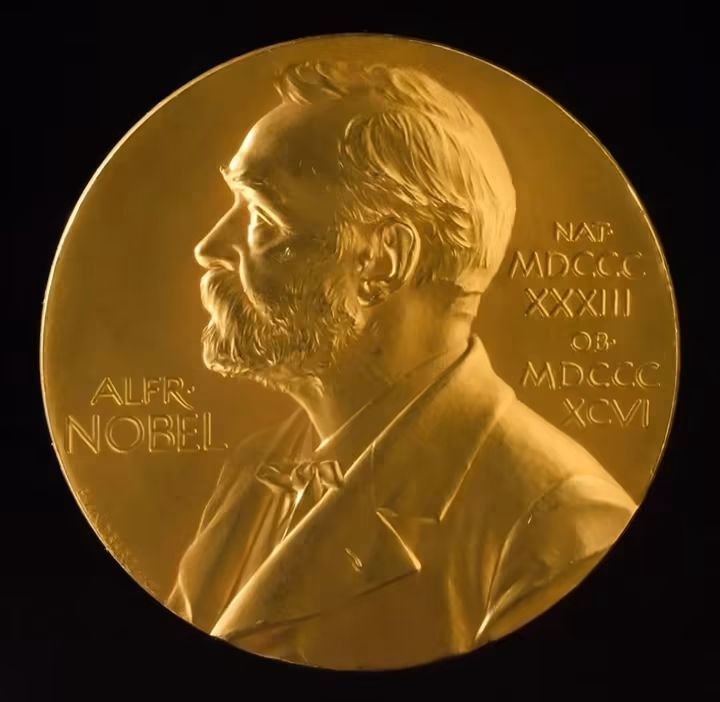
The Nobel Committee says the award is intended for a person or organisation that has conferred the greatest benefit on humankind in the field of peace, in accordance with the principles set out in Alfred Nobel’s will.
The committee’s decision therefore has significance beyond the monetary value or prestige attached to the award.
For organisations involved in humanitarian work, conflict resolution, international law, human rights or peacebuilding, receiving the Nobel Peace Prize can bring global attention to issues that might otherwise receive less international visibility.
The 2026 prize also comes after a year in which Trump’s public pursuit of the award has itself become part of the international conversation surrounding the Nobel.
Whether that campaign has any direct bearing on the committee’s final decision, however, will remain difficult to establish because the committee’s internal deliberations are not public.
What happens next?
The Norwegian Nobel Committee is scheduled to announce the 2026 Nobel Peace Prize on Friday, October 9, at 11:00 a.m. Central European Summer Time in Oslo. The award ceremony will take place on December 10.
Until the announcement, reports about possible recipients will remain largely speculative unless they concern information formally released by the Nobel Institute.
The committee has already completed months of reviewing nominations and expert assessments. Its members have been meeting throughout the year as part of the established selection process.
The final decision will therefore provide the first official confirmation of who has been selected.
For now, the clearest established fact is that Trump’s campaign has generated significant public attention around the Nobel Peace Prize, while the committee continues to operate under a confidential selection system designed to keep current nominations and deliberations private.
The question of whether political pressure, public lobbying or international controversy ultimately influences the committee cannot be answered from the outside before the decision is announced.
What can be established is that the Nobel Peace Prize remains a decision made by a five-member Norwegian committee after a lengthy process of nominations, expert assessment and deliberation — not through a public popularity contest.
Weng Global – Stories beyond borders
Sources
- Norwegian Nobel Institute — Nominations for the Nobel Peace Prize 2026.
- Norwegian Nobel Institute — Nomination and selection process.
- Norwegian Nobel Institute — Announcement Nobel Peace Prize 2026.
- Reuters — Trump will not win this year’s Nobel Peace Prize, but he may influence who does, say experts, October 1, 2026.
- AFP — Nobel Peace Prize jury treads carefully after Trump campaign, October 1, 2026.