Reported by Simon Daniel Yusuph l Journalist at Weng Global
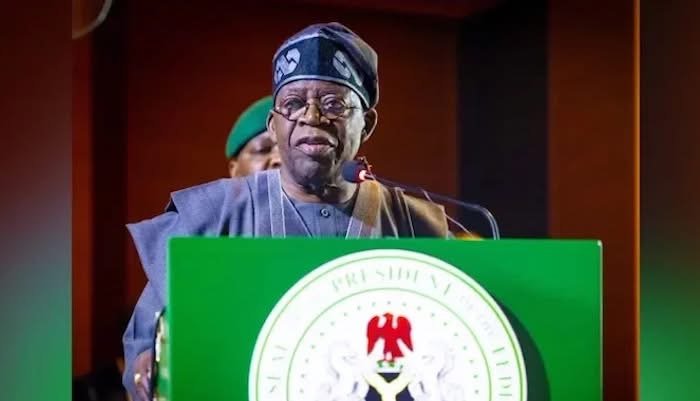
President Bola Ahmed Tinubu has declared that Nigeria is moving from an era of difficult economic reforms into what he described as an “age of prosperity”, as the country marked its 66th Independence Anniversary on October 1, 2026.
In his Independence Day address, Tinubu said the administration had spent its first three years confronting what it described as deep economic distortions, including fiscal pressures, fuel subsidy costs and foreign exchange problems, and that the priority must now shift towards translating economic stabilisation into jobs, lower production costs, stronger household incomes and improved living standards.
The President said the government’s economic task had changed from correcting Nigeria’s economic direction to delivering what he called “shared and widespread prosperity”.
The address came against a complicated economic backdrop. Nigeria has recorded stronger macroeconomic indicators since the reforms began, but international economic assessments continue to point to high poverty, weak household incomes, inadequate job creation and persistent pressures on vulnerable families.
Tinubu Says Difficult Reform Phase Is Over
Tinubu presented the past three years as a period of necessary but difficult adjustment.
His administration, which assumed office in May 2023, introduced major policy changes including the removal of the petrol subsidy and reforms to the foreign exchange market. The changes were designed to reduce fiscal distortions and allow market forces to play a greater role in determining prices and exchange rates.
The President acknowledged that the reforms had imposed significant costs on Nigerians but argued that they were necessary to address longstanding weaknesses.
According to him, Nigeria had reached a point where the government could focus less on economic correction and more on expanding production, employment and opportunities.
“Now, our purpose is simple: shared and widespread prosperity,” Tinubu said in the address.
He said the next phase would focus on reducing the cost of living by lowering the cost of producing and transporting goods.
That approach, he argued, would require greater agricultural production, improved transportation networks, better infrastructure, reliable energy and a more competitive business environment.
Cost of Living Becomes Central Challenge
The President placed the cost of living at the centre of his new economic agenda.
He said the government would seek to reduce production and distribution costs rather than rely primarily on measures that temporarily suppress prices.
The strategy includes expanding mechanised irrigation and dry-season farming, improving access to agricultural inputs, increasing mechanisation, expanding storage and improving transportation infrastructure.
Tinubu also pointed to investments in roads, railways and ports as part of efforts to connect farms and factories more efficiently with markets.
The reasoning is straightforward: if farmers can produce at lower cost, manufacturers can obtain more reliable and affordable energy, and transport operators can move goods more efficiently, the government expects some of those savings eventually to be reflected in consumer prices.
However, whether these measures produce significant relief for households will depend on implementation, productivity and the broader movement of food, energy and transport costs.
The World Bank said in its April 2026 Nigeria Development Update that the country had made meaningful progress in restoring macroeconomic stability, with inflation easing, external and fiscal positions strengthening and economic growth remaining robust. At the same time, it said household incomes had not fully recovered and poverty remained high.
Government Shifts Focus to Jobs and Production
Tinubu also identified employment and productive economic activity as central to the next phase of his administration.
Nigeria has one of Africa’s largest and youngest populations, creating both an opportunity and a significant employment challenge.
The World Bank estimates that about 3.5 million people enter Nigeria’s labour force each year. It has warned that weak job creation and limited entrepreneurial opportunities remain major constraints to improving living standards.
Tinubu said the government would therefore place jobs, enterprise and industrial growth at the heart of its policies.
He listed gas-powered industrial development, support for businesses seeking to revive factories, expanded digital connectivity, skills development and improved access to infrastructure and finance among the areas the government intends to pursue.
The objective is to move beyond economic growth measured only through national output and ensure that economic expansion produces opportunities for households.
This distinction is important because higher GDP does not automatically translate into higher incomes for every household.
Economic Growth Has Improved, World Bank Says
Some of the economic indicators cited by the administration have also shown improvement.
The World Bank says Nigeria’s real GDP grew by 4.2 per cent in the first half of 2026, compared with 3.9 per cent during the corresponding period of the previous year.
The institution said growth was driven mainly by services and stronger agricultural activity.
It also reported improvements in Nigeria’s external position, including a current account surplus of $5 billion in the first quarter of 2026 and gross foreign reserves of $51.9 billion at the end of July.
Inflation has also fallen substantially from the levels recorded during the most difficult period of the reform process, although food prices and household purchasing power remain important concerns.
These developments provide some support for the government’s argument that macroeconomic stability has improved.
But the World Bank has also stressed that economic growth remains insufficient to generate enough productive jobs and materially reduce poverty.
That distinction could become one of the most important tests of the President’s newly declared “age of prosperity”.
Poverty and Household Welfare Remain Major Tests
While Tinubu described the economic foundation as stronger, he acknowledged that millions of Nigerians continue to struggle with basic household expenses.
He specifically referred to families facing difficulties paying for food, education, healthcare and transportation.
The President said the government would continue strengthening direct support for poorer households and improving the National Social Register to help target assistance.
He also pointed to the Nigerian Education Loan Fund and the Consumer Credit Corporation, known as CREDICORP, as programmes intended to expand access to education and consumer credit.
Tinubu argued that such interventions should serve as a bridge towards greater economic opportunity rather than become permanent substitutes for prosperity.
The World Bank’s assessment presents a similar challenge from another angle.
It says that although Nigeria’s macroeconomic position has improved, poverty remains widespread and real incomes remain under pressure. Its country overview estimates that 69.6 per cent of Nigerians were living below the lower-middle-income poverty line of $4.20 per day in 2025, while 50.8 per cent were living in extreme poverty under the institution’s stated measure.
The figures underline the gap between macroeconomic stabilisation and the experience of individual households.
From Reform to Inclusive Growth
Nigeria’s economic debate has increasingly shifted from whether reforms were necessary to whether their benefits can reach a sufficiently broad section of the population.
The World Bank has argued that the country now has an opportunity to build on improved macroeconomic stability by accelerating inclusive growth.
Its April 2026 assessment said Nigeria needed to maintain credible macroeconomic policies while improving investment in human capital, infrastructure and targeted social protection.
The institution also stressed that productive employment would be critical to reducing poverty.
This places pressure on the government’s next phase to demonstrate measurable progress beyond improved headline indicators.
For households, prosperity is likely to be judged through practical questions: whether food becomes more affordable, whether electricity becomes more reliable, whether transportation costs fall, whether businesses create more jobs and whether wages rise sufficiently to meet household expenses.
Agriculture, Industry and Infrastructure
Tinubu’s Independence Day address placed considerable emphasis on production.
Agriculture is central to that strategy because food prices remain closely connected to household welfare.
The President said his administration would expand irrigation, improve access to seeds and fertiliser, increase mechanisation and strengthen storage and transportation.
The broader objective is to reduce losses between farms and markets while improving agricultural productivity.
Infrastructure is another major component.
Tinubu identified roads, railways and ports as essential links between producers and consumers.
The government has also continued to promote gas development and alternative energy initiatives as part of efforts to address energy costs.
For manufacturers and small businesses, energy reliability can have a direct impact on production costs and competitiveness.
However, infrastructure projects require sustained financing, effective implementation and maintenance. Their economic impact also depends on whether they improve the movement of goods and services at a scale large enough to influence business costs.
The Foreign Exchange Market and Investment
Foreign exchange reform has been another major feature of Tinubu’s economic programme.
The administration moved towards a more market-oriented foreign exchange system after taking office, with the objective of addressing distortions associated with multiple exchange rates and improving transparency in the market.
The government says the reforms have contributed to greater stability.
The World Bank similarly reported that Nigeria’s external position had strengthened, although it warned that dependence on short-term portfolio flows remained a vulnerability.
Foreign exchange stability matters to businesses because Nigeria relies heavily on imports for many industrial inputs, machinery and consumer goods.
A more predictable currency environment can make planning easier for businesses, but the broader effect on prices depends on production capacity, import dependence and other domestic costs.
Tinubu Warns Against Reversing Reforms
The President used the Independence Day address to defend the direction of his economic policies and argue against reversing the major reforms introduced since 2023.
He warned against political pressure to return to the previous petrol subsidy arrangements, describing such a reversal as a risk to the progress he believes the country has made.
That position is likely to remain part of Nigeria’s economic debate as the country moves closer to the 2027 general election.
The administration maintains that subsidy removal and other reforms were necessary to restore fiscal stability.
Critics of the reform programme, however, have continued to focus on the immediate burden placed on households, including higher transportation and living costs.
The central policy question is therefore no longer simply whether Nigeria has experienced economic adjustment, but whether the gains from that adjustment can become sufficiently broad and durable to improve living conditions.
A Three-Year Reform Journey
Tinubu’s speech was also an attempt to define the economic narrative of the first three years of his presidency.
When he took office in May 2023, the government inherited significant fiscal and economic pressures, including fuel subsidy costs, foreign exchange distortions, rising debt-servicing obligations and concerns about investment and public finances.
In his May 2026 third-anniversary statement, Tinubu again described the starting conditions as difficult and argued that the reforms were intended to stabilise the economy and establish a foundation for longer-term growth.
The administration has since highlighted improvements in revenue mobilisation, foreign reserves, economic growth and investment.
The World Bank has independently acknowledged improvements in macroeconomic stability, while also warning that stabilisation alone is not enough to deliver broad improvements in living standards.
That creates a clear distinction between the government’s stated achievements and the broader question of economic welfare.
What the “Age of Prosperity” Means for Nigerians
Tinubu’s declaration is ultimately a promise about the next stage of economic management.
The President said prosperity should mean more than stronger GDP figures or improved economic statistics.
He described it as an economy in which farmers can produce profitably, factories have reliable power, businesses can access credit, young people can find productive work, and households can afford food, transportation and education.
That definition places the emphasis on outcomes that Nigerians can experience directly.
It also creates a measurable standard against which the administration’s next phase can be assessed.
If economic growth continues but employment remains weak and household purchasing power remains under pressure, the benefits of reform could remain uneven.
Conversely, sustained growth accompanied by stronger job creation, lower inflation, improved productivity and rising household incomes would provide stronger evidence that macroeconomic stabilisation is translating into broader economic gains.
Nigeria at 66: What Happens Next?
As Nigeria begins its 67th year as an independent nation, the government’s stated priority is to move from economic stabilisation to wider prosperity.
The administration’s agenda includes lower production costs, increased agricultural output, industrial expansion, infrastructure development, job creation, digital connectivity, access to finance and targeted support for vulnerable Nigerians.
The immediate challenge is implementation.
The next phase will require sustained economic growth, continued attention to inflation and exchange-rate stability, increased private investment and stronger productivity.
It will also require the government to demonstrate that improved macroeconomic indicators can translate into better living conditions.
Tinubu ended his Independence Day address by declaring that Nigeria had “corrected its course” and that the foundations for prosperity had been laid.
Whether that prosperity becomes broadly felt will depend not only on the continuation of reforms but on their ability to generate productive employment, strengthen household incomes and reduce the economic pressures confronting millions of Nigerians.
For Nigeria at 66, the transition from what the President calls an “age of reform” to an “age of prosperity” therefore represents both a political declaration and a significant policy challenge.
The coming years will show whether the country’s improved macroeconomic position can be converted into the everyday economic security that Nigerians have long demanded.
Weng Global – stories beyond borders
Sources
- The State House, Abuja
- World Bank
- National Bureau of Statistics
- Punch Newspapers