Reported by Weng Patrick Atokor l Journalist at Weng Global
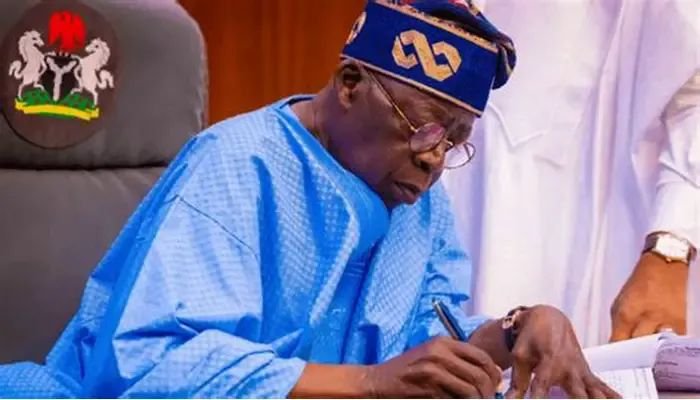
President Bola Ahmed Tinubu has signed the Appropriation (Amendment) (No. 4) Bill, 2025, extending the implementation period of Nigeria’s 2025 budget from September 30 to December 31, 2026.
The development gives federal ministries, departments and agencies (MDAs) another three months to implement eligible capital projects and utilise funds already appropriated under the 2025 budget framework.
The State House announced the presidential assent on Wednesday, September 30, 2026, after the National Assembly approved the latest extension.
The amendment represents the fourth extension of the implementation period for the capital component of the 2025 budget. The deadline was previously moved from December 31, 2025, to March 31, 2026, then to June 30 and subsequently September 30.
The latest decision therefore keeps parts of the 2025 capital budget active into the final quarter of 2026.
Why the 2025 Budget Is Still Being Implemented in 2026
Nigeria’s federal budget cycle has faced a longstanding challenge involving overlapping implementation periods.
The original 2025 budget implementation period was scheduled to end on December 31, 2025. However, lawmakers subsequently approved extensions to provide additional time for the government to implement capital projects and utilise appropriated funds.
The first extension moved the deadline to March 31, 2026. A second extension moved it to June 30, while a third pushed it to September 30.
The fourth extension now moves the deadline to December 31, 2026. Reports from the National Assembly indicate that lawmakers considered the additional time necessary to allow ongoing capital projects and outstanding obligations to be completed.
The repeated extensions are significant because the federal government is already operating under the 2026 Appropriation Act.
President Tinubu signed the ₦68.32 trillion 2026 budget into law in April and at the same time approved an earlier extension of the 2025 budget from March 31 to June 30.
This means that, in practical terms, elements of two budget years continue to have implementation implications at the same time.
What the Latest Amendment Allows
The extension does not amount to a new 2025 appropriation.
During the Senate’s consideration of the amendment, Senate Leader Opeyemi Bamidele said the measure was intended to create additional time for ministries, departments and agencies to implement capital projects for which appropriations had already been made and funds released.
He also stressed that the extension should not be interpreted as a relaxation of accountability, fiscal responsibility or legislative oversight.
The distinction is important.
The amendment primarily extends the legal window for implementing existing capital allocations. It does not, by itself, create a fresh pool of money for new projects.
For federal agencies, the additional three months can provide more time to complete projects that are already under way, process eligible payments and utilise funds within the existing legal and budgetary framework.
Lawmakers Point to Uncompleted Projects
One of the central arguments advanced by lawmakers in support of the extension was the need to prevent public projects from being abandoned because the existing implementation deadline was approaching.
The Senate said several capital projects remained at different stages of execution, while some released funds had yet to be fully utilised.
Bamidele said capital budget execution involves multiple stages, including procurement, contract execution, mobilisation, certification of completed work and payment. According to him, additional time was therefore required to allow projects already in progress to move through those stages.
Senate President Godswill Akpabio similarly argued that allowing the September 30 deadline to pass without an extension could have created difficulties for contractors and government agencies dealing with outstanding obligations.
The House of Representatives had also cited the need to provide more time for ongoing infrastructure projects and other capital expenditures captured in the 2025 budget.
Concerns Over Budget Execution
While lawmakers approved the extension, the repeated need to extend the life of the capital budget has also highlighted broader questions about the speed and efficiency of budget implementation in Nigeria.
During Senate debate, Chief Whip Tahir Monguno attributed some delays to the federal government’s centralised payment system.
Monguno argued that continued delays in processing payments could contribute to repeated requests for extensions. His comments represented his assessment during the legislative debate rather than an independently established explanation for all delays in budget execution.
The issue is important because extending an implementation deadline solves one immediate problem — the expiry of the legal spending window — but does not necessarily resolve the administrative, procurement or financing bottlenecks that may have contributed to delays in the first place.
A Continuing Challenge for Nigeria’s Budget System
The latest extension also brings renewed attention to Nigeria’s efforts to move away from overlapping budget cycles.
When President Tinubu presented the 2026 budget in December 2025, he said the government intended to end the longstanding practice of running multiple budgets and allowing projects and obligations to roll over repeatedly.
The President described overlapping budgets and abandoned projects as obstacles to fiscal discipline and sustainable development.
The subsequent extensions of the 2025 capital budget show the practical difficulty of achieving that objective.
However, the existence of an extension does not by itself establish that every aspect of the government’s budget system is failing. The stated purpose of the latest amendment is to allow projects already provided for and funded under the 2025 framework to be completed rather than potentially left unfinished because of the expiry of the implementation period.
That distinction is important for understanding the development beyond the headline.
What It Means for Federal Projects
For Nigerians, the immediate significance of the extension will largely depend on how federal agencies use the additional three months.
Where contracts are already substantially advanced, the extension could give ministries and agencies additional time to complete works and settle eligible obligations.
The National Assembly has specifically linked the extension to the completion of critical infrastructure and the protection of public investments already captured in the budget.
The practical outcome, however, will depend on project readiness, procurement status, available funds, contract execution and the ability of MDAs to complete the necessary administrative processes before December 31.
The extension therefore creates an additional implementation window, rather than guaranteeing that every outstanding project will be completed within it.
The Broader Fiscal Picture
Nigeria’s budget process involves more than the annual announcement of an expenditure figure.
After a budget is approved, ministries and agencies must translate appropriations into actual programmes and projects. Procurement, contracting, fund releases, project execution, certification and payment can all affect the speed at which budgeted expenditure becomes visible on the ground.
This is why the repeated extension of the 2025 capital budget is relevant beyond the technical amendment itself.
It raises questions about how quickly appropriated funds are converted into completed projects, how government agencies manage annual spending deadlines and how the country can maintain a predictable fiscal calendar.
At the same time, extending the implementation period can protect projects that are already at advanced stages from being disrupted simply because the statutory deadline has expired.
The balance between these two considerations — fiscal discipline and practical project completion — is therefore central to understanding the latest amendment.
What Happens Next?
With President Tinubu’s assent, the implementation period for the affected capital component of the 2025 budget now runs until December 31, 2026.
Federal MDAs will therefore have the additional three-month window to continue implementing eligible projects and obligations under the amended framework.
The extension also places greater attention on what agencies accomplish before the new deadline.
For Nigerians, the key issues to watch will include the completion of ongoing capital projects, utilisation of released funds, settlement of legitimate contractual obligations and the extent to which the additional period translates into measurable project delivery.
The development also keeps Nigeria’s overlapping budget-cycle debate in focus as the government continues operating the 2026 budget while concluding implementation activities under the 2025 framework.
The Weng Global Spotlight
President Tinubu’s signing of the fourth amendment to the 2025 budget is more than a change to a date on a government document.
It is the latest stage in a prolonged effort to complete spending commitments under a budget that was originally expected to expire at the end of 2025.
The immediate purpose of the extension is clear: provide federal agencies with additional time to implement eligible capital projects and utilise appropriated funds.
The longer-term question is whether the additional period will produce faster project completion and more effective use of public resources, while Nigeria continues efforts to establish a more predictable and disciplined budget cycle.
For citizens, the most important measure will ultimately be what happens on the ground — whether roads, hospitals, schools, power projects and other publicly funded investments covered by the budget are delivered, completed and properly accounted for.
The December 31 deadline therefore creates another test for federal budget execution.
WHAT HAPPENED? President Bola Tinubu signed the fourth amendment to the 2025 Appropriation framework, extending the implementation period to December 31, 2026.
WHY DOES IT MATTER? The extension gives federal MDAs additional time to implement capital projects and utilise funds already appropriated, while highlighting continuing challenges surrounding Nigeria’s budget cycle and project execution.
WHAT SHOULD READERS KNOW NEXT? The focus now shifts to how effectively federal agencies use the additional three months and whether ongoing projects and eligible obligations are completed before the new deadline.
Weng Global – Stories beyond borders
Sources
- The State House — Presidential announcement on the signing of the Appropriation (Amendment) (No. 4) Bill, 2025.
- Channels Television — Reports on the National Assembly’s extension of the 2025 capital budget implementation period.
- Premium Times — Reports on the House and Senate proceedings concerning the fourth extension.
- THISDAY — Senate proceedings and explanations surrounding the extension.
- The State House — April 2026 statement on the 2026 Appropriation Act and earlier extension of the 2025 budget.