Reported by Weng Patrick Atokor l Journalist at Weng Global
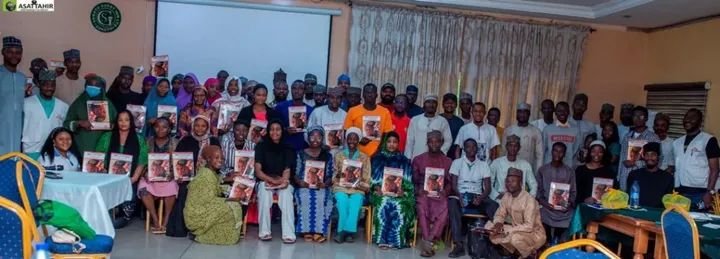
Médecins Sans Frontières (MSF) has trained 200 staff members, community engagers and volunteers of the Asattahir International Foundation (AIF) in Sokoto State on the prevention, early detection and referral of noma cases.
The two-day capacity-building training was held from September 22 to 23, 2026, and brought together participants from Sokoto North, Sokoto South and Wamakko Local Government Areas.
According to AIF, the training was facilitated by MSF’s Health Promotion Unit as part of efforts to strengthen community-level awareness and improve the identification and referral of people suspected to have noma.
MSF focuses on early detection and referral
The training comes amid continuing efforts by health organisations to improve awareness of noma in northern Nigeria, where the disease remains a significant public health concern.
Speaking during the programme, Florencia Maghanga, Medical Team Lead of MSF Sokoto, commended AIF for supporting the identification and referral of suspected noma cases to the Noma Children Hospital in Sokoto.
Maghanga stressed that early identification and timely referral are critical in preventing the disease from progressing to more severe stages.
“Early identification and timely referral are critical. Prevention remains the best approach, and this requires sustained community awareness, early recognition and prompt referral,” she said, according to AIF’s account of the training.
The training was designed to equip frontline personnel and community volunteers with knowledge needed to recognise potential noma cases and connect suspected patients with appropriate healthcare services.
Participants were also trained on preventive practices and the importance of community awareness in reducing delays between the appearance of symptoms and access to medical care.
AIF to expand noma awareness activities
Rufus Yagkong, Head of Programmes and Research at AIF, expressed appreciation to MSF for supporting the capacity-building programme.
Yagkong said the knowledge gained during the training would strengthen the ability of AIF staff, community engagers and volunteers to contribute to noma prevention, early recognition and referral.
He added that AIF would incorporate noma prevention and awareness activities into its ongoing programmes across Sokoto State.
The foundation also plans to use its community structures and field presence to educate residents about the disease, encourage early recognition and promote timely referral of suspected cases.
According to AIF, the collaboration reflects its broader effort to work with relevant organisations and stakeholders on humanitarian and development interventions targeting vulnerable communities.
What is noma?
Noma is a severe disease affecting the mouth and face. The World Health Organization (WHO) says it primarily affects children between two and six years old, particularly those living in conditions associated with extreme poverty and other underlying risk factors.
The disease often begins as inflammation of the gums and can rapidly progress, destroying soft tissue and, in severe cases, facial bones and skin.
WHO says early detection and treatment can halt the progression of noma. Treatment at an early stage can include antibiotics, improved oral hygiene and nutritional support, while advanced cases may require surgery and longer-term rehabilitation.
The disease was added to WHO’s list of neglected tropical diseases in December 2023, following a recommendation from its Strategic and Technical Advisory Group for Neglected Tropical Diseases.
Why early detection matters
Noma can progress rapidly, making awareness among families, community workers and frontline health personnel particularly important.
WHO notes that many cases are difficult to quantify because the disease can progress quickly and may remain undiagnosed or untreated. Stigma, limited awareness and weaknesses in health systems can also contribute to delayed diagnosis and treatment.
The WHO has consequently emphasised strengthening the capacity of health workers, social actors and communities to prevent, identify and manage noma cases.
The organisation also recommends improving awareness and integrating noma into existing health surveillance systems to strengthen detection and response.
Sokoto’s role in noma treatment
Sokoto is an important centre for noma treatment in Nigeria.
The Sokoto Noma Hospital provides free medical care, including reconstructive surgery, for people affected by the disease. MSF says it has supported the hospital since 2014 through activities including community outreach, active case finding, health promotion, mental health support and reconstructive surgery.
MSF’s Nigeria programme also identifies early detection as a major component of its work on noma. The organisation says most patients who contract the disease are children under six whose immune systems may have been weakened by malnutrition.
The hospital’s work is carried out in collaboration with Nigeria’s health authorities, with services extending beyond immediate treatment to rehabilitation and support for survivors.
Community health workers play a key role
The training of 200 AIF personnel highlights the role community-based workers can play in identifying suspected cases before the disease becomes advanced.
Community workers are often positioned closer to families and communities than specialised hospitals, making them important links between residents and formal healthcare services.
Training such workers to recognise possible symptoms can therefore help reduce delays in referral, particularly in communities where awareness of noma remains limited.
WHO has previously identified community health workers, families and primary healthcare professionals as important audiences for noma education and early detection.
The latest training in Sokoto therefore adds another community-level layer to existing efforts to improve noma awareness and access to treatment.
What happens next?
AIF says it intends to integrate noma prevention and awareness activities into its ongoing programmes across Sokoto State.
The organisation’s community structures are expected to support continued education, early recognition and referral of suspected cases.
For MSF, the training forms part of a broader approach to noma control that includes community outreach and early case detection alongside medical care and support for people affected by the disease.
The continued focus on community-level awareness is significant because early recognition remains central to preventing noma from progressing to severe facial damage and other potentially life-threatening complications.
Weng Global – Stories beyond borders
Sources
- Asattahir International Foundation — report on the September 22–23, 2026 MSF training in Sokoto.
- Médecins Sans Frontières — Sokoto Noma Hospital and its programme supporting patients affected by noma.
- World Health Organization — Noma fact sheet, including disease characteristics, treatment and prevention.
- Médecins Sans Frontières — Nigeria programme and noma activities.
- World Health Organization — information on early detection and management of noma.