Reported by Simon Daniel Yusuph l Journalist at Weng Global
Lagos State First Lady, Dr Ibijoke Sanwo-Olu, has urged residents to remain patient as authorities work to address delays in refuse collection across the state, amid operational challenges affecting waste evacuation and disposal.
The appeal comes as Lagos continues efforts to ease pressure on its waste-management system, with congestion at dumpsites, access problems and limited disposal infrastructure contributing to delays in the movement of refuse trucks.
The Lagos State Government has acknowledged that residents have experienced frustration from accumulated waste in some communities. Governor Babajide Sanwo-Olu recently inspected operations at the Olusosun dumpsite in Ojota and announced measures intended to improve the movement of waste trucks and strengthen collection capacity.
Dumpsite congestion behind collection delays
The challenges facing Lagos’ waste collection system are not limited to the number of trucks available to collect refuse.
Earlier reports from waste operators indicated that trucks were spending extended periods waiting to discharge refuse at dumpsites, particularly at Olusosun, one of the state’s major waste disposal facilities.
Private Sector Participation operators told PUNCH that congestion and deteriorated internal access roads at Olusosun had made it difficult for trucks to enter, discharge their loads and return to their collection routes. Some operators said trucks could remain at the facility for several days, reducing the number of trips they could make to residential areas.
The Guardian also reported that some operators had identified inadequate disposal capacity and overstretched landfill facilities as major obstacles to regular waste collection. According to the report, trucks remaining at disposal facilities for several days can create a chain reaction, preventing them from returning to their assigned routes on schedule.
The result is that waste can accumulate in communities even when collection operators have trucks available.
Government announces new measures
The state government has announced several interventions aimed at reducing the pressure on the system.
Governor Sanwo-Olu said the government was working to level and expand access roads at the state’s five major dumpsites so waste trucks can discharge refuse and return to their routes more efficiently.
He also announced the ordering of 160 new waste compactors to strengthen the collection fleet, while development partners are expected to provide additional heavy-duty equipment.
The governor further disclosed plans to restructure the Lagos State Waste Management Authority, LAWMA, with the stated aim of strengthening oversight and improving operations at the community level.
The government is also working with Private Sector Participation operators to improve their operations and ensure that waste collection services are provided by capable operators.
These measures are intended to address both the immediate collection backlog and some of the structural problems affecting the state’s waste-management system.
Longer-term infrastructure plans
Beyond the immediate response, Lagos authorities have also outlined plans to increase the state’s waste-handling capacity.
The government is constructing Transfer Loading Stations at Olusosun and Solous 3, while Material Recovery Facilities are planned for Epe and Badagry.
The facilities are expected to support the movement and processing of waste while reducing pressure on existing disposal sites.
LAWMA has also previously outlined a broader plan to expand the state’s compactor fleet. Vanguard reported in July that the state was targeting the acquisition of about 3,000 compactor trucks over three years, with about 150 expected to arrive before the end of 2026 as part of the initial phase.
The infrastructure programme reflects a wider effort to move Lagos towards a more integrated waste-management system rather than relying heavily on conventional dumpsites.
Waste collection remains a public concern
The current delays have renewed concerns among residents about the reliability of refuse collection in different parts of Lagos.
Earlier in the year, the state government directed LAWMA to convene an urgent meeting with PSP operators after residents complained about irregular waste evacuation, particularly in densely populated parts of Alimosho.
Environment Commissioner Tokunbo Wahab said the intervention was necessary because of complaints about operators failing to collect refuse regularly.
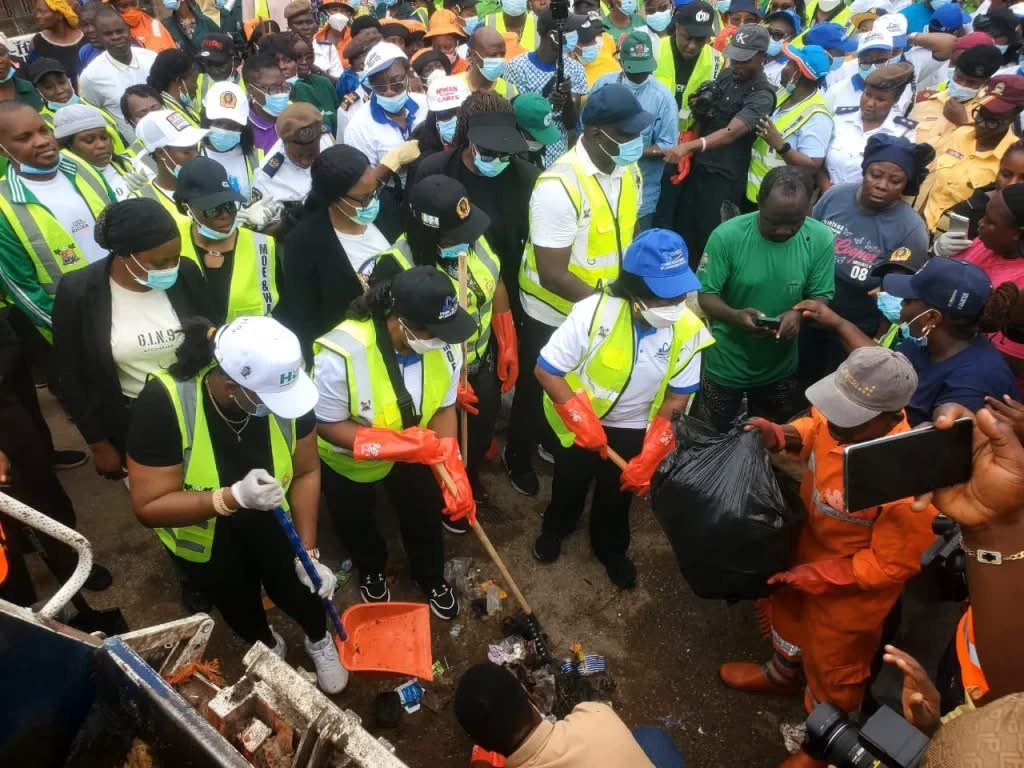
The problem has also occurred against the backdrop of Lagos’ renewed monthly environmental sanitation exercise.
The state restarted the monthly exercise in April 2026 after a suspension lasting nearly a decade. The programme is held on the last Saturday of each month and is intended to encourage residents to take greater responsibility for the cleanliness of their surroundings.
The First Lady has previously used the sanitation exercise to encourage residents to make environmental cleanliness a daily responsibility rather than limiting it to the designated monthly period.
In July, she urged Lagos residents to dispose of refuse through designated waste collectors and avoid dumping waste in drainage channels, warning that poor waste-management practices can contribute to flooding and disease outbreaks.
Why the delays matter
Waste collection is closely linked to public health, flood management and the general condition of Lagos communities.
When refuse remains uncollected for extended periods, residents may resort to informal disposal methods, including dumping waste in streets, drainage channels and other unauthorised locations.
Such practices can create additional environmental problems and make the original collection challenge more difficult to resolve.
For a densely populated megacity such as Lagos, the efficiency of the waste-management chain depends not only on household collection but also on the availability of functional disposal facilities, accessible roads, adequate equipment and efficient coordination between government agencies and private operators.
The current situation therefore highlights the importance of addressing bottlenecks throughout the system rather than focusing only on the number of collection trucks.
Residents urged to support cleanup efforts
While government agencies and waste operators remain responsible for providing an effective collection system, Lagos authorities have also continued to urge residents to cooperate by disposing of waste properly.
Governor Sanwo-Olu has warned against indiscriminate dumping and said environmental enforcement officers would arrest and prosecute offenders.
The First Lady has similarly encouraged residents to maintain clean surroundings throughout the month, stressing that environmental sanitation should be a shared responsibility.
That approach places household behaviour alongside government infrastructure and waste-collection capacity as part of the wider effort to keep Lagos clean.
What happens next
The immediate focus is on reducing the backlog created by delays at dumpsites and improving the turnaround time for waste trucks.
The government’s planned road improvements at major dumpsites, additional equipment, new compactors and cooperation with PSP operators are expected to improve collection capacity.
Longer-term projects, including the planned Transfer Loading Stations and Material Recovery Facilities, are intended to increase disposal and recycling capacity and reduce pressure on existing facilities.
For residents, the key issue will be whether the interventions translate into more regular refuse evacuation in their communities.
The First Lady’s appeal for patience comes against this backdrop, as Lagos authorities attempt to resolve the immediate waste backlog while pursuing infrastructure and operational reforms intended to make the state’s waste-management system more reliable.
Weng Global – stories beyond borders
Sources
- Lagos State Government
- Lagos State Waste Management Authority (LAWMA)
- Punch Newspapers
- The Guardian
- Vanguard
- Television Continental (TVC)