Reported by Simon Daniel Yusuph l Journalist at Weng Global
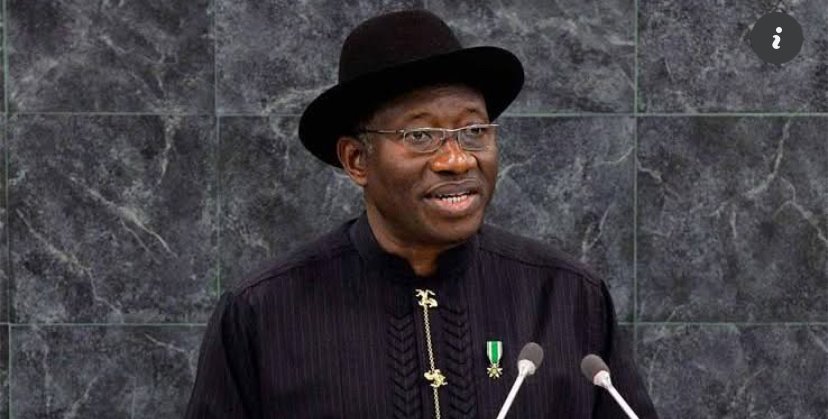
Former President Goodluck Jonathan has warned Nigerian politicians against using the pursuit of electoral victory as a justification for misconduct, stressing that political contests must be conducted according to established rules.
Jonathan gave the warning on Thursday, September 24, 2026, in Abuja while delivering a goodwill message at a public lecture held to mark the 80th birthday of former Attorney-General of the Federation and former Minister of Justice, Kanu Agabi.
The former president said political competition should not be treated as an environment where participants can disregard laws and established democratic procedures simply because they are seeking to win.
Jonathan: Politics Has Rules
Jonathan compared politics to a football match, arguing that participants are expected to follow the rules governing the contest.
He said politicians sometimes justify actions that would otherwise be regarded as unacceptable by simply describing them as part of political activity.
Jonathan said electoral contests should instead be governed by established rules, with the courts available to intervene when those rules are violated.
His comments come as Nigerian political parties and aspirants begin preparations for the 2027 general elections, a process expected to involve party primaries, political alliances, campaigns and intense competition for elective offices.
The former president’s remarks were reported by TheCable and other Nigerian media outlets covering the Abuja event.
Warning Against Electoral Misconduct
Jonathan’s comments also touched on the broader issue of corruption and ethical conduct in public life.
He argued that Nigeria’s fight against corruption cannot depend solely on passing laws or establishing enforcement agencies.
According to reports of his remarks, the former president said lasting progress would require a culture in which ethical behaviour is valued, public office is treated as a responsibility and institutions are strong enough to enforce accountability.
The argument places political conduct within a wider discussion about the strength of democratic institutions. Elections depend not only on voting but also on compliance with electoral laws, respect for institutions and acceptance of established procedures for resolving disputes.
2027 Election Season
Jonathan’s warning comes less than a year before Nigeria’s next general elections, scheduled for 2027.
Political activity surrounding the election has already intensified, with parties and political figures discussing possible alliances, candidates and strategies ahead of the contest.
The 2027 election will also take place against the background of Nigeria’s experience in previous election cycles, including the closely contested 2015 presidential election.
Jonathan was president during the 2015 election and conceded defeat to Muhammadu Buhari before the final results were fully announced.
His decision has subsequently been cited by political figures and democracy advocates as an example of peaceful transfer of power in Nigeria.
Labour Party Chairman Invokes Jonathan’s 2015 Example
The issue was also raised during the 2026 Goodluck Jonathan Foundation Democracy Dialogue in Bauchi in August.
Labour Party National Chairman Nenadi Usman urged politicians preparing for the 2027 elections to respect democratic rules and avoid rhetoric or actions capable of threatening political stability.
Usman pointed to Jonathan’s concession after the 2015 presidential election, arguing that it helped Nigeria avoid a potentially destabilising post-election crisis.
Her comments were made at the annual democracy dialogue organised by the Goodluck Jonathan Foundation. The event was themed, “Beyond Elections: Can Political Parties and the Judiciary Save African Democracy?”
Usman’s remarks were political commentary from the Labour Party leadership and should be understood in that context. They do not establish independently that Jonathan’s concession alone determined the stability of Nigeria’s democracy.
The Role of Political Parties
The conduct of political parties will be particularly important as the 2027 election approaches.
Political parties are responsible for selecting candidates, conducting internal contests and mobilising supporters. Their conduct during these processes can affect the wider political environment.
The 2026 Goodluck Jonathan Foundation Democracy Dialogue also featured discussions about the condition of African democracy, political parties, the judiciary and possible reforms to democratic governance. Former President Olusegun Obasanjo and other political figures participated in the dialogue.
The discussions reflect wider concerns about how political competition is conducted in Nigeria and across Africa, particularly regarding the relationship between elections, political parties and democratic institutions.
Why the Warning Matters
Jonathan’s comments are significant because electoral competition can generate disputes over nominations, campaigns, voting processes and results.
Nigeria’s electoral system provides legal and institutional mechanisms for resolving such disputes, including judicial proceedings where appropriate.
When political actors operate outside established rules, however, disputes can become more difficult to resolve peacefully.
Jonathan’s emphasis on rules therefore places responsibility on politicians and political parties to pursue electoral ambitions within the legal and institutional framework governing elections.
His remarks do not endorse any particular party or candidate. Rather, they focus on the conduct expected of political actors regardless of their political affiliation.
What Happens Next
As the 2027 election cycle progresses, political parties will continue with preparations for candidate selection, alliances, campaigns and other electoral activities.
The Independent National Electoral Commission and other relevant institutions will remain central to the administration of the election, while courts will continue to provide legal avenues for resolving electoral disputes within their jurisdiction.
For voters, the unfolding political season is expected to bring competing claims from parties and candidates. Distinguishing verified information from political rhetoric, allegations and campaign promises will therefore remain important as the election approaches.
Jonathan’s latest intervention adds his voice to the ongoing debate over political conduct and democratic stability in Nigeria.
The central message from his remarks is that electoral victory does not remove the obligation of political actors to observe the rules governing democratic competition.
Weng Global – stories beyond borders
Sources:
- TheCable
- Business Times Nigeria
- Punch Newspapers
- The Guardian Nigeria
- ThisDay
- Goodluck Jonathan Foundation