Reported by Weng Patrick Atokor l Journalist at Weng Global
Nigeria’s successful tele-robotic surgery across roughly 500 kilometres has demonstrated the potential of advanced technology to expand access to specialist healthcare, but sustaining such breakthroughs will require continued investment in medical training, infrastructure, connectivity and healthcare institutions.
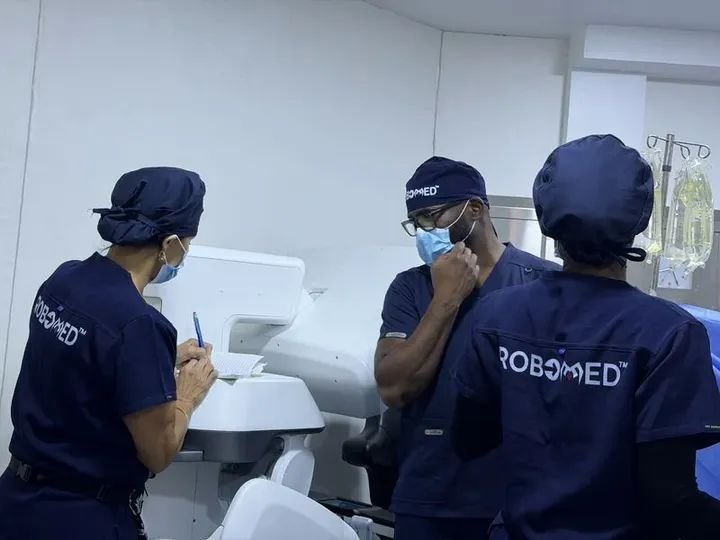
The procedure, carried out through a collaboration involving Redeemer’s Health Village (RHV), RoboMed Global and Nisa Premier Hospital in Abuja, was performed in real time with the surgeon operating a robotic system from RHV in Ogun State while the patient remained in Abuja.
The operation involved a robot-assisted right radical nephrectomy to remove a kidney affected by a cancerous tumour. Reports from Nigerian media said the procedure was performed on September 19, 2026, and represented the first tele-robotic surgery of its kind in Nigeria and West Africa as described by the institutions involved.
The development represents more than a technological milestone. It provides a practical demonstration of how telecommunications, robotics and specialist medical expertise can potentially be combined to reduce geographical barriers to healthcare.
How the Tele-Robotic Surgery Worked
Tele-robotic surgery allows a surgeon to control robotic surgical instruments from a location separate from the patient.
In the Nigerian procedure, Professor Obi Davies-Ekwenna, a professor of urology and transplant surgery and robotic surgeon, operated from a Toumai robotic console at Redeemer’s Health Village while the patient was treated at Nisa Premier Hospital in Abuja.
The two locations were connected through telecommunications infrastructure, allowing the surgeon’s movements at the console to be transmitted to the robotic equipment at the patient’s location. Medical teams were present at both sites to support the operation.
The procedure was a radical nephrectomy, meaning the affected kidney was removed because of a cancerous tumour.
The achievement is significant because it demonstrates that a specialist does not necessarily have to be physically present in the same city as a patient to participate directly in certain complex surgical procedures.
However, tele-robotic surgery does not remove the need for medical professionals at the patient’s location. Anaesthesia, patient monitoring, emergency response and other aspects of surgical care still require trained healthcare personnel and appropriate facilities.
Technology Alone Cannot Transform Healthcare
The success of the procedure has generated considerable attention, but the wider lesson for Nigeria may be the infrastructure required to make advanced healthcare technologies dependable.
Tele-robotic surgery requires more than a sophisticated surgical robot.
It depends on reliable electricity, stable telecommunications connectivity, trained surgeons, nurses and biomedical engineers, appropriate operating theatres, maintenance systems and strong clinical protocols.
BusinessDay reported that medical experts had called for greater investment in specialist training, internet connectivity, electricity and biomedical engineering capacity following the procedure.
These requirements are particularly important because a remote surgical procedure depends on continuous communication between the surgeon and the robotic system. Interruptions in power, connectivity or equipment performance can create serious operational challenges.
That means Nigeria’s ability to replicate the achievement will depend partly on whether the country can develop the supporting infrastructure alongside the technology.
A Potential Response to Specialist Access Challenges
The development also comes amid broader efforts to improve access to specialist healthcare in Nigeria.
The Federal Ministry of Health and Social Welfare has identified digital health and telemedicine as components of its health-sector transformation agenda. The ministry says its e-Health and Telemedicine Programme covers services including real-time online consultations, telehealth and virtual clinics.
In July 2026, the ministry also reaffirmed its commitment to an inclusive digital health system, noting that Nigeria’s National Digital Health Architecture is intended to create an interoperable digital health ecosystem. The ministry said innovations such as telemedicine could improve access to healthcare, particularly in underserved communities.
The tele-robotic procedure takes that concept considerably further.
Instead of simply allowing a doctor to communicate with a patient remotely, the technology enables a suitably trained surgeon to control robotic instruments during an operation from another location.
If safely developed and appropriately regulated, such systems could eventually create new opportunities for specialists to support patients who are far from major medical centres.
Training Will Be Critical
Technology cannot substitute for medical expertise.
One of the important questions following Nigeria’s tele-robotic surgery breakthrough is how many Nigerian healthcare professionals will eventually have the skills required to operate, maintain and support such systems.
Reports following the procedure said plans were being developed for a robotic academy to train surgeons and other healthcare professionals. Punch reported that Davies-Ekwenna discussed a target of training at least 150 surgeons within two years.
Such training would need to extend beyond surgeons.
Robotic surgery requires multidisciplinary teams that can include nurses, anaesthetists, biomedical engineers, technicians and other specialists.
Building that workforce could be as important as acquiring the machines themselves.
The World Health Organization’s 2026 health workforce report similarly identifies continuing shortages, unequal distribution and the need for sustained investment in health workforce planning as persistent global challenges.
For Nigeria, therefore, investment in advanced medical technology should be accompanied by investment in people.
Nigeria Already Has a Foundation for Robotic Surgery
The latest achievement did not emerge in isolation.
The Federal Ministry of Health and Social Welfare announced in August that it had welcomed Redeemer’s Health Village’s robotic surgery programme, describing it as an important development in advanced healthcare delivery.
The ministry said robotic surgery could contribute to improved precision and minimally invasive procedures while potentially supporting efforts to reduce medical tourism. It also called for greater private-sector participation and investment in healthcare.
Nisa Premier Hospital has also been involved in robotic surgery in Nigeria, with reports indicating that the Abuja facility had been operating as a robotic surgery centre since November 2025.
The combination of existing robotic surgery capacity and tele-robotic technology creates an opportunity to explore how specialist expertise can be shared across locations.
The Medical Tourism Question
Nigeria has for years faced challenges surrounding outbound medical tourism, with patients travelling abroad for specialised procedures.
The Federal Ministry of Health has explicitly linked investment in advanced healthcare services to efforts to reverse the direction of medical tourism and retain healthcare spending within Nigeria.
Tele-robotic surgery could contribute to that objective if the technology becomes reliable, accessible and affordable.
For example, a patient who requires specialist intervention may potentially receive treatment in Nigeria while a highly specialised surgeon participates remotely from another Nigerian city or, subject to regulatory and technical requirements, another country.
But technology should not be viewed as a complete solution to medical tourism.
Patients also consider cost, quality, trust, availability of specialists, follow-up care, hospital infrastructure and access to medicines when choosing where to receive treatment.
Consequently, reducing medical tourism would require improvements across the healthcare system rather than relying on individual technological achievements.
Investment Must Extend Beyond One Landmark Operation
The central challenge now is sustainability.
A single successful operation demonstrates that the technology can work under particular circumstances. Building a dependable national system requires repeated procedures, clinical training, equipment maintenance, reliable connectivity and transparent evaluation of outcomes.
It also requires financing models that allow more patients to benefit from advanced medical services rather than restricting the technology to a small number of well-funded facilities.
Nigeria’s health authorities have already identified infrastructure, financing, workforce development and digital transformation as important areas of health-sector reform.
In September 2026, the Federal Ministry of Health announced the establishment of the National Health Technology and Data Analytics Office to help coordinate digital health transformation and integration of health technology and data systems.
That broader digital-health infrastructure could become increasingly relevant as technologies such as remote surgery develop.
What Happens Next?
The next stage should be focused on building capacity around the technology.
That includes expanding specialist training, strengthening biomedical engineering, improving hospital power supply, ensuring dependable connectivity and developing appropriate standards for remote surgical procedures.
The Federal Ministry of Health has also previously identified reliable electricity as important to sustainable health-service delivery and has discussed initiatives aimed at strengthening power infrastructure in health facilities.
Regulatory and clinical safeguards will also be important as tele-robotic surgery develops.
Questions around patient safety, equipment certification, professional responsibility, data security, emergency procedures and accountability in cross-location surgery will need clear answers before the technology can be expanded widely.
The Nigerian breakthrough therefore should be viewed both as an achievement and as the beginning of a larger conversation.
Why the Breakthrough Matters
Nigeria’s first reported tele-robotic surgery demonstrates what becomes possible when medical expertise, robotics and telecommunications infrastructure converge.
But the real measure of the achievement will not be the attention generated by one historic procedure.
Its long-term value will depend on whether Nigeria can turn the breakthrough into sustainable medical capacity.
That means training more specialists, developing supporting technical expertise, strengthening hospitals, improving digital infrastructure and ensuring that advanced healthcare technologies eventually become accessible beyond a small number of facilities.
The procedure has shown that geographical distance does not necessarily have to prevent specialist surgical expertise from reaching a patient.
The challenge now is to build the systems that can make that possibility safe, reliable, repeatable and accessible.
For Nigeria’s healthcare sector, the lesson is clear: medical innovation can open new doors, but sustained investment is what keeps them open.
Weng Global – Stories beyond borders
Sources
- Federal Ministry of Health and Social Welfare — information on Redeemer’s Health Village robotic surgery programme and Nigeria’s digital-health transformation.
- Premium Times — report on the collaboration between Redeemer’s Health Village, RoboMed Global and Nisa Premier Hospital.
- Punch — reporting on Nigeria’s first reported tele-robotic surgery and the training plans associated with the programme.
- The Guardian — report on the tele-surgery session at Redeemer’s Health Village.
- BusinessDay — reporting on calls for investment in infrastructure and specialist training.
- World Health Organization — 2026 report on global health workforce levels and trends.