Reported by Weng Patrick Atokor l Journalist at Weng Global
Nigeria has maintained a sustained period without recorded piracy incidents in its territorial waters, with the Nigerian Navy and other maritime security agencies continuing efforts to protect the country’s waterways and support economic activity.
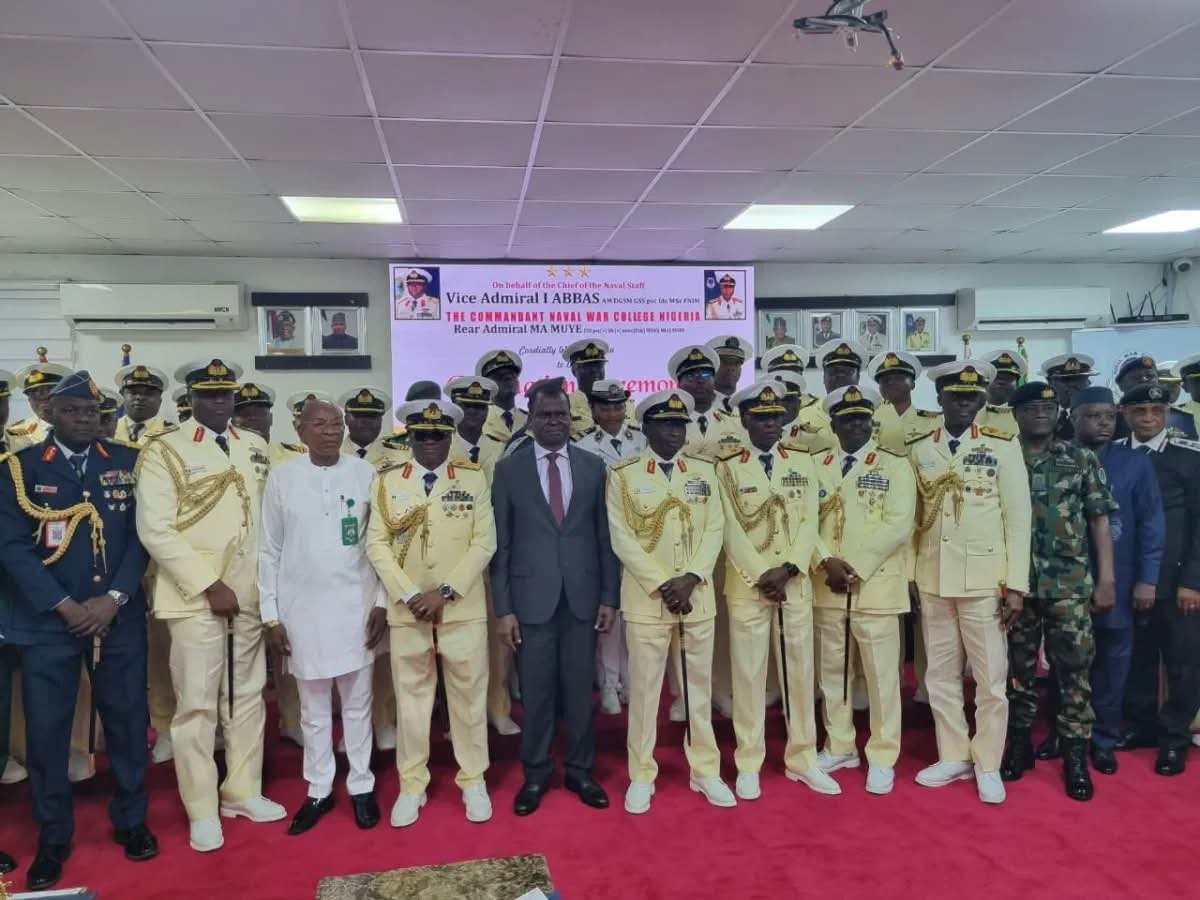
The development was highlighted by Chief of the Naval Staff, Vice Admiral Idi Abbas, as Nigerian authorities continue to strengthen maritime surveillance, inter-agency cooperation and regional security efforts across the Gulf of Guinea.
Nigeria’s four-year zero-piracy record has previously been confirmed by the Nigerian Maritime Administration and Safety Agency (NIMASA), which attributed the progress to sustained security operations under the Deep Blue Project and cooperation among security agencies.
Nigeria’s maritime security gains
NIMASA Director-General Dayo Mobereola said in May 2026 that Nigeria had recorded zero piracy attacks for four consecutive years.
He linked the achievement to the Deep Blue Project, which combines maritime surveillance, intelligence, rapid-response capabilities and cooperation among security agencies.
The project has become a central component of Nigeria’s strategy to address piracy and other maritime crimes in the country’s waters and the wider Gulf of Guinea.
The Federal Government has also said piracy incidents across the Gulf of Guinea declined by more than 70 per cent during the period, although maritime security challenges remain in the wider region.
The development represents a significant change from the period when the Gulf of Guinea was one of the world’s major piracy hotspots.
Nigerian Navy continues surveillance operations
The Nigerian Navy remains responsible for a major part of Nigeria’s maritime security operations.
In June, Vice Admiral Abbas said Nigeria had been removed from the global list of piracy-prone countries and had maintained that position since 2023.
He nevertheless warned that isolated cases of sea robbery still occurred and stressed that Nigeria could not consider its maritime environment completely secure if neighbouring waters remained vulnerable.
The Navy has subsequently continued to emphasise intelligence, technology and surveillance as important tools for protecting Nigeria’s maritime domain.
In September, Abbas directed commanders to intensify naval operations and make greater use of intelligence and technology to defend Nigeria’s territorial integrity and combat criminal activities at sea.
Zero piracy does not mean zero maritime crime
The reported absence of piracy incidents should not be interpreted as meaning that every form of maritime crime has disappeared from Nigerian waters.
Authorities continue to deal with crude oil theft, illegal refining, smuggling and isolated cases of sea robbery.
The Navy said in September that it had uncovered suspected illegal refining sites, reservoirs and large quantities of products suspected to have been stolen or illegally refined in Rivers and Delta states.
The Navy has also warned that criminal networks involved in crude oil theft remain a significant threat despite improvements in maritime surveillance.
This distinction is important because piracy is a specific category of maritime crime, while other offences can continue even when piracy incidents fall sharply.
Independent reporting has also raised questions about whether official piracy statistics fully capture attacks affecting small-scale fishers and other coastal communities. A May 2026 investigation by Pluboard argued that some attacks involving artisanal fishers may fall outside the definitions used in international piracy statistics.
Technology and cooperation remain central
Nigeria’s maritime security strategy increasingly relies on technology and cooperation between military, law-enforcement and maritime institutions.
The Deep Blue Project has expanded the use of specialised vessels, aircraft, helicopters, surveillance systems and intelligence capabilities.
In May, NIMASA announced that 492 personnel from different security and operational units had completed specialised training under the project. The programme included maritime security operations, helicopter operations, interceptor-boat tactics, intelligence and unmanned aerial systems.
NIMASA has also said that Nigeria’s improved maritime security profile contributed to the country’s election into Category C of the International Maritime Organisation.
The agency has continued to emphasise collaboration with the Nigerian Armed Forces, police, Department of State Services and other stakeholders as necessary to sustain the gains.
Economic implications
Maritime security has direct implications for Nigeria’s economy because the country depends heavily on sea transport for international trade.
A safer maritime environment can reduce risks for commercial shipping and improve confidence among investors and shipping operators.
The Federal Government has said it is seeking Nigeria’s removal from international war-risk classifications, arguing that this could help reduce insurance-related costs for ships and cargo entering Nigerian waters.
Lower maritime security risks could also support Nigeria’s wider ambition to develop its blue economy, strengthen its ports and increase activity across shipping, fishing and other maritime industries.
However, maintaining these gains will require continued investment, particularly because criminal activity in the Gulf of Guinea remains transnational.
Regional cooperation remains important
Vice Admiral Abbas has repeatedly stressed the importance of cooperation between African countries in addressing maritime security threats.
In September, he called for stronger regional military and maritime cooperation and encouraged wider African participation in regional security initiatives, including the Combined Maritime Task Force–Gulf of Guinea.
The approach reflects the interconnected nature of maritime security in West Africa. Criminal groups operating across national boundaries can exploit weaknesses in one country’s waters and affect neighbouring states.
For Nigeria, maintaining its current security gains therefore depends not only on domestic naval operations but also on intelligence sharing and coordinated regional responses.
What happens next
The Nigerian Navy and maritime authorities are expected to continue surveillance and enforcement operations while strengthening cooperation with other security agencies and regional partners.
The government has also been considering an expansion of the Deep Blue Project into vulnerable coastal corridors, including Igbokoda and Bakassi, as part of efforts to consolidate maritime security gains.
At the same time, authorities face the continuing challenge of addressing crimes that fall outside conventional piracy statistics, including oil theft, illegal fishing, smuggling and attacks affecting vulnerable coastal communities.
Nigeria’s four-year record without a recorded piracy incident therefore represents an important maritime-security development, but sustaining it will depend on continued surveillance, enforcement, regional cooperation and attention to the broader range of threats affecting the country’s waterways.
Weng Global – Stories beyond borders
Sources
- Nigerian Maritime Administration and Safety Agency (NIMASA) / reporting on Nigeria’s four-year zero-piracy record.
- Nigerian Navy official website and operational information.
- Channels Television — statements by Chief of Naval Staff Vice Admiral Idi Abbas on maritime security.
- Punch — Federal Government and NIMASA reporting on Nigeria’s zero-piracy record and maritime-security strategy.
- THISDAY — proposed expansion of the Deep Blue Project.