Reported by Simon Daniel Yusuph l Journalist at Weng Global
Dangote seeks to broaden refinery ownership
Aliko Dangote has said the Dangote Petroleum Refinery and Petrochemicals is targeting 10 million shareholders through its ongoing Initial Public Offering (IPO), as the company seeks to bring millions of retail investors in Nigeria, across Africa and potentially other parts of the world into its ownership structure.
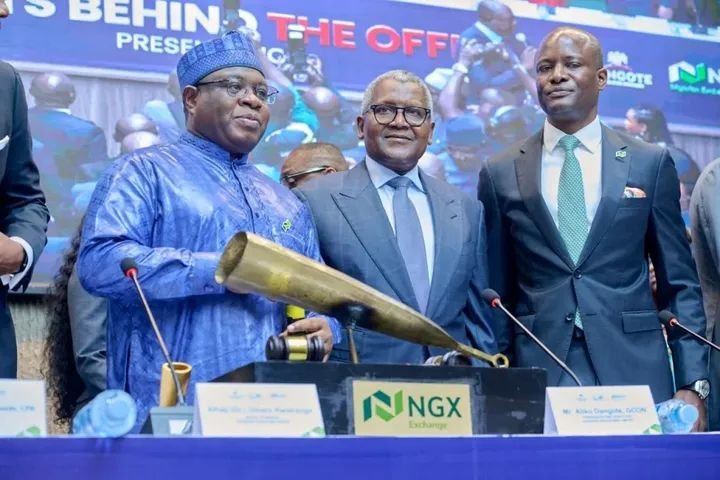
Dangote made the disclosure as the refinery’s public share offer entered the Nigerian capital market, with the transaction positioned as one of the largest equity offerings in Africa and an attempt to significantly widen participation in the country’s stock market.
The IPO involves 4.1 billion ordinary shares priced at N525 each, giving the offer a potential value of about N2.15 trillion if fully subscribed. Investors can apply for a minimum of 10 shares, requiring N5,250.
The public offer opened on September 14, 2026, and the refinery’s official IPO platform states that the offer is scheduled to close on October 13, subject to the terms of the offering. The shares are expected to be listed on the Main Board of the Nigerian Exchange following regulatory approvals.
Dangote says ownership is central to the IPO
Dangote has presented the transaction as more than a conventional fundraising exercise.
According to reports from the IPO signing ceremony in Lagos, he said the company was particularly interested in creating broad ownership and allowing ordinary Africans to participate in the refinery’s future.
The target of 10 million shareholders is therefore significantly larger than the number of investors typically associated with major Nigerian capital-market transactions.
Punch reported that transaction advisers described the 10 million-investor target as roughly 20 times Nigeria’s existing retail participation record.
The strategy is designed to use electronic distribution channels, including banks, fintech platforms, stockbrokers and other financial intermediaries, to make applications accessible to a large number of investors.
The Voice of Nigeria reported that the subscription process is integrated with the Bank Verification Number system, with the company seeking to reduce some of the traditional barriers associated with equity investment.
A major test for Nigeria’s capital market
The scale of the proposed shareholder base makes the Dangote Refinery IPO an important test for Nigeria’s capital-market infrastructure.
The offering comes at a time when digital investment platforms have become increasingly important for retail participation in Nigerian stocks.
Reuters reported that the launch generated such strong demand that some Nigerian investment platforms experienced significant increases in traffic and temporary service disruptions. Bamboo, for example, recorded a sharp surge in traffic shortly after the offer opened.
The episode highlights both the appetite for investment opportunities among Nigerians and the technological challenges that could emerge when millions of people attempt to participate in a major transaction simultaneously.
The Securities and Exchange Commission has also warned investors about potential fraud connected with the IPO, including impersonation and phishing risks. Investors have been advised to use approved subscription channels.
The official Dangote IPO platform similarly warns investors to subscribe only through approved channels and not to provide sensitive information such as PINs, passwords or one-time passwords to anyone claiming to represent the offer.
The minimum investment is designed to encourage retail participation
One of the most notable features of the offer is its relatively low minimum subscription.
At N525 per share and a minimum requirement of 10 shares, an investor can apply with N5,250.
The structure is intended to make participation possible for ordinary retail investors rather than restricting access primarily to large institutional investors.
The Financial Times reported that the low minimum investment could attract first-time investors to the Nigerian stock market, although it also noted that awareness and access remain uneven, particularly in areas with weaker financial and digital infrastructure.
The approach also reflects a broader effort to increase domestic participation in Nigeria’s capital market.
For decades, ownership of large industrial companies has largely been concentrated among founders, institutional investors and major financial interests. A successful mass-retail IPO could increase the number of Nigerians directly holding shares in a major industrial enterprise.
However, becoming a shareholder also exposes investors to the normal risks associated with equity markets. The official IPO platform cautions that share values can rise or fall and that investors may not recover the amount they invest.
Dangote Refinery’s growing importance to Nigeria’s energy sector
The IPO is taking place against the backdrop of the refinery’s growing role in Nigeria’s petroleum industry.
Located in Lagos, the Dangote refinery has a stated processing capacity of 700,000 barrels of crude oil per day, making it one of the world’s largest single-site refineries.
Reuters reported that the refinery’s IPO seeks to raise funds for further expansion, with the company planning to increase its capacity substantially in the coming years.
The refinery has also become increasingly important to Nigeria’s efforts to reduce dependence on imported refined petroleum products.
The country’s long-standing reliance on imported fuel has exposed consumers and businesses to international crude prices, foreign-exchange pressures and disruptions in global energy markets.
The refinery’s ability to process crude domestically is therefore being watched closely by policymakers, investors and consumers.
Africa’s largest IPO
The transaction has attracted international attention because of its size.
Reuters described the Dangote Refinery offering as Africa’s largest IPO, with the company seeking up to about $2.1 billion through the share sale. The refinery is being valued at approximately $49 billion in connection with the offering.
The Associated Press also reported that the IPO represents a major development for African capital markets by opening public investment in one of the continent’s largest industrial projects.
For Nigeria, the transaction could therefore have significance beyond the Dangote Group itself.
A large and successful retail shareholder base could demonstrate that Nigerian companies can mobilise substantial domestic capital through the stock market.
At the same time, the scale of the transaction means investors and regulators will be closely watching issues such as transparency, allocation, market performance, corporate governance and the ability of financial infrastructure to accommodate large numbers of retail participants.
Dangote expected to remain the dominant shareholder
Despite the broad public offer, the IPO does not mean that ownership of the refinery is being transferred to the public majority.
Reporting based on the company’s prospectus indicates that Dangote will continue to hold a controlling interest in the refinery following the offer.
Nairametrics reported, based on analysis of the prospectus, that Dangote’s beneficial ownership would remain at about 84.34 per cent after the planned share sale.
This means the IPO is primarily expanding the shareholder base rather than changing control of the company.
The distinction is important for potential investors because purchasing shares gives investors an ownership interest but does not necessarily give them control over the company’s strategic direction.
Strong demand creates further questions
The early response to the offer has already generated discussion about whether demand could exceed the number of shares currently available.
The Guardian reported that Dangote had indicated a willingness to make additional shares available if demand significantly exceeded the existing offer. The company has also emphasised its intention to prioritise broad participation by retail investors.
Strong demand, however, does not automatically translate into guaranteed investment returns.
The performance of the shares after listing will depend on a range of factors, including the refinery’s financial performance, crude-oil prices, refined-product prices, foreign-exchange conditions, operating costs, government policies and broader market conditions.
Investors will therefore need to consider the company’s prospectus and understand the risks associated with buying shares before making investment decisions.
What happens next
The public offer is currently open, with the official Dangote IPO platform stating that subscriptions opened on September 14 and are scheduled to close on October 13, 2026.
Following the offer and the completion of applicable regulatory processes, the company’s shares are expected to be listed on the Main Board of the Nigerian Exchange.
The immediate test will be whether the transaction can translate the extraordinary level of interest surrounding the IPO into a genuinely broad shareholder base.
The longer-term test will be whether the refinery can deliver the operational and financial performance required to sustain investor confidence while expanding its capacity and role in Nigeria’s energy market.
For Nigeria’s capital market, the transaction also provides a rare opportunity to bring millions of ordinary citizens into direct ownership of a major industrial asset.
For investors, however, the central consideration remains the same as with any publicly offered equity: ownership creates an opportunity to participate in a company’s performance, but it also carries financial risk.
Why it matters
Dangote’s 10-million-shareholder target represents an ambitious attempt to broaden public participation in one of Africa’s biggest industrial businesses.
If achieved, the initiative would create an unusually large retail shareholder community around a Nigerian company and could deepen public participation in the country’s capital market.
It also places Nigeria’s financial and digital infrastructure under pressure to demonstrate that it can process mass-market investment securely and efficiently.
The success of the IPO will ultimately be measured not only by the amount of money raised, but also by the breadth of ownership created, the quality of investor participation and the refinery’s ability to deliver sustainable value over time.
Weng Global – Stories beyond borders
Sources
- Dangote Petroleum Refinery and Petrochemicals — Official IPO platform and public-offer information.
- Reuters — Reporting on the Dangote Refinery IPO, investor demand and the refinery’s expansion plans.
- Associated Press — Report on the opening of public investment in the Dangote Refinery.
- Financial Times — Reporting on the IPO’s retail-investor strategy and its significance for Nigeria’s capital market.
- Punch — Reporting on the target of 10 million retail investors and the structure of the offer.
- The Guardian Nigeria — Reporting on the IPO and Dangote’s comments on retail investor participation.
- Voice of Nigeria — Reporting on the 10-million-investor target and BVN-integrated subscription process.
- Channels Television — Reporting on the opening of the IPO and Dangote’s statements about the refinery.