Reported by Weng Patrick Atokor l journalist at wengglobal
Nigeria’s relationship with the manufacturing sector is increasingly being shaped by a question that goes beyond production figures and investment announcements: how can businesses and regulators build a system in which compliance, enforcement and legitimate commercial activity reinforce one another?
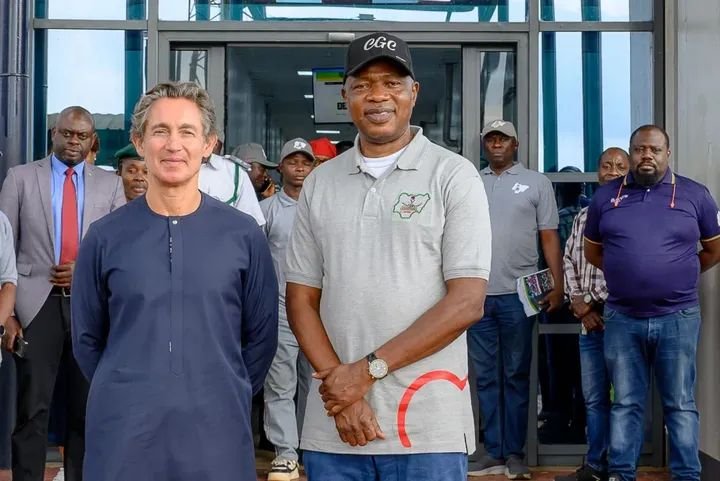
That question has again come into focus following remarks by the Comptroller-General of the Nigeria Customs Service, Bashir Adewale Adeniyi, during an engagement with British American Tobacco Nigeria.
Adeniyi praised BAT Nigeria for its compliance and called for stronger ties between the Customs Service and the manufacturing industry. The message points to a broader issue facing Nigeria’s economy: the need for government agencies and businesses to work together while maintaining the regulatory standards that govern legitimate trade.
For a country seeking to expand manufacturing, attract investment and improve public revenue, the relationship between regulators and businesses is not a peripheral issue. It is part of the economic infrastructure.
Beyond a meeting between Customs and a company
At first glance, a Customs official commending a major manufacturer for compliance may appear to be a routine corporate engagement.
But the significance is broader.
The Nigeria Customs Service sits at an important point in Nigeria’s trade system. Its responsibilities include customs administration, revenue collection, enforcement against illicit trade and the facilitation of legitimate commerce.
Manufacturers, meanwhile, depend on predictable rules and efficient regulatory processes to move raw materials, machinery and finished products through increasingly complex supply chains.
When the two sides communicate effectively, businesses have a clearer understanding of regulatory expectations, while authorities gain a better understanding of the practical challenges facing legitimate operators.
That does not remove the need for enforcement. Instead, it can make enforcement more targeted.
The Customs Service has increasingly emphasised stakeholder engagement as part of its approach to trade facilitation and institutional reform. Earlier this year, the Service reiterated its commitment to deeper engagement with business organisations while pursuing digital reforms designed to reduce bureaucratic bottlenecks in cargo clearance.
That approach is particularly relevant in manufacturing, where delays and uncertainty can affect production schedules, inventory management and investment decisions.
BAT and Customs have already moved beyond dialogue
The latest engagement is also part of a relationship that has produced a more formal agreement.
In June 2026, the Nigeria Customs Service and British American Tobacco Nigeria signed a Memorandum of Understanding focused on combating illicit tobacco trade, improving regulatory compliance and protecting legitimate business investments.
The agreement provides for greater cooperation in areas including intelligence sharing, capacity building and coordinated efforts against illegal cross-border trade.
That development gives additional context to Adeniyi’s call for deeper industry ties.
The issue is not simply whether a company complies with regulations. It is also about whether government and industry can establish systems that make compliance easier to understand, monitor and sustain while allowing enforcement agencies to identify operators who deliberately operate outside the rules.
For legitimate businesses, illicit trade can create an uneven competitive environment.
For government, it can mean lost revenue and weaker regulatory control.
For consumers, it can raise questions about the authenticity, safety and accountability of products entering the market.
These concerns explain why the fight against illicit trade has become an area where public institutions and private companies can have overlapping interests.
Why compliance matters to manufacturers
Compliance is sometimes discussed as if it were simply an obligation imposed on businesses.
In practice, it can have wider economic implications.
A compliant manufacturer operates within the rules governing its activities, including customs procedures, taxation, product regulation, labour requirements and other applicable standards.
For government, consistent compliance can support revenue collection and regulatory oversight.
For businesses, a predictable compliance environment can help reduce disputes, delays and uncertainty.
For the wider economy, it can contribute to a more transparent marketplace.
But collaboration should not be confused with preferential treatment.
A strong regulator-business relationship should still operate within clear rules that apply consistently to market participants. Engagement between Customs and large companies can be useful precisely because it provides a channel for clarifying those rules and identifying problems in the system.
The credibility of such partnerships ultimately depends on transparency, accountability and equal application of the law.
The illicit-trade problem
The Customs-BAT relationship also highlights one of the persistent challenges confronting Nigeria’s formal economy: illicit trade.
In its June agreement with BAT Nigeria, the Customs Service identified smuggling and illegal cross-border movements as areas requiring stronger cooperation. The parties said the partnership would support information exchange and enforcement efforts against illicit trade networks.
This challenge extends beyond tobacco.
Customs operations continue to involve seizures of goods that authorities say were improperly imported, concealed or diverted. On September 16, 2026, for example, the Port Harcourt Area II Command announced the seizure of 56 containers containing goods including vegetable oil, used clothing and foreign tomato paste, with a combined duty-paid value reported at ₦5.53 billion. Customs said the consignments had been imported through the free-trade-zone system under concessions intended to support manufacturing and other economic activities.
The case illustrates the delicate balance regulators face.
Nigeria uses various incentives and trade arrangements to support investment and economic activity. But where such mechanisms are abused, the same incentives can become channels for activities authorities regard as illegal.
That makes effective monitoring essential.
Manufacturing needs predictability
For manufacturers operating in Nigeria, regulatory predictability can be as important as regulatory policy itself.
A business planning a factory expansion, importing production equipment or sourcing raw materials needs to understand what procedures apply, how long processes may take and what obligations must be fulfilled.
Uncertainty can increase costs.
This is one reason Customs’ wider reform agenda matters beyond the agency itself.
The Service has been pursuing digitalisation and paperless processes, with Adeniyi previously stating that the objective is to reduce bureaucratic bottlenecks and improve cargo clearance.
At the international level, the Customs Service has also been expanding cooperation with other customs administrations. In March 2026, Nigerian Customs and the United Kingdom’s HM Revenue and Customs discussed customs modernisation, data transparency and operational cooperation under the Nigeria–UK Enhanced Trade and Investment Partnership framework.
These developments point to a changing understanding of what modern customs administration involves.
It is no longer only about inspecting goods at ports and borders.
It increasingly involves data, technology, risk management, international cooperation and relationships with businesses.
Where industry collaboration becomes important
For an organisation such as BAT Nigeria, collaboration with Customs can provide an avenue for discussing the practical realities of its supply chain and regulatory obligations.
For Customs, engagement with manufacturers can provide information about legitimate trade patterns and emerging risks.
The potential benefit is a more informed regulatory system.
However, the effectiveness of such collaboration will ultimately depend on implementation.
A memorandum, meeting or public commendation does not by itself eliminate smuggling or guarantee compliance.
The real test is whether cooperation produces measurable improvements in areas such as information sharing, enforcement, clearance procedures and adherence to regulations.
That distinction is important.
Public-private partnerships can create useful frameworks, but their credibility comes from results.
What this means for Nigeria’s business environment
Nigeria needs manufacturing growth, but manufacturing does not operate in isolation.
Factories depend on imported equipment and raw materials. Finished products move through distribution networks. Businesses interact with customs, tax authorities, standards regulators, ports and other government institutions.
Every point of friction can affect the cost of doing business.
At the same time, weak enforcement can undermine businesses that invest in compliance.
This is why the Customs-BAT engagement deserves attention beyond the individuals involved.
It reflects a larger conversation about the kind of regulatory environment Nigeria wants to build.
One model relies heavily on enforcement after violations occur.
Another seeks to combine enforcement with stronger communication, technology, intelligence and voluntary compliance.
The practical challenge is finding a balance between the two.
Businesses need clear rules and efficient processes. Regulators need the authority and capacity to enforce those rules. Consumers and the public need confidence that legitimate commerce is being protected without compromising accountability.
The bigger picture
The significance of Adeniyi’s comments therefore lies less in the praise itself and more in what the relationship represents.
Nigeria’s economic ambitions require functioning institutions and productive private-sector participation.
The Customs Service is an important part of that institutional structure. Manufacturers such as BAT Nigeria are important participants in the formal economy. Their interests will not always be identical, and regulatory independence remains necessary.
But where their interests overlap — particularly around legitimate trade, compliance and the fight against illicit commerce — structured cooperation can provide a basis for addressing shared challenges.
The June 2026 Customs-BAT agreement already established a formal framework around illicit tobacco trade and compliance.
The latest call for deeper industry ties can therefore be viewed as part of a continuing effort to strengthen the relationship between regulators and legitimate businesses.
For Nigeria, the important question is what comes next.
If stronger cooperation results in better intelligence, more consistent compliance, improved trade processes and effective action against illicit commerce, the benefits could extend beyond one company or one government agency.
It could contribute to a business environment in which legitimate manufacturers compete under clearer rules, government agencies have better information and enforcement is increasingly driven by risk and evidence.
That is where the real importance of the Customs-industry relationship lies.
Weng Global Spotlight looks beyond the headline to the systems, institutions and decisions shaping everyday economic life. In this case, the story is not simply about Customs praising BAT Nigeria. It is about a larger question confronting Nigeria’s economy: how to build stronger cooperation between regulators and businesses without weakening accountability, competition or the rule of law.
Weng Global – Stories beyond borders
Sources
- Nigeria Customs Service — official materials on customs modernisation and stakeholder engagement.
- The Guardian Nigeria — report on the June 2026 Customs-BAT Nigeria agreement on illicit tobacco trade and compliance.
- Punch — report on the Customs-BAT Nigeria MoU and its focus on combating tobacco smuggling.
- Punch — report on Customs’ digital reforms and engagement with business stakeholders.
- Punch — report on the September 2026 seizure of 56 containers in Rivers State.