Reported by Weng Patrick Atokor | Journalist at Weng Global
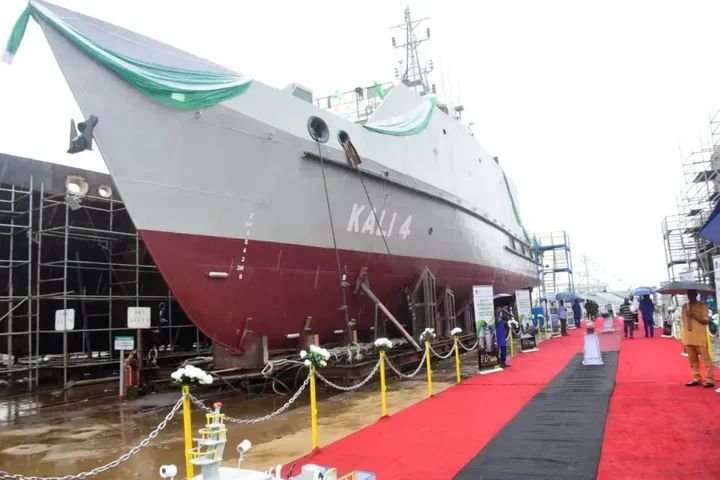
Delta State has stepped up its efforts to strengthen maritime security and protect critical oil and gas infrastructure with the induction of a new security support vessel, SSV-KALI 3.
The vessel was inducted into service on Tuesday at the Yade Barge, Niger River Bank, Asemoku Jetty, Okpai, in Ndokwa East Local Government Area of the state. The development brings additional maritime capacity to ongoing efforts to tackle oil theft, illegal bunkering and other crimes affecting the state’s waterways and energy assets.
The ceremony was attended by Delta State Deputy Governor, Monday Onyeme, who represented Governor Sheriff Oborevwori, and the Chief of Naval Staff, Vice Admiral Idi Abbas, alongside representatives of Sterling Oil Exploration and Energy Production Company Limited (SEEPCO) and other stakeholders.
New capacity in fight against oil theft
Oil theft and illegal bunkering remain major challenges for Nigeria’s oil-producing regions, where criminal activities around pipelines, waterways and production facilities can threaten government revenue, private investments and the environment.
The Delta State Government said the deployment of SSV-KALI 3 would strengthen its ability to secure waterways and support security agencies operating around critical oil and gas infrastructure.
Governor Oborevwori, represented at the event by his deputy, said the vessel would add valuable capacity to existing security operations by helping protect oil and gas assets and supporting efforts against oil theft, illegal bunkering and other maritime crimes.
The governor stressed that security was central to the ability of businesses to operate, invest and expand in the state.
For Delta, whose economy is closely linked to oil and gas activities, improving security around production areas and waterways could have wider implications for investment, employment and economic activity.
A more secure operating environment could also improve confidence among companies working in the energy sector while allowing legitimate businesses and communities that depend on waterways to operate with fewer disruptions.
A vessel built in Delta State
One of the major features of the project is that SSV-KALI 3 was designed and constructed in Delta State.
Governor Oborevwori described the locally built vessel as evidence of the state’s growing technical and industrial capacity.
Rather than simply acquiring security equipment from outside the country, the project demonstrates how local engineering expertise can contribute to strategic sectors such as energy and maritime security.
The governor said the achievement reflected the potential of local content, indigenous manpower and private-sector investment to support economic development.
He also commended SEEPCO and the Nigerian Navy for their collaboration in delivering the vessel, describing the partnership as an example of cooperation between government institutions, security agencies and private businesses.
The development could therefore have significance beyond maritime security. Locally produced equipment can create opportunities for engineers, technicians, manufacturers and other businesses within the wider industrial value chain.
Nigerian Navy backs stronger partnerships
The Chief of Naval Staff, Vice Admiral Idi Abbas, highlighted the importance of cooperation between the Nigerian Navy and private-sector operators in protecting the country’s maritime environment.
According to reports from the induction ceremony, Abbas said partnerships of this nature were important for protecting maritime businesses, energy infrastructure and other strategic assets.
He assured private-sector organisations that the Nigerian Navy remained willing to work with credible partners to deepen maritime security and protect Nigeria’s maritime interests.
The Navy’s involvement is particularly important because oil and gas infrastructure often extends across waterways and difficult-to-access areas where conventional land-based security operations may have limitations.
A dedicated security support vessel can provide an additional platform for patrols, monitoring, personnel movement and rapid response around waterways.
Protecting communities and economic activity
The significance of the vessel extends beyond oil companies and government revenue.
Delta’s waterways are also important to communities that depend on them for transportation, fishing, commerce and other economic activities.
Criminal activities such as illegal bunkering and maritime attacks can undermine these legitimate activities by making waterways less secure.
The state government said it had been working with security agencies to improve intelligence sharing, coordination and rapid response across communities and waterways associated with oil and gas operations.
The deployment of SSV-KALI 3 is expected to complement these efforts by providing additional operational support.
For residents, the effectiveness of the initiative will ultimately depend on whether improved security translates into safer waterways, reduced criminal activity and greater protection for communities and businesses.
Local content and industrial development
Beyond its security role, the SSV-KALI 3 project highlights the economic importance of local content in Nigeria’s oil and gas industry.
Nigeria has long sought to increase local participation in the petroleum sector by encouraging indigenous companies, technical professionals and manufacturers to take on more responsibilities previously handled by foreign contractors.
The Delta-built vessel provides an example of how local engineering and industrial capacity can be applied to a strategic national challenge.
Oborevwori said his administration would continue supporting initiatives capable of promoting local businesses, creating employment and strengthening the capacity of people and companies in the state.
If sustained, such initiatives could contribute to the development of a broader industrial ecosystem around maritime security, oil and gas services and engineering.
What the deployment means for Delta
The induction of SSV-KALI 3 comes at a time when the protection of Nigeria’s oil infrastructure remains an important national economic priority.
For Delta State, stronger maritime security could help reduce vulnerabilities around oil-producing communities and infrastructure while creating a safer environment for legitimate economic activity.
It could also strengthen cooperation between the state government, security agencies and private-sector operators.
However, a single vessel cannot eliminate oil theft or illegal bunkering on its own. The broader success of the initiative will depend on intelligence gathering, surveillance, community cooperation, law enforcement, prosecution of offenders and continued coordination among relevant agencies.
The vessel should therefore be viewed as part of a wider security strategy rather than a standalone solution.
A wider message for Nigeria
The SSV-KALI 3 project also sends a broader message about the role of local industry in addressing Nigeria’s security and economic challenges.
Its construction in Delta State demonstrates that sophisticated assets for strategic sectors can be developed locally when government, businesses and technical institutions work together.
For the oil and gas industry, stronger security can help protect production and investments. For communities, it can contribute to safer waterways. For local businesses, it can create opportunities for participation in industrial supply chains.
The challenge now is to ensure that the vessel is effectively deployed and maintained, with clear operational coordination between the state, the Nigerian Navy, SEEPCO and other relevant security stakeholders.
If properly utilised, SSV-KALI 3 could become an important addition to Delta State’s maritime security architecture and its broader campaign against oil theft and illegal bunkering.
Conclusion
Delta State’s induction of SSV-KALI 3 represents a new step in efforts to secure its waterways and protect critical oil and gas assets.
The vessel combines security objectives with a strong local-content component, having been designed and constructed in Delta State through collaboration involving SEEPCO and the Nigerian Navy.
As oil theft, illegal bunkering and maritime crime continue to pose challenges to Nigeria’s energy sector, stronger surveillance and security capacity will remain important.
For Delta, the immediate priority will be turning the new asset into measurable security gains — safer waterways, better protection of infrastructure, improved confidence for investors and stronger economic opportunities for communities.
Sources: Punch Newspapers; The Sun Nigeria; The Pointer; Asaba Metro.