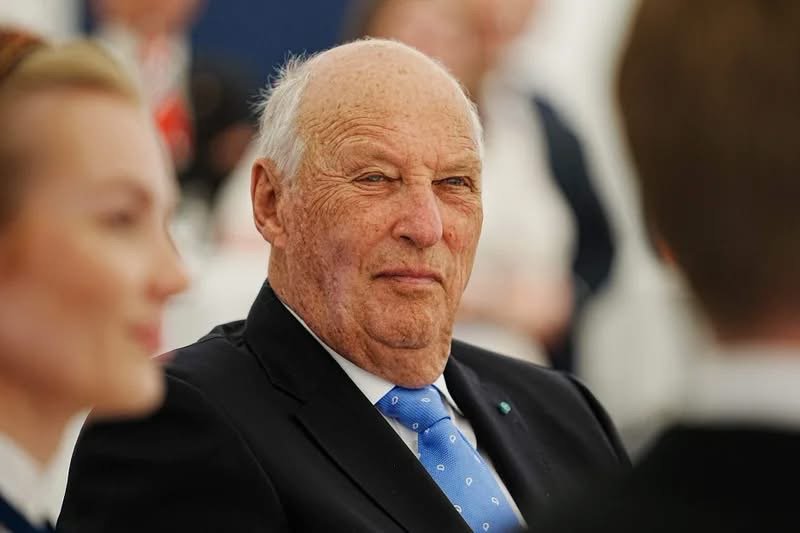
Norway’s King Harald V Health Update: Crown Prince Haakon Steps In as Regent Amid Hospitalisation Claim
Norway’s King Harald V has faced renewed scrutiny over his health, with reports circulating that the 89-year-old monarch has been hospitalised and that Crown Prince Haakon has assumed the responsibilities of Regent.
However, wengglobal’s review of available official and reputable sources found no current confirmation that King Harald has been hospitalised for two weeks because of haemolytic anaemia as stated in the supplied report.
The distinction is important. The Norwegian Royal Court’s official programme recently listed King Harald attending public engagements, including a reception for Norway’s national football team at the Royal Palace on July 13, 2026, while its official programme also showed him presiding over the Council of State on August 7.
The Royal Court’s current information further confirms that Crown Prince Haakon is the heir to the Norwegian throne and serves as Regent when the King is ill or abroad. That constitutional arrangement, however, does not by itself establish that a new period of regency is currently underway.
For wengglobal, accuracy is particularly important when reporting on the health of a sitting head of state. Claims concerning a monarch’s medical condition should be based on an official palace announcement, a verified statement from medical authorities or reporting from reputable news organisations with direct access to the information.
King Harald has experienced health challenges
King Harald, who has reigned since January 1991, has experienced several health problems in recent years.
In February 2024, he became seriously ill while holidaying in Malaysia and was admitted to hospital after developing an infection. He subsequently received a temporary pacemaker because of a low heart rate before being medically evacuated back to Norway.
Reuters reported at the time that the Norwegian Royal Court announced that the King would be on sick leave for two weeks, during which Crown Prince Haakon would take over his constitutional duties as Regent.
The episode generated international attention because Harald was then Europe’s oldest reigning monarch and had already experienced a number of health-related absences.
The King later underwent surgery in Norway to receive a permanent pacemaker.
The Associated Press subsequently reported that Harald returned to official duties after an extended period of sick leave following the pacemaker procedures. The report also noted that the monarch would permanently reduce his official workload because of his age.
Crown Prince Haakon has previously served as Regent
Crown Prince Haakon’s role as temporary Regent is established under Norway’s Constitution.
According to the Norwegian Royal Court, Article 41 provides that when the King is abroad or incapacitated by illness, the Crown Prince acts in the King’s stead and exercises the relevant royal powers.
Haakon has previously assumed those responsibilities on several occasions, including during his father’s treatment for cancer in 2003–2004, following heart surgery in 2005 and during Harald’s health crisis in 2024.
The arrangement is designed to ensure continuity in the constitutional functions of the Norwegian monarchy without requiring a change in succession.
In other words, when Haakon becomes Regent, he does not become King.
King Harald remains the constitutional monarch while temporarily unable to perform his duties.
What the Norwegian succession system says
Crown Prince Haakon is first in line to succeed his father.
The Norwegian Royal Court describes him as the King’s son, heir to the throne and the person who assumes the King’s responsibilities when the monarch is incapacitated or abroad.
The succession itself remains governed by the Norwegian Constitution.
The current order places Haakon first, followed by his daughter, Princess Ingrid Alexandra. The Royal Court explains that Norway’s succession rules were changed in 1990 to establish equal succession rights for male and female children, although transitional provisions preserved Haakon’s position because of his birth date.
Consequently, a temporary Regency should not be interpreted as an abdication or transfer of the throne.
No evidence found for haemolytic anaemia claim
The specific medical condition contained in the supplied report requires particular caution.
Haemolytic anaemia is a condition in which red blood cells are destroyed faster than the body can replace them. It can have several causes and may require medical treatment depending on its severity and underlying cause.
But as of the latest information available to wengglobal, there is no verified statement from the Norwegian Royal Court confirming that King Harald is currently being treated for haemolytic anaemia.
The Royal Court’s official material reviewed for this report does not identify such a diagnosis.
That means wengglobal cannot responsibly present the diagnosis as established fact.
This is particularly important because royal health reports can quickly spread through social media and secondary websites without confirmation from the palace or medical authorities.
Recent official appearances provide important context
The Royal Court’s published records provide a different picture from the claim that Harald has been continuously hospitalised for two weeks.
On July 13, 2026, the King hosted Norway’s men’s national football team at the Royal Palace following its historic World Cup campaign. Crown Prince Haakon, Princess Ingrid Alexandra and Prince Sverre Magnus were also present.
The official programme also recorded Harald presiding over a Council of State meeting on August 7, with Crown Prince Haakon attending.
These official records do not prove that the King could not subsequently have become unwell, but they demonstrate why the claim of a two-week hospitalisation should not be reported without further confirmation.
A responsible news report must distinguish between confirmed information and an unverified development.
Harald’s previous hospitalisations
The current report may also have been influenced by earlier stories about the King’s health.
In February 2026, reports indicated that Harald was hospitalised during a private holiday in Tenerife after developing an infection. Publicly available accounts said he was treated for a skin infection on his leg.
His health has also been affected by other infections and cardiac problems in previous years.
In 2024, his illness in Malaysia became particularly serious. After receiving the temporary pacemaker, he was flown back to Norway and subsequently received a permanent device.
The Associated Press reported that Haakon assumed his father’s duties during the King’s recovery.
The repeated health episodes have inevitably raised questions about the future of Norway’s monarchy, but Harald has previously rejected suggestions that he intends to abdicate.
A constitutional monarchy built around continuity
Norway’s monarchy is constitutional, meaning the King serves primarily as the country’s ceremonial head of state rather than exercising executive political power.
Government authority is exercised through elected institutions, while the monarch performs constitutional and representational duties.
That makes continuity particularly important when the King becomes temporarily unavailable.
The Regency mechanism allows government and state functions connected to the Crown to continue without disruption.
Article 41 of the Norwegian Constitution specifically provides for the Crown Prince to conduct government as temporary executor of royal powers when the King is unable to perform his duties because of illness.
The mechanism therefore provides a constitutional solution to temporary incapacity.
Haakon’s growing public role
Crown Prince Haakon has become increasingly familiar to the Norwegian public through his extensive official programme.
The Royal Court describes him as having a wide range of official responsibilities and specifically notes his role as Regent when the King is ill or abroad.
His previous periods as Regent have also provided practical experience in carrying out the constitutional responsibilities associated with the monarchy.
However, assuming temporary royal powers should not be confused with succession.
Haakon will become King only when the throne becomes vacant, such as following the death or abdication of the reigning monarch.
Until then, Harald remains King of Norway.
Health reporting requires verification
The latest claim illustrates the challenges facing journalists covering the health of public figures.
Medical information is particularly sensitive, and inaccurate reporting can cause unnecessary concern for family members, citizens and international audiences.
In this case, the reference to haemolytic anaemia and a two-week hospitalisation cannot presently be substantiated by the official sources reviewed.
The Norwegian Royal Court remains the most authoritative source for information concerning the King’s official condition and ability to carry out his duties.
Major international news organisations such as Reuters and Associated Press have previously provided detailed coverage of Harald’s confirmed hospitalisations, including the 2024 episode that led to a temporary pacemaker and his subsequent treatment in Norway.
Their earlier reporting also demonstrates that significant developments concerning the King’s health are normally accompanied by statements from the palace.
What happens if Harald is unable to perform his duties?
If the King becomes incapacitated, Norway’s constitutional system already provides a mechanism.
Crown Prince Haakon assumes the role of Regent and carries out the King’s constitutional functions.
If both the King and Crown Prince are unable to perform their duties, the Constitution provides for the Council of State to administer the realm.
This arrangement ensures that the temporary absence of an individual does not create a constitutional vacuum.
It also explains why reports that Haakon has become Regent should not automatically be interpreted as evidence of an impending change in the monarchy.
The future of Norway’s monarchy
At 89, King Harald is one of Europe’s oldest reigning monarchs, and his health has naturally become a subject of public interest.
His long reign has included several periods when illness temporarily limited his official activities.
Nevertheless, the monarchy has continued to function through established constitutional procedures, with Haakon stepping in whenever necessary.
The Royal Court has also indicated through its official programme that Harald continues to participate in public duties when his health permits.
That balance — maintaining the King’s constitutional role while allowing the Crown Prince to assume responsibilities during periods of incapacity — has allowed Norway’s system to operate without disruption.
wengglobal fact-check
Based on the sources reviewed for this report, wengglobal cannot independently verify the claim that King Harald V has been hospitalised for two weeks because of haemolytic anaemia or that a new period of Regency has officially begun in August 2026.
The Norwegian Royal Court’s recent official records show King Harald participating in public duties, including a July reception and an August Council of State meeting.
Crown Prince Haakon is, however, constitutionally empowered to serve as Regent whenever the King is ill or otherwise unable to perform his duties.
Earlier reports from Reuters and AP confirm that Haakon has exercised those responsibilities during previous periods of Harald’s hospitalisation.
For now, wengglobal will treat the haemolytic-anaemia claim as unverified pending an official announcement from the Norwegian Royal Court or corroboration from reputable news agencies.
This approach is consistent with wengglobal’s commitment to independent, evidence-based journalism and avoids presenting an unconfirmed medical claim as fact.
Sources
- The Royal Court of Norway — Crown Prince Haakon — Official information on Haakon’s role and Regency.
- The Royal Court of Norway — Regency — Constitutional rules governing a Regency when the King is ill or abroad.
- The Royal Court of Norway — Official Programme — Official record of recent royal engagements.
- Reuters — Norway’s King Harald on his way home from Malaysia — Coverage of Harald’s 2024 hospitalisation and Haakon’s Regency.
- Associated Press — Norwegian King Harald’s health and pacemaker treatment — Coverage of his recovery and Haakon’s assumption of royal duties.
- Associated Press — King Harald returns to work after pacemaker procedures — Report on the King’s return to official duties after his 2024 illness.
SEO Tags
Meta Description