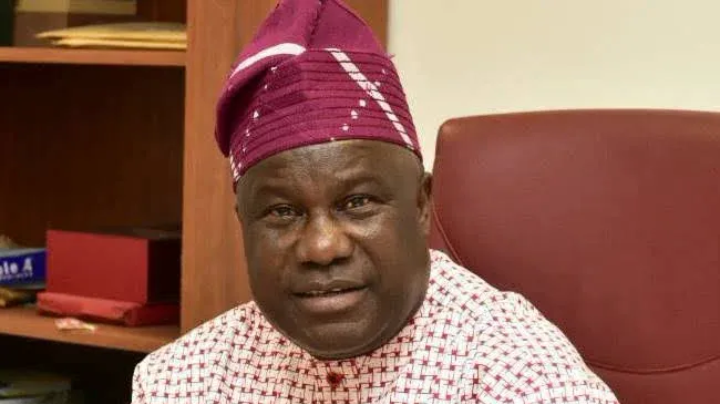
Agbebaku Explains Exit as Edo Assembly Speaker, Cites Personal Reasons and Commitment to Peace!
Former Speaker of the Edo State House of Assembly, Blessing Agbebaku, has explained his decision to relinquish the leadership of the state legislature, saying the move was motivated by personal considerations and a desire to preserve peace and stability in Edo State.
Agbebaku’s reported resignation comes against the backdrop of significant political changes within the Edo Assembly, which has witnessed defections, shifting party loyalties and changes in its leadership structure since the 2023 election cycle.
The development places renewed attention on the political relationship between the legislature and the executive arm of government in Edo, particularly as the state prepares for another phase of political realignment ahead of the 2027 general elections.
However, available reports reviewed by wengglobal indicate that Agbebaku was still serving as Speaker as recently as July 2026. Channels Television reported on July 21 that the Edo State House of Assembly, under Agbebaku’s leadership, directed chairmen of the state’s 18 local government councils to submit payment schedules for officers of the Edo State Security Network. (Channels Television)
wengglobal was therefore unable to independently verify the reported resignation from the speakership or locate a major national-media report containing Agbebaku’s latest explanation at the time of publication. The details concerning his resignation are consequently attributed to the information supplied for this report rather than presented as independently established fact.
Agbebaku’s rise to the speakership
Agbebaku emerged as Speaker of the Edo State House of Assembly in June 2023 after lawmakers inaugurated the eighth Assembly.
He represented Owan West State Constituency and was elected Speaker shortly after the proclamation of the Assembly by then-Governor Godwin Obaseki.
Vanguard, reporting on the development at the time, said Agbebaku emerged Speaker of the eighth Assembly, while Maria Edeko was elected Deputy Speaker. The report noted that 24 lawmakers were inaugurated into the Assembly. (Vanguard News)
In his acceptance remarks, Agbebaku promised to lead a unified legislature and said he would carry lawmakers along regardless of their political affiliations.
His emergence was significant because the Edo Assembly had experienced political tensions and leadership disputes in previous years.
Agbebaku therefore entered office with an expectation that the legislature would provide a stable platform for lawmaking, oversight and representation while maintaining an effective relationship with the executive.
Political shifts reshape Edo Assembly
The political configuration of the Edo Assembly changed considerably during Agbebaku’s tenure.
In May 2025, Agbebaku defected from the Peoples Democratic Party (PDP) to the All Progressives Congress (APC), alongside other political actors.
BusinessDay reported that Agbebaku explained his decision as being connected to the development of his Owan West constituency and his desire to retain the speakership position in order to facilitate development in his area. (Business Day)
The defection attracted considerable political attention because Agbebaku had been elected to the Assembly on the PDP platform.
His office subsequently clarified aspects of reports surrounding his decision.
The Nation reported that Agbebaku’s office rejected suggestions that the defection was motivated by personal financial benefit, describing such reports as misleading and maintaining that the decision was driven by his commitment to constituency development and collaboration with Governor Monday Okpebholo. (The Nation)
The development reflected the broader political realignment taking place in Edo following the 2024 governorship election, which brought Okpebholo of the APC to power.
Defections alter balance of power
Agbebaku’s movement to the APC occurred as several lawmakers and political figures also crossed party lines.
The Cable reported that the Speaker defected to the APC in May 2025 and that the move was part of a wider shift that eventually strengthened the ruling party’s position within the Assembly. (TheCable)
The changes eventually altered the balance between the APC and PDP lawmakers.
The Tribune reported that the APC became the majority party in the Edo Assembly following additional defections, although the change in numerical strength did not immediately result in the removal of Agbebaku as Speaker. (Tribune Online)
This history is important in understanding the political environment surrounding the reported resignation.
Agbebaku’s tenure was characterised not simply by legislative responsibilities but also by a period of considerable political transition in Edo State.
The former Speaker’s emphasis on peace
The latest explanation attributed to Agbebaku places peace at the centre of his decision.
According to the information supplied, the former Speaker said he resigned for personal reasons and in the interest of peace in Edo State.
If confirmed, the position would represent a significant shift from the intense political competition that has characterised parts of the state’s recent political history.
A legislative leadership position carries considerable political weight. The Speaker controls the proceedings of the House, presides over debates, manages the legislative agenda and plays an important role in determining how the Assembly interacts with other arms of government.
A voluntary departure from such a position can therefore have implications beyond the individual officeholder.
It can affect the distribution of political influence within the legislature, the relationship between political parties and the stability of the Assembly’s leadership structure.
For Edo State, the central question would be whether the reported resignation is part of a broader political arrangement or simply a personal decision by Agbebaku.
Without an official statement from the former Speaker or the Edo Assembly, it would be premature to draw conclusions about the political calculations behind the development.
Previous Assembly tensions
The Edo Assembly has experienced several periods of political tension in recent years.
During the administration of former Governor Godwin Obaseki, disagreements involving the executive, deputy governor and members of the legislature generated significant public attention.
Agbebaku himself previously called for unity within the House and stressed the importance of cooperation among lawmakers.
In 2024, the Assembly also suspended three lawmakers amid allegations surrounding a plot to impeach the Speaker and other principal officers. The development reflected the extent to which internal political disagreements could threaten legislative stability.
A report carried by Pulse, based on a News Agency of Nigeria report, said former Edo Assembly Speaker Francis Okiye resigned from the PDP in May 2024 amid political disagreements, while the Assembly under Agbebaku was dealing with internal tensions. (Pulse Nigeria)
These episodes form part of the wider political context in which the Edo legislature has operated.
Agbebaku’s reported appeal to prioritise peace would therefore resonate against a background in which political divisions have periodically affected the Assembly.
His tenure also involved legislative activities
Despite the political changes surrounding the Assembly, the legislature under Agbebaku continued to perform its statutory functions.
As recently as July 2026, Channels Television reported that the House directed the 18 local government chairmen to submit payment schedules for members of the Edo State Security Network.
The directive was aimed at resolving a dispute concerning payment of stipends to members of the security network.
According to the report, Agbebaku recalled that the state government had organised training for members of the security network and issued certificates to qualified officers as part of the process required for payment. (Channels Television)
The Assembly’s activities therefore extended beyond political disputes to matters of security, local government administration, revenue harmonisation and other areas of governance.
The reported resignation would consequently come at a time when the House remains involved in issues with direct consequences for residents across the state.
What the reported resignation could mean
If formally confirmed, Agbebaku’s departure would open a new chapter for the Edo State House of Assembly.
The immediate task would be to determine who succeeds him and whether the existing political configuration of the House will remain intact.
The process could also test the strength of the APC’s internal structure, particularly because Agbebaku moved from the PDP to the APC while serving as Speaker.
The choice of a successor could become a significant political issue if different interests within the ruling party seek to influence the leadership of the legislature.
It could also have implications for the relationship between Governor Okpebholo’s administration and the House.
A stable relationship between the executive and legislature can facilitate the passage of budgets, development legislation and government policies. Conversely, prolonged disagreement over legislative leadership could create uncertainty and distract from governance.
For that reason, Agbebaku’s stated concern about peace, if confirmed, is particularly relevant.
Political succession and 2027
The reported leadership change also comes as political parties begin positioning themselves ahead of the 2027 elections.
Although the next general election remains some distance away, political realignments are already occurring across Nigeria.
In Edo, lawmakers and political actors will have to balance constituency interests, party structures and the broader ambitions of political organisations.
Agbebaku’s political future will also attract attention.
He remains an elected representative of Owan West, and any decision concerning his future political ambitions could become an important factor in the local political equation.
In May 2026, PUNCH reported that Agbebaku appealed to APC leaders and members in Owan West for forgiveness over past disagreements within the party. The report said he also expressed an intention to seek re-election and called for unity among party members. (Punch Newspapers)
That development provides additional context for understanding his political position within the APC and his constituency.
It also suggests that political reconciliation has been an important part of his recent engagement with party stakeholders.
Need for official clarification
Given the conflicting picture in publicly available reports, an official statement is important.
The most recent major-media report located by wengglobal before publication still identified Agbebaku as Speaker in July 2026.
Accordingly, the reported resignation should not be treated as conclusively established until the Edo State House of Assembly, its Clerk, Agbebaku himself or another authorised authority confirms the development.
Such confirmation would also clarify the effective date of the resignation, whether a successor has been selected and what role Agbebaku intends to play in the Assembly or broader Edo politics.
Responsible journalism requires that these questions be answered through verifiable information rather than speculation.
A moment for political stability
If Agbebaku’s decision to leave the speakership is ultimately confirmed, his stated emphasis on personal reasons and the preservation of peace would place the development within a broader conversation about political stability in Edo State.
The effectiveness of a legislature depends not only on the individuals occupying leadership positions but also on the willingness of lawmakers to work collectively despite political differences.
The Edo Assembly has experienced significant political changes since 2023, including party defections and changes in its internal balance.
The next phase will therefore require careful management to ensure that leadership changes do not disrupt legislative work or weaken the Assembly’s ability to represent citizens.
For Agbebaku, the reported decision could mark the conclusion of an important chapter that began with his election as Speaker in June 2023.
For the Edo Assembly, it could signal the beginning of another political transition.
And for the people of Edo State, the overriding expectation remains that political developments should strengthen rather than undermine governance, stability and democratic accountability.
wengglobal will continue to monitor the situation and publish further updates once the reported resignation and its circumstances are formally confirmed by the relevant authorities.
Sources
- Channels Television — Report on the Edo Assembly’s July 2026 activities under Speaker Blessing Agbebaku. (Channels Television)
- Vanguard — Report on Agbebaku’s emergence as Speaker of the Edo State House of Assembly in June 2023. (Vanguard News)
- BusinessDay — Report on Agbebaku’s 2025 defection from the PDP to the APC and his explanation for the decision. (Business Day)
- The Nation — Report on Agbebaku’s clarification concerning his defection and constituency-development rationale. (The Nation)
- TheCable — Report on changes within the Edo Assembly following the resignation of Deputy Speaker Maria Oligbi-Edeko and Agbebaku’s earlier defection. (TheCable)
- PUNCH — Report on Agbebaku’s appeal for reconciliation with APC stakeholders in Owan West in 2026. (Punch Newspapers)
- Pulse/NAN — Background report on political developments involving the Edo Assembly and former Speaker Francis Okiye. (Pulse Nigeria)
Editorial Verification Note: At the time of publication, wengglobal could not independently confirm the reported resignation of Blessing Agbebaku as Speaker from a publicly accessible official statement or a major national-media report. The most recent report located by wengglobal, published by Channels Television on July 21, 2026, still identified him as Speaker. The supplied claim that he resigned for personal reasons and in the interest of peace is therefore clearly attributed and should be updated when official confirmation becomes available.