Reported Simon Daniel Yusuph l journalist at wengglobal
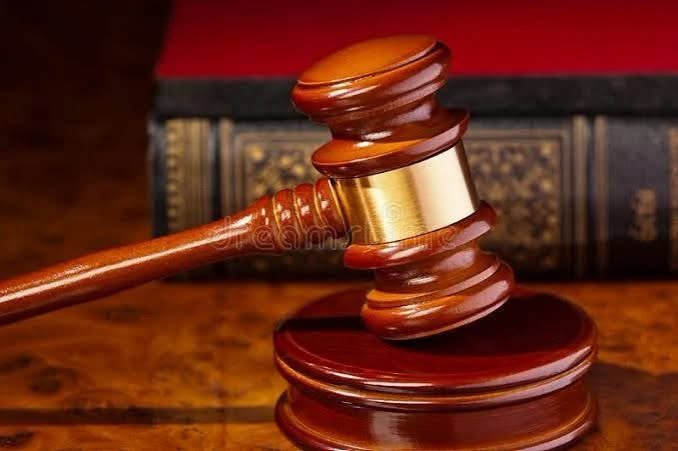
A Federal High Court has issued an order restraining the Imo State Government and the police from disrupting rallies, political gatherings and other lawful civic activities organised by Ikenga Imo Ugochinyere, the member representing Ideato North/South Federal Constituency in the House of Representatives.
The ruling comes against the backdrop of heightened political tensions in Ideato and follows allegations by the federal lawmaker and his supporters that security operatives had repeatedly attempted to prevent peaceful political gatherings in the constituency.
The court’s intervention is significant because it places judicial protection around the exercise of constitutional rights to peaceful assembly, association and political participation at a time when political parties and their supporters are increasingly mobilising ahead of Nigeria’s 2027 general elections.
Ugochinyere, a prominent political figure in Imo State and a national leader of the Action Peoples Party (APP), has been involved in a series of political and legal disputes with authorities in the state over the past several years.
The latest development also comes after a controversial incident at Ntueke, in Ideato South Local Government Area, where a political gathering associated with Ugochinyere was disrupted by security operatives. Reports from the incident alleged the use of tear gas and gunfire, while the police said an investigation had been commenced to establish what actually occurred. (Premium Times Nigeria)
Court Intervention Follows Growing Tension Over Political Gatherings
The Federal High Court’s order represents another judicial development in the long-running dispute surrounding Ugochinyere’s political activities in Imo State.
The lawmaker has previously obtained court orders against state authorities and security agencies in circumstances involving alleged attempts to arrest, intimidate or restrict him.
In February 2023, for instance, the High Court of the Federal Capital Territory sitting in Gwagwalada restrained then Imo State Governor Hope Uzodimma, security agencies and other respondents from arresting Ugochinyere or subjecting him to certain alleged criminal charges pending determination of the substantive case. PUNCH and Vanguard reported the ruling at the time. (Punch Newspapers)
A separate ruling reported in March 2023 also restrained the police from acting on an invitation issued to Ugochinyere in connection with allegations involving murder, kidnapping and arson pending the determination of the substantive suit. (Punch Newspapers)
The latest order therefore adds another chapter to a relationship between the lawmaker and state security authorities that has periodically been marked by litigation and competing allegations.
Disputed Ntueke Rally Brings Issue Back Into Focus
The immediate political context surrounding the latest court intervention includes the April 2026 rally in Ntueke.
The gathering was organised by Ugochinyere’s supporters in connection with the unveiling of an APP office and his endorsement as a candidate for the Ideato Federal Constituency ahead of the 2027 elections.
According to Premium Times, Ugochinyere accused security operatives of using tear gas and, according to his allegation, live ammunition to disperse supporters. The publication said video footage it reviewed showed police operatives blocking a road with an armoured vehicle before tear gas was deployed. However, it noted that the footage did not independently establish the allegation that security personnel fired live ammunition. (Premium Times Nigeria)
The distinction is important for responsible reporting because allegations concerning the use of live ammunition remain contested.
The Nigerian Army also rejected suggestions that its personnel were involved. Premium Times quoted Army spokesperson Colonel Appolonia Anele as saying the Army had no personnel at the rally and that the commander of 34 Brigade Artillery confirmed there was no military presence at the venue. (Premium Times Nigeria)
Meanwhile, Imo State Police spokesperson Henry Okoye said the police had commenced an investigation into the incident.
Other reports gave accounts of injuries among participants. Vanguard reported that at least 15 people were allegedly injured during attempts to disperse the gathering, while Leadership reported that two women collapsed and about 15 people were injured after tear gas was fired. (Vanguard News)
These varying accounts underline the need for an independent and transparent investigation capable of establishing precisely what happened at Ntueke.
Ugochinyere: Political Participation Must Be Protected
Ugochinyere has consistently argued that peaceful political mobilisation is a constitutional right and that neither government authorities nor security agencies should prevent citizens from gathering peacefully.
Following the Ntueke incident, the lawmaker called on the Inspector-General of Police and other senior security officials to investigate the conduct of personnel involved.
He argued that commissioning a political party office and gathering supporters to express political preferences were legitimate democratic activities.
His position has received support from some community and political groups.
The Ideato Peoples Assembly, an apolitical socio-cultural organisation, subsequently called for an investigation into the alleged attack on the Ntueke rally and urged authorities to protect the right to peaceful assembly. The group said the incident occurred on April 27, 2026, and alleged that several people were wounded. (Global Upfront Newspapers)
Such calls reinforce the broader debate about the appropriate role of security agencies during political activities.
Security and Public Order Responsibilities
While citizens have constitutional rights to peaceful assembly and association, those rights operate alongside the responsibility of authorities to maintain public order and protect lives and property.
Political rallies can present security challenges, particularly in areas experiencing political rivalry or insecurity. Security agencies are therefore expected to provide protection, manage crowds and prevent violence rather than become a source of unnecessary confrontation.
Where restrictions on political gatherings are considered necessary, authorities are expected to act within the law and provide legitimate justification.
This makes the court’s intervention particularly relevant. Judicial oversight can provide a mechanism for determining whether government or security actions fall within their lawful responsibilities or improperly interfere with protected civic rights.
The order does not, however, mean that political organisers are exempt from laws governing public gatherings, public safety or criminal conduct. Nor does it prevent security agencies from responding to genuine threats or offences in accordance with the law.
Rather, the central issue is whether peaceful political activities can be disrupted arbitrarily.
2027 Elections Raise the Stakes
The dispute has broader significance because Nigeria is moving towards the 2027 general elections, with political parties already positioning candidates, strengthening structures and mobilising supporters.
In Imo State, Ugochinyere has emerged as an important opposition figure, particularly following his move to the APP.
His political activities in Ideato have attracted substantial grassroots support but have also generated opposition and controversy.
The April rally reportedly attracted a large crowd, with Vanguard estimating attendance at more than 10,000 people. (Vanguard News)
The scale of political mobilisation in the constituency means that any confrontation between political groups and security agencies could have consequences beyond a single gathering.
A peaceful and credible electoral environment requires political parties to be allowed to organise and communicate with voters while ensuring that rallies do not become platforms for violence, intimidation or the incitement of unrest.
A History of Legal Battles
Ugochinyere’s latest court victory is not his first legal confrontation involving Imo authorities.
In December 2022, the FCT High Court sitting in Apo reportedly restrained the Imo State Government, police and Department of State Services from arresting or detaining him over allegations he described as politically motivated. The court also awarded ₦5 million in general and exemplary damages in his favour. (Vanguard News)
In another ruling in 2023, the FCT High Court restrained security agencies from invading his home and from arresting, detaining or charging him over certain allegations. THISDAY reported that the order also covered his supporters, motorcade and campaign convoy. (Thisdaylive)
These earlier cases provide important context for understanding why the latest ruling is being viewed as significant by Ugochinyere and his supporters.
However, each court case must be treated on its own facts and legal issues. Previous judicial interventions do not automatically establish wrongdoing by the state government or security agencies in subsequent incidents.
The Imo State Government has previously denied allegations of wrongdoing made by Ugochinyere. Similar allegations surrounding earlier disputes have also been contested by government officials. (Punch Newspapers)
The Wider Democratic Question
At the heart of the dispute is a question that extends beyond Ugochinyere, the APP or Imo State: how should Nigeria balance public security with citizens’ constitutional rights during politically sensitive periods?
Democracy depends on more than voting on election day. It requires citizens to organise, associate, campaign, criticise government, attend political meetings and express political preferences without unlawful intimidation.
At the same time, democratic rights do not eliminate the responsibility of political actors to maintain peaceful conduct.
Political parties and their supporters must ensure that gatherings remain orderly, while security agencies must exercise restraint and professionalism.
The courts consequently have an important role in resolving disputes where either side believes those responsibilities have been breached.
What the Ruling Means for Imo Politics
The Federal High Court order could provide immediate legal protection for Ugochinyere’s political activities, particularly as the APP intensifies mobilisation across Ideato.
It also sends a broader message that disputes involving political gatherings should be addressed through lawful processes rather than confrontation.
For security agencies, the ruling reinforces the principle that policing political activities must remain within constitutional and statutory boundaries.
For political parties, it underscores the need to organise rallies responsibly, obtain any legally required approvals and cooperate with security authorities to prevent disorder.
And for voters, the development highlights the importance of preserving an environment in which political choices can be expressed freely and peacefully.
Wengglobal Perspective
The latest ruling should not be interpreted as a judicial declaration that every allegation made by Ugochinyere against the Imo State Government or security agencies has been established as fact.
Rather, it is an important judicial development in a continuing dispute over the boundaries between legitimate security operations and the constitutional rights of citizens to assemble and participate in political activities.
The allegations surrounding the Ntueke rally remain subject to investigation, particularly claims regarding the use of live ammunition and the involvement of specific security personnel.
The police investigation announced after the incident will therefore be important in establishing an authoritative account.
For wengglobal, the central concern is the preservation of democratic space and the rule of law. Political competition ahead of 2027 will inevitably become more intense, but political disagreements should be resolved through institutions, evidence and lawful processes.
Security agencies must remain professional and politically neutral, while political actors must ensure that their activities do not threaten public safety.
The latest Federal High Court intervention offers an opportunity for all parties to step back from confrontation and allow constitutional institutions to function.
As Nigeria approaches another consequential electoral cycle, the ability of political actors, government institutions, security agencies and the judiciary to respect clearly defined constitutional boundaries will be critical to maintaining public confidence in the democratic process.
The court’s order may therefore be more than a temporary legal protection for one lawmaker. It could become another test of how Nigeria’s institutions manage the delicate relationship between security, political competition and citizens’ fundamental freedoms.
Sources
- Premium Times — Lawmaker accuses security operatives of firing live bullets, teargas to disrupt party’s rally. (Premium Times Nigeria)
- Vanguard — Teargas, live bullets as Ugochinyere’s supporters defy attempt to stop rally. (Vanguard News)
- PUNCH Newspapers — Court stops Uzodimma from arresting CUPP spokesperson, Ugochinyere. (Punch Newspapers)
- THISDAY — Court Stops Imo Gov, Security Agencies from Invading CUPP Spokesperson’s Home. (Tribune Online)
- The Guardian Nigeria — Reports on political tensions and opposition activities involving Ugochinyere and Imo State. (Guardian NG)
- Leadership — Two Collapse, 15 Injured During Ugochinyere’s Rally In Imo. (Leadership)
- The Independent Nigeria — Reports on Ugochinyere’s allegations concerning opposition activities and security operations in Imo. (independent.ng)