Uttarakhand Tunnel Disaster: Seven Workers Killed as 19 Rescued After Landslide and Flooding!
A major tunnel accident in India’s Himalayan state of Uttarakhand has left seven workers dead after a sudden landslide sent water, mud and debris into an under-construction tunnel at a hydroelectric project, with 19 workers rescued and an emergency search continuing for others reported missing.
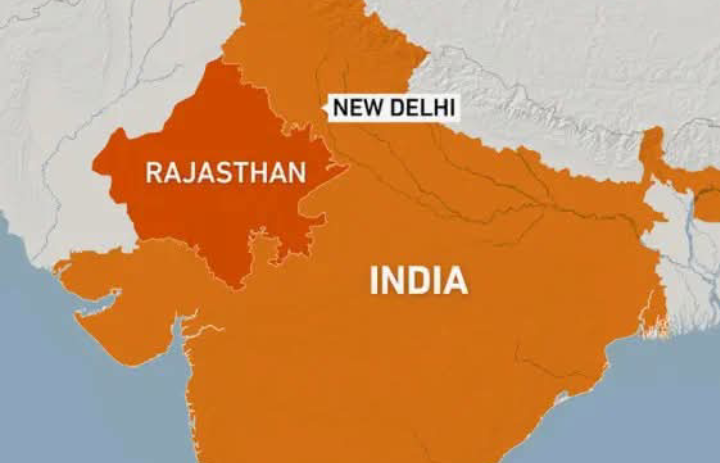
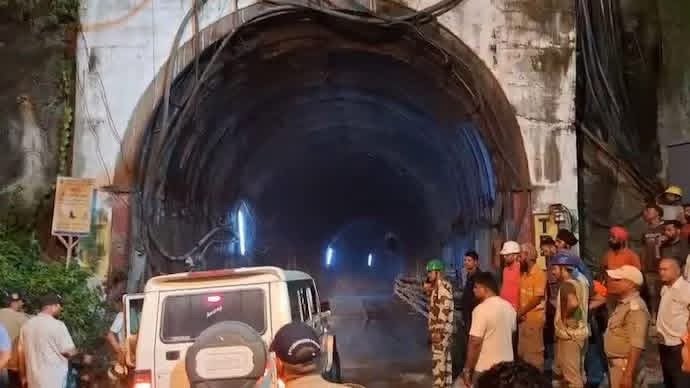
The incident occurred on Thursday evening at Mayapur near Pipalkoti in Chamoli district, where construction was underway on the Vishnugad-Pipalkoti Hydroelectric Project operated by the state-owned Tehri Hydro Development Corporation (THDC). The accident has triggered a large-scale multi-agency rescue operation involving disaster response personnel, police and other emergency services.
According to the Press Trust of India (PTI), 22 people were inside the tunnel when landslides and subsidence caused debris and water to rapidly fill part of the underground structure. Nineteen people were rescued overnight, while seven of those brought out were confirmed dead. Three others were still being searched for as rescue teams continued operations. (The Pioneer)
The incident has once again drawn attention to the dangers associated with major infrastructure projects in Uttarakhand, a mountainous region where steep terrain, geological instability, monsoon rainfall and seismic activity can complicate construction and emergency response.
Landslide and Water Inundation Trigger Emergency
Officials said the incident happened at about 7pm local time on Thursday when a sudden flow of water and debris entered the tunnel.
The force of the incoming material caused a partial collapse and flooded sections of the underground construction site, trapping workers inside. Rescue personnel subsequently faced difficult conditions, including substantial water levels and unstable debris while attempting to reach those still unaccounted for.
The Daily Pioneer, citing PTI, reported that the tunnel remained filled with water during the rescue operation and that six rescue personnel entered the affected section as teams worked to locate the missing workers. (The Pioneer)
The National Disaster Response Force (NDRF), State Disaster Response Force (SDRF), Indo-Tibetan Border Police (ITBP) and local police were among the agencies involved in the emergency response.
Uttarakhand Chief Minister Pushkar Singh Dhami travelled to Pipalkoti to monitor the rescue operation, while district authorities directed agencies to deploy the resources required to locate the missing workers.
Conflicting Early Figures Underscore Fluid Situation
As with many developing disasters, casualty and rescue figures changed as officials gained access to the affected tunnel and accounted for workers.
An Associated Press report said 22 workers had been inside the tunnel, with 12 rescued alive and three still missing at the time of its update. It also reported that at least seven workers had died. (AP News)
Hindustan Times later reported that 21 workers had been evacuated, with seven declared dead and 14 injured, while authorities continued monitoring the situation. (Hindustan Times)
Meanwhile, PTI reporting published by The Daily Pioneer gave the figure of 19 workers rescued, seven dead and three missing. (The Pioneer)
The differences reflect the rapidly changing nature of the rescue operation rather than necessarily indicating separate incidents. Wengglobal understands that figures may continue to be revised as authorities complete identification and accounting procedures.
Hydropower Development Under Scrutiny
The accident occurred at the Vishnugad-Pipalkoti Hydroelectric Project, a major hydropower development in the Himalayan region.
Hydropower projects are an important component of India’s energy strategy, particularly in mountainous states where rivers provide significant potential for electricity generation. However, tunnelling and other large-scale construction activities in the Himalayas present unusual engineering challenges.
The region is characterised by steep slopes, fractured rock formations and active geological processes. Heavy monsoon rainfall can further increase the risk of landslides, rockfalls and sudden water infiltration into construction areas.
The latest disaster is therefore likely to renew debate over the safety of infrastructure development in ecologically and geologically fragile parts of the Himalayas.
The Associated Press noted that construction accidents in India can occur amid rapid infrastructure expansion, while the Himalayan region presents additional risks because of fragile mountains, seismic activity and unpredictable underground conditions. (AP News)
For workers operating underground, the combination of geological instability and sudden water ingress can create a particularly dangerous environment, making early-warning systems, geological surveys, emergency exits, drainage systems and strict construction safety procedures critical.
Uttarakhand’s Troubled History With Tunnel Accidents
The latest accident has also revived memories of another major tunnel disaster in Uttarakhand.
In November 2023, 41 workers became trapped for 17 days after part of the Silkyara-Barkot tunnel in Uttarakhand collapsed. A complex rescue operation eventually brought all 41 workers to safety.
The 2023 operation attracted international attention because rescuers had to navigate unstable ground and repeated technical challenges before reaching the trapped workers.
The Associated Press referenced the 2023 incident as an example of the hazards faced by workers involved in tunnel construction in the Himalayan region. (AP News)
The more recent incident also follows a fatal tunnel-related accident in Uttarakhand in July 2026. The Indian Express reported that a 21-year-old worker from Jharkhand died after a portion of concrete lining fell inside the under-construction Silkyara-Barkot tunnel. (The Indian Express)
The recurrence of serious accidents has intensified questions about whether construction standards, geological assessments and worker protection measures are adequate for the demanding conditions of the region.
Monsoon Adds to Rescue Challenges
The accident comes during India’s annual monsoon season, when heavy rainfall frequently triggers landslides and flooding across mountainous areas.
Uttarakhand has experienced significant rainfall and landslide activity in recent weeks, creating additional difficulties for emergency services operating in remote and mountainous terrain.
Water entering an underground tunnel can rapidly change the conditions facing rescuers. Rising water levels can restrict access, undermine debris and increase the risk to both trapped workers and emergency personnel.
In the Chamoli operation, rescue teams had to work around these challenges while attempting to establish safe access to the affected section.
The emergency response consequently required coordination among several specialised agencies rather than relying on a single rescue service.
Human Cost Behind the Infrastructure Push
Beyond the engineering and environmental questions surrounding the accident, the immediate concern remains the families of those who lost their lives.
The seven confirmed fatalities represent a significant human cost for a project intended to contribute to India’s energy infrastructure. The injured workers were taken for medical treatment, while emergency teams continued searching for those still unaccounted for.
Hindustan Times reported that injured workers were initially taken to the district hospital in Gopeshwar, while Base Hospital Srinagar and AIIMS Rishikesh were placed on alert to provide advanced treatment if required. (Hindustan Times)
The incident underscores the importance of ensuring that economic and infrastructure objectives are matched by rigorous protection of workers.
For major projects in high-risk environments, safety cannot be treated simply as an operational requirement. It is central to responsible infrastructure development.
Questions Likely to Follow Rescue Operation
Once the immediate rescue phase is completed, authorities are likely to face questions about what caused the sudden inflow of water and debris, whether the incident could have been prevented and whether existing safety protocols were properly implemented.
Investigators would ordinarily need to establish the geological conditions at the site, the effectiveness of drainage and support structures, the warning systems available to workers and the adequacy of emergency evacuation arrangements.
Such assessments are particularly important in mountainous construction zones where conventional assumptions about ground stability may not always apply.
The focus should also remain on whether workers had sufficient training, protective equipment, communication systems and clearly defined evacuation procedures.
While the precise cause of the latest incident remains subject to official investigation, the scale of the disaster demonstrates the importance of continuous risk assessment throughout the construction cycle.
Broader Lessons for Himalayan Infrastructure
The Uttarakhand tunnel accident is not an isolated reminder of the risks associated with infrastructure development in the Himalayas.
In July 2026, another major tunnel disaster in neighbouring Sikkim left 20 people dead at a hydroelectric project, according to reports cited by Al Jazeera. Rescue efforts there were complicated by waterlogging and hazardous underground conditions. (Al Jazeera)
Taken together, such incidents raise broader questions about the pace of infrastructure expansion in environmentally sensitive mountain regions.
India faces significant energy and transport demands, and hydropower remains an important part of its infrastructure strategy. Yet development in fragile terrain requires careful balancing of economic objectives, environmental considerations, geological realities and occupational safety.
For policymakers and project developers, the latest Uttarakhand tragedy provides another reminder that construction timelines and energy ambitions must not come at the expense of worker safety.
For now, the priority remains locating the missing workers, supporting survivors and injured personnel, and establishing the circumstances that led to the disaster.
As rescue teams continue their efforts in Chamoli, the tragedy stands as a stark reminder of the human risks involved in building critical infrastructure in one of the world’s most geologically challenging environments.
Sources
- Associated Press — “Tunnel collapses at an Indian hydropower project, killing at least 7” (AP News)
- Hindustan Times — “Seven workers killed, 14 injured after landslide, water seepage in Chamoli tunnel” (Hindustan Times)
- The Daily Pioneer/PTI — “7 dead as water floods Chamoli tunnel, search on for 3 missing” (The Pioneer)
- PUNCH — “Seven workers killed, 19 rescued in India tunnel accident” (Punch Newspapers)
- The Indian Express — “Falling slab kills 21-year-old in Uttarakhand tunnel 3 years after dramatic rescue of 41 workers” (The Indian Express)
- Al Jazeera — “Death toll from blast at Indian hydroelectric project rises to 20 people” (Al Jazeera)