2027 Elections: Obi–Kwankwaso Movement Raises Alarm Over Alleged Plot to Disrupt NDC in Enugu!
ENUGU, Nigeria — Political tensions within the Nigeria Democratic Congress (NDC) in Enugu State have intensified after the Obi–Kwankwaso United Front raised allegations of an attempt to take control of the party’s structure and influence the outcome of its internal selection processes ahead of the 2027 general elections.
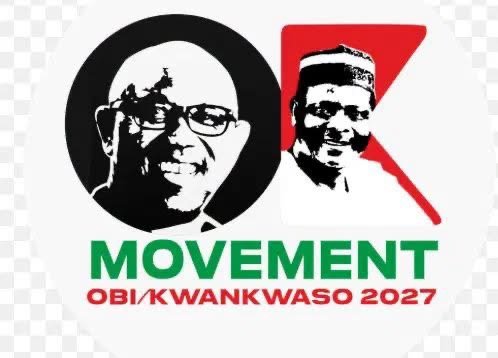
The group, which identifies with the political movement supporting NDC presidential candidate Peter Obi and his running mate, Rabiu Musa Kwankwaso, has called on the party’s national leadership to intervene in the Enugu dispute and ensure that candidates emerge through transparent and credible internal processes.
The allegations centre on disagreements over the conduct and outcome of NDC primary elections in the state. The group has accused former Enugu State governor Okwesilieze Nwodo and former federal permanent secretary Chinyeaka Oha of attempting to influence the party’s candidate-selection process.
Those allegations remain claims by the group and have not been independently established by Wengglobal. Neither Nwodo nor Oha has been cited in the available reports as accepting the accusations.
The dispute nevertheless adds another layer to the internal challenges facing the NDC as it attempts to consolidate its structures across the country and position itself as a major opposition platform ahead of the 2027 elections.
The controversy was reported by The Whistler and The Authority, which both covered complaints from NDC stakeholders in Enugu over alleged interference in the party’s primary process. (The Whistler)
Obi–Kwankwaso group demands transparent process
The Obi–Kwankwaso United Front has urged Peter Obi and Rabiu Kwankwaso to intervene in the dispute and ensure that the party’s structures remain under the control of duly recognised party officials.
The group’s coordinator, Charles Nwadike, warned that the NDC could lose substantial support in Enugu State if members believe that candidates are being imposed rather than emerging through the party’s internal processes.
According to reports, Nwadike argued that the party’s leadership should allow the votes of its members to determine candidates rather than accept lists allegedly prepared by individuals or factions.
The group also threatened the possibility of mass defections if the national leadership proceeds with candidates whom aggrieved members believe were not legitimately selected.
The allegations have not been independently verified, and Wengglobal has not established that any candidate was unlawfully imposed.
What is clear, however, is that disagreement over the primary process has become sufficiently serious to attract public intervention from groups associated with the Obi–Kwankwaso political movement.
The dispute also demonstrates the difficulty of managing a rapidly expanding political organisation containing members with different backgrounds, political histories and ambitions.
Enugu NDC executives reject disputed candidate list
The controversy became more pronounced after a group of NDC executive members in Enugu reportedly rejected a list of candidates allegedly submitted to the national leadership by Nwodo and Oha.
According to The Authority, the executives argued that the list did not correspond with the outcomes of the party’s primary elections and described it as a product of individual interests rather than the established electoral process. (The Authority)
The development is significant because political parties rely on the credibility of their nomination processes to maintain cohesion among aspirants and supporters.
When competing lists of candidates emerge after a primary, the dispute can quickly extend beyond individual aspirants and affect the wider party structure.
Supporters of candidates who believe they won may resist attempts to replace them, while those included on alternative lists may argue that their nominations were legitimate.
The national leadership must therefore resolve the disagreement in a way that is seen to be procedurally fair by the competing sides.
Allegations of candidate substitution
Another major concern raised by the Enugu groups is the allegation that some aspirants who emerged from the party’s internal processes could be replaced by candidates favoured by other interests.
The youth wing of the NDC operating under the umbrella of the OK Movement in Enugu North Senatorial District reportedly raised similar concerns.
In a statement issued in Nsukka and signed by its coordinator, Theophilus Eke, the group alleged that efforts were being made to influence the party’s candidate-selection process and substitute some aspirants with others.
Again, these are allegations rather than established findings.
No independent evidence has been presented in the available reports proving that a systematic substitution operation was underway.
Nevertheless, the similarity between the concerns raised by the Obi–Kwankwaso United Front and the youth wing suggests that dissatisfaction over the primary process extends beyond a single individual or constituency.
For the NDC leadership, that could make the issue more difficult to resolve through private negotiations alone.
The controversy comes as NDC expands nationally
The dispute in Enugu comes only months after Peter Obi and Rabiu Kwankwaso formally moved to the NDC, creating a new political alignment that has attracted significant attention ahead of the 2027 presidential election.
Obi, the former Anambra State governor and 2023 Labour Party presidential candidate, and Kwankwaso, the former Kano State governor and 2023 New Nigeria Peoples Party presidential candidate, joined the NDC in May 2026.
Their movement to the party followed growing uncertainty within the opposition coalition that had previously been associated with the African Democratic Congress.
The development significantly increased the political profile of the NDC.
The Guardian Nigeria reported that the Obi–Kwankwaso Movement subsequently launched a grassroots mobilisation campaign in the South-East, with Enugu serving as a major venue for its political activities. (The Guardian Nigeria)
That history makes the current Enugu dispute particularly important.
The South-East is a major component of Obi’s political support base, and Enugu has traditionally been an important centre of political activity in the region.
Any prolonged internal disagreement in the state could therefore have implications beyond individual primary contests.
NDC faces an internal democracy test
The dispute places the NDC under scrutiny over its commitment to internal democracy.
Political parties seeking national support often campaign on promises of transparency, accountability and institutional reform.
Those principles are also tested inside party structures.
If members believe that their votes in primary elections can be overturned by influential individuals, confidence in the party can decline.
Conversely, if the national leadership establishes a transparent mechanism for reviewing complaints and correcting genuine procedural errors, it could strengthen the party’s credibility.
The Enugu dispute therefore provides the NDC with an opportunity to demonstrate how it intends to manage internal competition.
The party’s response could determine whether the current disagreement becomes a temporary political dispute or develops into a wider organisational crisis.
Why the issue matters ahead of 2027
Candidate selection is one of the most sensitive stages in any election cycle.
For aspirants, winning a party ticket provides access to the electoral platform, party machinery and campaign structure.
For the party, however, every nomination can produce winners and losers.
The losers may accept the outcome if they believe the process was transparent.
Where they suspect manipulation, the consequences can include protests, defections, litigation and parallel party structures.
Nigeria’s political history contains numerous examples of internal party disputes eventually reaching the courts or contributing to factional divisions.
This makes early resolution particularly important for the NDC.
The party is still building its national structure and cannot afford prolonged disputes that could weaken its organisational capacity before the 2027 election.
Obi’s previous warning against litigation
The Enugu controversy also contrasts with Peter Obi’s earlier appeal to NDC members to avoid unnecessary litigation and focus on building the party.
After joining the NDC, Obi urged members to resolve internal disputes without allowing prolonged court battles to weaken the organisation.
The Punch reported that Obi specifically appealed to party members not to resort to litigation, arguing that internal legal disputes could undermine the construction of a credible political alternative. (The Punch)
His position underlines the importance of resolving the Enugu dispute through credible internal mechanisms.
However, avoiding litigation does not mean that legitimate complaints should be ignored.
For internal reconciliation to succeed, aggrieved members must have access to a process through which their allegations can be heard, investigated and determined.
Otherwise, calls for unity could be interpreted as pressure on dissatisfied members to accept disputed outcomes.
Claims of financial demands require scrutiny
Among the most serious allegations made by the Obi–Kwankwaso United Front is a claim that some aspirants were allegedly being asked to pay as much as $40,000 to obtain NDC candidacies.
That allegation was reported by The Whistler and The Authority, both of which attributed the claim to Nwadike.
The allegation has not been independently verified by Wengglobal.
It is also not clear from the available reports whether any individual has been identified as having demanded such payment, whether any payment was actually made or whether documentary evidence exists to substantiate the claim.
Such an allegation should therefore be treated with particular caution.
Political parties have a responsibility to ensure that nomination fees and other legitimate charges are clearly defined, publicly communicated and consistently applied.
Any allegation of unofficial payments for political nominations, if substantiated, would raise serious questions about transparency and internal party governance.
The NDC leadership would be expected to investigate credible complaints and make its findings known to affected members.
The role of Nwodo and Oha remains contested
The allegations against Okwesilieze Nwodo and Chinyeaka Oha are at the centre of the dispute.
Nwodo is a former governor of Enugu State, while Oha is a former federal permanent secretary. Both have long political experience in the state.
The groups accusing them claim that their involvement in the party has altered the balance of power within the Enugu NDC.
They also allege that the two figures were previously associated with the ADC before moving towards the NDC following Obi’s decision to join the party.
These claims have not been independently established and should not be treated as evidence of wrongdoing.
The central question for the NDC is not simply who is influential within the party but whether its formal procedures are being followed.
If primary results are disputed, the party should be able to produce credible records showing how candidates were selected and why particular names were submitted as nominees.
Enugu could become an important battleground
The political significance of Enugu makes the dispute more consequential.
The NDC’s decision to expand its grassroots activities in the South-East reflects the region’s importance to Obi’s political base.
In May, the Guardian reported that the Obi–Kwankwaso Movement held a summit in Enugu as part of a broader mobilisation campaign ahead of the 2027 elections. The movement said it intended to promote what it described as an inclusive and corruption-free political vision. (The Guardian Nigeria)
The Nation also reported on the movement’s Enugu summit and its plans to mobilise support for the Obi–Kwankwaso alliance. (The Nation)
This makes party unity in the state strategically important.
A divided NDC could find it difficult to convert national momentum around Obi and Kwankwaso into an effective electoral organisation at the grassroots.
What the NDC leadership must now confront
The national leadership faces several immediate questions.
It must determine whether the disputed candidate lists accurately reflect the results of the party’s primaries.
It must also clarify the authority of state executives, primary electoral committees and national party officials in the nomination process.
Most importantly, the party must establish a credible channel through which aggrieved aspirants can present evidence and receive a reasoned response.
A transparent review could prevent the dispute from escalating.
Failure to address the complaints could produce deeper divisions, particularly if aspirants believe that their only options are to defect or seek judicial intervention.
For a party preparing for a nationwide presidential campaign, such fragmentation could be costly.
The road to 2027
The Enugu dispute illustrates the broader pressures facing the NDC as it attempts to transform an emerging political alliance into a functioning national party.
The entry of Obi and Kwankwaso has brought significant political attention to the organisation, but it has also increased expectations among supporters who want the party to operate differently from established political structures.
The Obi–Kwankwaso United Front’s allegations should therefore be viewed within that wider context.
The group is demanding that the NDC demonstrate that its internal processes are credible and that popular votes, rather than political influence, determine its candidates.
Whether the allegations are ultimately substantiated remains to be determined.
For now, the responsible course is for the party leadership to investigate the complaints, hear all sides and publish clear decisions based on verifiable records.
That approach would not only address the immediate Enugu dispute but could also establish a precedent for handling similar disagreements elsewhere in the country.
The NDC’s national ambition will ultimately depend on its ability to manage internal competition without sacrificing cohesion.
For Wengglobal, the unfolding controversy is therefore significant not merely because of the individuals involved but because it offers an early test of the political organisation’s institutional capacity.
The 2027 election remains months away, but the groundwork is already being laid through party structures, nominations and grassroots mobilisation.
If the NDC can resolve its Enugu disagreements transparently, it could emerge with stronger internal legitimacy.
If the dispute remains unresolved, however, allegations of candidate imposition and structural interference could undermine the party’s campaign before the general election even begins.
For now, the allegations remain contested, and the burden is on the relevant NDC authorities to establish the facts.
What happens next in Enugu may provide an important indication of how the emerging opposition party intends to balance political unity, internal democracy and the competing ambitions of its members as Nigeria moves towards 2027.
Sources
- The Whistler — “Groups Urge Obi To Stop NDC Hijack In Enugu State,” June 4, 2026. The report carries statements from the Obi/Kwankwaso United Front and other Enugu stakeholders concerning alleged attempts to influence the NDC structure and candidate-selection process. (The Whistler Newspaper)
- The Authority — “NDC Primaries: Enugu Exco Rejects List Submitted By Nwodo, Oha,” June 4, 2026. The report details the alleged rejection of a candidate list by NDC executives and the objections raised by the Obi/Kwankwaso United Front and the party’s youth wing. (THE AUTHORITY NEWS)
- The Guardian Nigeria — “Obi–Kwankwaso Movement launches grassroots drive for 2027 in Southeast,” May 6, 2026. The report provides context on the movement’s Enugu mobilisation and its support for the Obi–Kwankwaso political project. (The Guardian Nigeria)
- The Nation — “Obi–Kwankwaso movement launches grassroots drive for 2027 in southeast,” May 7, 2026. The report independently covered the Enugu summit and the movement’s stated objectives ahead of the 2027 elections. (The Nation Newspaper)
- The Punch — “Don’t go to court, Obi urges NDC members against litigation,” May 3, 2026. The report provides context on Obi’s call for NDC members to resolve internal disputes without prolonged litigation. (Punch Newspapers)
- BusinessDay — “2027: Analysts, others weigh in on Obi-Kwankwaso NDC alliance,” May 10, 2026. The report examines the political prospects and potential fault lines surrounding the Obi–Kwankwaso alliance within the NDC. (BusinessDay)
Wengglobal editorial note: The allegations concerning candidate imposition, attempts to “hijack” the NDC structure and alleged demands for $40,000 were made by the Obi/Kwankwaso United Front and other aggrieved stakeholders. Wengglobal has not independently verified those claims. No conclusion of wrongdoing should be drawn against any named individual solely from the allegations reported here. The individuals accused should be given an opportunity to respond, and any subsequent response or investigation will be reported accordingly.