Kano Mass Wedding: Abba Yusuf Charges 1,500 Newlyweds to Build Homes on Justice, Respect and Patience
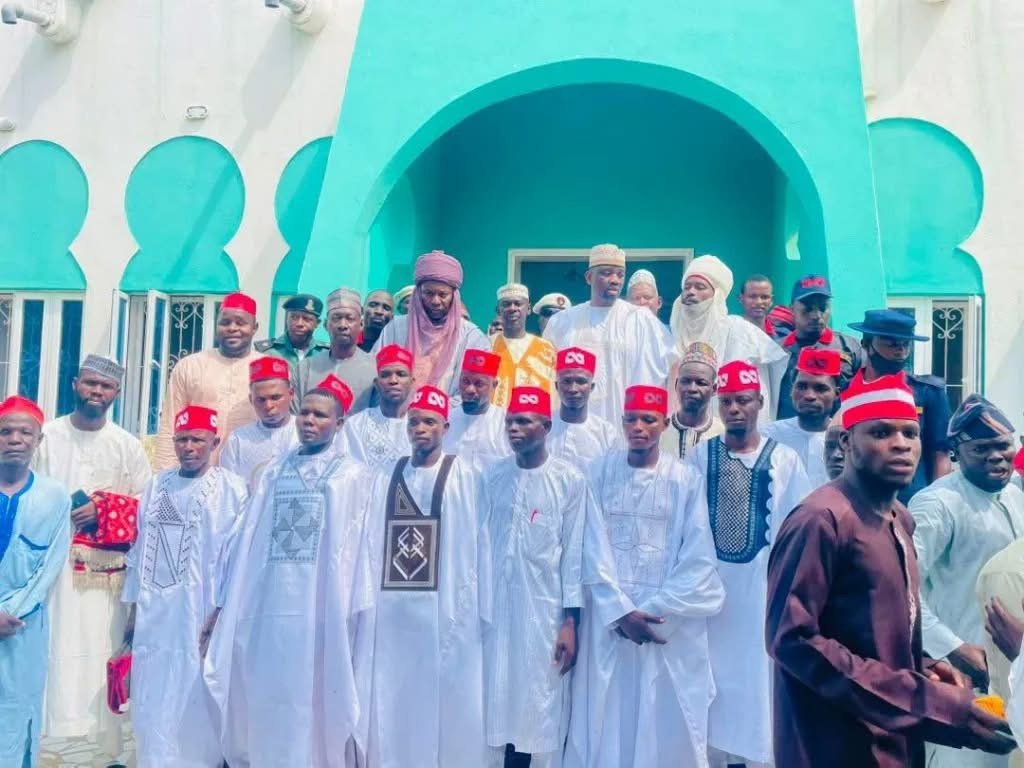
KANO, Nigeria — Kano State Governor, Abba Kabir Yusuf, has urged 1,500 newly married couples who benefited from the state-sponsored mass wedding programme to build their homes on justice, mutual respect, patience and understanding, as the government presents the initiative as part of a wider effort to strengthen families and support economically vulnerable residents.
The mass wedding, held across Kano State under the administration’s Marriage Social Welfare Initiative, popularly known as “Auren Gata,” brought together couples selected from communities across the state. The programme was designed primarily to assist people facing financial barriers to marriage, including widows, divorcees and young women from less-privileged backgrounds.
Governor Yusuf has described the intervention as more than a ceremonial exercise, linking it to his administration’s broader social-welfare agenda and its stated objective of strengthening family life and promoting social stability.
The latest ceremony is the second mass-wedding exercise organised under Yusuf’s administration. According to the Associated Press, the programme involved 1,500 couples and was coordinated by the Kano State Hisbah Board, with ceremonies taking place across all 44 local government areas of the state. (AP News)
Yusuf’s message to the beneficiaries places particular emphasis on the responsibilities that accompany marriage. Beyond the financial and material support provided by the government, the governor urged the newlyweds to approach their relationships with patience, fairness and respect, principles he said are essential to sustaining peaceful families.
Government intervention targets marriage costs
The Kano mass-wedding programme comes at a time when the cost of establishing a household has become increasingly difficult for many Nigerian families.
Expenses associated with marriage ceremonies, dowry, accommodation, furniture, clothing and household necessities can place significant financial pressure on couples, particularly those without stable incomes.
The Kano State Government has positioned its mass-wedding initiative as an intervention designed to reduce some of those barriers.
Earlier preparations for the 2026 exercise showed the scale of the programme. In June, The Punch reported that the state government had earmarked N1.5 billion for the mass wedding involving 1,500 couples. The funding was expected to cover elements including dowry, household items, food, clothing and empowerment support. (Punch Newspapers)
The Guardian Nigeria also reported in June that 1,500 prospective couples were undergoing medical screening ahead of the ceremony, including checks for HIV, hepatitis, genotype compatibility and other health conditions. The newspaper said the programme was part of the state’s social-welfare strategy aimed at supporting low-income families, encouraging marriage and strengthening family values. (The Guardian Nigeria)
The extensive preparation reflects the state’s effort to move the initiative beyond a one-day ceremony and incorporate screening, counselling and post-marriage support.
Medical screening and counselling precede weddings
One of the notable features of the programme has been the mandatory screening of prospective couples.
Reports from The Punch and TheCable said the Hisbah Board, working with health authorities, arranged screening for thousands of prospective participants before the final selection of the 1,500 couples.
The screening process included tests for HIV/AIDS, hepatitis, genotype compatibility and drug use, among other checks. (The Cable)
The process was intended to help ensure that prospective couples entered marriage with information about their health status and compatibility.
The Associated Press reported that all couples who eventually participated underwent screening and counselling, while the necessary religious and legal requirements were completed before the marriages. (AP News)
That preparation is significant because the durability of a marriage depends on factors extending well beyond the ceremony itself.
Counselling can help couples understand expectations around communication, finances, conflict resolution, responsibilities and family relationships. While counselling cannot eliminate marital difficulties, it can give couples tools for addressing disagreements before they escalate.
Financial support accompanies the ceremony
The state government’s intervention also includes material assistance intended to help beneficiaries establish their households.
According to the Associated Press, each bride was to receive N200,000, comprising dowry and startup capital, while the couples also received household items including beds, mattresses, blankets, bed sheets and rugs. (AP News)
Earlier reports on the programme had outlined different components of the proposed support package as preparations progressed. The Punch reported in May that each bride was expected to receive N100,000 as business startup capital in addition to N100,000 dowry provided by the government. (Punch Newspapers)
The changing descriptions of individual components in reports over the preparation period underscore the importance of relying on the final programme details when assessing what beneficiaries ultimately received.
The underlying objective, however, has remained consistent: reduce the financial burden associated with marriage while giving newly established households some immediate economic support.
Social welfare at the centre of the policy
Governor Yusuf’s administration has presented the mass wedding as part of a wider social intervention policy.
The programme is particularly targeted at residents who might otherwise struggle to marry because of financial constraints.
Kano has a long history of government-supported mass weddings. Similar initiatives were conducted under previous administrations, including a 2019 programme involving 1,500 couples.
The practice has therefore become a recurring component of the state’s social-policy landscape rather than an entirely new government initiative.
The current administration revived and expanded the programme as part of its own social-welfare strategy. In April, Premium Times, citing the News Agency of Nigeria, reported that preparations had been concluded for the 1,500-couple exercise under the “Auren Gata” initiative. Officials said the decision followed what they described as positive outcomes from previous exercises. (Premium Times)
The policy has attracted both support and debate.
Supporters argue that government assistance can remove financial barriers that prevent vulnerable residents from establishing families. Critics, meanwhile, have questioned whether public funds devoted to mass weddings should be accompanied by stronger investments in employment, skills development and long-term household income.
For the programme to deliver sustainable benefits, those economic questions remain important.
From wedding ceremony to household stability
The central challenge facing the 1,500 couples begins after the celebration.
A government-sponsored wedding can reduce the initial financial burden, but it cannot by itself guarantee a stable marriage or financially secure household.
This makes the governor’s emphasis on justice, respect and patience particularly relevant.
Marriage requires continuing negotiation between two individuals, often involving decisions about money, work, housing, extended family and child-rearing.
Financial pressure can become a major source of tension in households, particularly where couples lack reliable income. For that reason, the empowerment component of the Kano programme may prove as important as the wedding itself.
The Associated Press reported that the state government views the initiative as a means of helping vulnerable women establish new lives while promoting family stability. The report cited the case of a widow who described the ceremony as an opportunity to begin a new chapter after years of widowhood. (AP News)
That personal dimension illustrates why the programme cannot be understood solely in terms of the number of couples married.
For some beneficiaries, the intervention represents financial assistance. For others, it may mean a second opportunity at family life following divorce or widowhood.
A deeply personal story emerges
Among the beneficiaries highlighted in international reporting was Haruna Bashir, a widower who lost his wife and six children in a deadly attack earlier in 2026.
According to the Associated Press, Bashir was among the 1,500 men and women who entered new marriages through the state-sponsored programme.
The Kano State Hisbah Board’s Commander-General, Sheikh Aminu Ibrahim Daurawa, said Bashir had struggled socially following the loss of his immediate family and described the wedding as part of his gradual return to normal life. (AP News)
His experience illustrates the complex human stories behind the statistics.
A mass wedding involving 1,500 couples may appear primarily as a government programme, but each marriage involves individual circumstances, hopes and challenges.
For widows and divorcees, in particular, the opportunity to remarry may carry significant emotional and social meaning.
Kano’s approach and the wider economic reality
The programme also reflects the wider economic environment confronting families across northern Nigeria.
Rising household costs have made marriage increasingly difficult for young adults who may lack stable employment or sufficient savings.
In Kano, government officials have repeatedly argued that reducing the cost of marriage can help address some of the social pressures affecting vulnerable households.
However, marriage support cannot substitute for broader economic development.
Stable jobs, vocational training, access to finance, affordable housing and effective social protection remain important to the long-term welfare of newly formed families.
The empowerment packages attached to the Kano programme therefore have particular significance.
If beneficiaries are able to use the startup capital and household support to establish sustainable livelihoods, the programme could have an impact extending beyond the wedding ceremony itself.
If economic support ends after the initial intervention, however, families could continue to face the same financial pressures that made marriage difficult in the first place.
Importance of accountability and follow-up
For a programme involving significant public resources, follow-up will be important.
Government agencies should be able to assess how beneficiaries are progressing after the weddings, including whether empowerment funds are being used productively and whether couples have access to further counselling or social support when necessary.
Such monitoring would provide evidence about the long-term effectiveness of the initiative.
It would also allow future programmes to be adjusted based on measurable outcomes rather than relying primarily on the number of couples married.
The Kano government has already invested considerable resources in screening, counselling, wedding arrangements and material support. A systematic follow-up programme could help determine whether those investments are translating into stronger household stability.
Respect, justice and patience as a lasting message
Governor Yusuf’s appeal to the newlyweds ultimately shifts attention from the ceremony to the responsibilities of married life.
Justice within a household means treating one’s partner fairly. Respect involves recognising the dignity and rights of both spouses. Patience is essential when disagreements arise, while communication can help prevent misunderstandings from becoming lasting conflicts.
These principles are particularly important for couples beginning marriage under economic pressure.
A successful marriage cannot be measured simply by the wedding ceremony, the value of gifts received or the size of government assistance.
Its durability is determined over time through everyday decisions, shared responsibilities and the willingness of spouses to support one another.
The Kano mass-wedding programme has therefore created a significant starting point for 1,500 couples. The next test will be whether the financial support, counselling and government intervention provided can help translate that beginning into stable households.
For the government, the initiative offers an opportunity to demonstrate how social welfare can address immediate economic barriers while supporting family development.
For the beneficiaries, it marks the beginning of a new responsibility.
As the celebrations conclude, the governor’s central message remains applicable beyond the wedding day: the success of these marriages will depend not only on how they began, but on how the couples treat one another and manage the challenges that come with building a family.
Wengglobal will continue to follow developments surrounding Kano’s social-welfare programmes, including their economic and social outcomes, with emphasis on verified information, accountability and the experiences of the citizens directly affected.
Sources
- Associated Press (AP) — “Widower who lost wife and 6 children in attack remarries in Nigerian mass wedding for 1,500 couples,” August 8, 2026. The report provides current details of the mass wedding, beneficiaries, government support, screening, counselling and Governor Yusuf’s social-welfare rationale. (AP News)
- The Guardian Nigeria — “Kano screens 1,500 couples for mass wedding,” June 16, 2026. The report details the medical-screening process and social-welfare objectives of the programme. (The Guardian Nigeria)
- Premium Times — “Kano govt prepares wedding for 1,500 couples – Official,” April 23, 2026. The report, based on information from the Kano State Hisbah Board and NAN, outlines the “Auren Gata” initiative and its focus on vulnerable residents. (Premium Times)
- The Punch — “Kano earmarks N1.5bn for mass wedding of 1,500 couples,” June 16, 2026. The report provides details of the government’s proposed funding and support package. (Punch Newspapers)
- TheCable — “Kano Hisbah launches medical screening for 3,000 couples ahead of mass wedding,” June 7, 2026. The report covers the screening requirements and selection process. (The Cable)
- The Punch — “Kano to screen 3,000 couples ahead of mass wedding,” May 1, 2026. The report details the prospective beneficiaries and medical-screening requirements. (Punch Newspapers)
- The Guardian Nigeria — “Zamfara, Kano govts sponsor 1,600 couples’ mass wedding,” April 2026. The report provides additional context on the Kano initiative and the wider use of government-sponsored mass weddings in northern Nigeria. (The Guardian Nigeria)