NDLEA Deepens Partnership With Pharmacists in Edo to Tighten Control of Controlled Medicines and Curb Drug Abuse!
The National Drug Law Enforcement Agency (NDLEA), Edo State Command, and stakeholders in the pharmaceutical sector have renewed their commitment to strengthening cooperation against substance abuse, the illegal distribution of controlled medicines and illicit drug trafficking across the state.
The renewed partnership places pharmacists and other legitimate medicine professionals at the centre of a broader public-health and enforcement strategy aimed at preventing controlled and psychoactive substances from being diverted into illegal markets.
The development comes amid heightened efforts by Nigerian authorities to address the country’s drug problem through a combination of enforcement, prevention, public education, treatment and closer monitoring of pharmaceutical supply chains.
For Edo State, the collaboration is particularly significant because pharmacies, medicine outlets and other healthcare points represent important links between regulated medicines and the communities they serve. Strengthening communication between pharmaceutical professionals and law-enforcement authorities could therefore help identify irregularities earlier while protecting legitimate access to medicines required for medical treatment.
Partnership moves beyond enforcement
The renewed engagement between the NDLEA and pharmaceutical stakeholders reflects an increasingly important recognition that drug control cannot rely solely on arrests and seizures.
While enforcement remains central to the NDLEA’s mandate, preventing the misuse of legitimate pharmaceutical products requires cooperation from professionals who handle medicines within the legal supply chain.
Pharmacists can play a critical role in identifying suspicious purchasing patterns, inappropriate requests for controlled substances and attempts to obtain medicines through fraudulent or unauthorised channels. They can also help educate patients and members of the public about the risks associated with the misuse of prescription and psychoactive medicines.
The partnership is therefore expected to promote information sharing, regulatory compliance and greater awareness among pharmaceutical practitioners, while supporting the NDLEA’s efforts to disrupt the diversion of controlled substances.
This approach is consistent with a wider national shift toward combining public-health measures with traditional drug-law enforcement.
In July 2026, the Federal Government called for a balanced, evidence-based and human-centred approach to drug control, bringing together prevention, treatment, security and access to essential controlled medicines for legitimate patients. (FMI & National Orientation)
Why pharmacists matter in Nigeria’s drug-control strategy
Pharmacists occupy a strategically important position in Nigeria’s healthcare system because they are among the professionals responsible for ensuring that medicines are supplied and used appropriately.
The challenge becomes particularly acute where prescription medicines and other controlled substances are diverted for non-medical purposes.
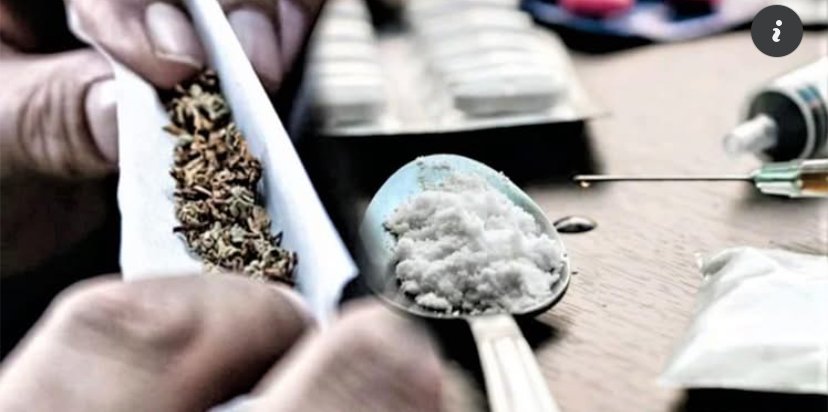
A 2021 scoping review of drug-abuse research in Nigeria found that substances commonly misused included cannabis, cocaine, amphetamines, heroin, diazepam, codeine-containing products and tramadol. The review also identified pharmacies and patent medicine shops among sources through which some people obtained substances that were subsequently abused. (PubMed Central (PMC))
The finding does not imply that pharmacies are inherently responsible for drug abuse. Rather, it demonstrates why strong regulation, professional vigilance and effective communication between legitimate medicine providers and enforcement agencies are important components of drug-control policy.
The objective is to protect the integrity of the pharmaceutical supply chain without creating unnecessary barriers to patients who legitimately require controlled medicines.
Edo intensifies campaign against drug abuse
The renewed NDLEA-pharmacist partnership comes as Edo authorities intensify their broader campaign against drug abuse and illicit trafficking.
In May 2026, the Edo State Government reaffirmed its commitment to strengthening prevention, enforcement, rehabilitation and public-awareness measures against drug abuse and illegal drug trafficking.
At a stakeholders’ meeting of the State and Local Government Drug Control Committee in Benin City, officials stressed the importance of collaboration among government agencies, local authorities, community leaders and civil-society organisations.
The state government also identified concerns surrounding the involvement of various groups in the movement and distribution of illicit drugs and called for drug-control strategies that go beyond major traffickers to address less visible links in the supply chain. (FMI & National Orientation)
The NDLEA’s Edo State Commander, Mitchell Ofoyeju, has also been involved in public sensitisation initiatives designed to strengthen awareness and compliance among medicine providers.
In April 2026, the agency cautioned patent and proprietary medicine dealers in Edo against using legitimate operating licences as a cover for the unlawful sale of controlled and psychoactive substances.
The warning was issued during an anti-drug-abuse workshop attended by more than 2,000 participants from Edo South. The NDLEA said medicine vendors could serve as important frontline partners in identifying and preventing drug abuse, while warning that violations of drug-control laws could result in arrest and prosecution. (FMI & National Orientation)
Regulation must protect legitimate medicine access
One of the central challenges facing drug-control agencies is maintaining a balance between preventing abuse and ensuring that patients can obtain medicines they legitimately need.
Controlled medicines are not inherently illicit. Some are essential in medical practice, including for the management of pain and other conditions. The problem arises when such substances are diverted from legitimate medical use, sold without proper authorisation or consumed outside medically appropriate circumstances.
For that reason, cooperation between the NDLEA and pharmacists can help create a more predictable regulatory environment.
Better communication can enable pharmacists to understand their legal obligations while allowing enforcement officials to distinguish legitimate pharmaceutical activity from suspicious or criminal conduct.
The Pharmaceutical Society of Nigeria’s 2026 progress report provides evidence of an effort to institutionalise this cooperation. According to the report, the NDLEA and PSN established joint committees at the national level and across the 36 states and the Federal Capital Territory to improve communication and address concerns affecting pharmacists and pharmaceutical companies. (psnnational.org)
That development could prove important in Edo, where the pharmaceutical sector is being encouraged to participate more actively in efforts to prevent substance abuse.
From confrontation to coordinated oversight
The strengthening of cooperation also represents a potentially important evolution in the relationship between regulators and pharmaceutical professionals.
Historically, drug-control enforcement can sometimes create tensions for legitimate operators, particularly where controlled medicines are involved and regulatory requirements are not clearly understood.
A structured partnership provides an opportunity to replace uncertainty with clearer channels for consultation, reporting and compliance.
For pharmacists, this means greater awareness of the rules governing controlled substances and a clearer mechanism for raising concerns or seeking clarification.
For the NDLEA, stronger cooperation with pharmaceutical professionals can provide access to specialised knowledge about medicines, legitimate supply chains and emerging patterns of misuse.
The partnership could therefore improve the quality of intelligence available to investigators while reducing the risk of legitimate pharmaceutical activities being unnecessarily disrupted.
The wider threat posed by substance abuse
The significance of the initiative extends beyond the pharmaceutical industry.
Drug abuse has implications for public health, families, education, employment, crime and community safety. The consequences can be especially damaging for young people, whose exposure to addictive substances can affect education, relationships and long-term economic prospects.
The Federal Government has increasingly emphasised that Nigeria’s drug-control response must address both supply and demand.
The NDLEA has also pursued alternative approaches to drug control. In February 2026, NDLEA Chairman and Chief Executive Officer Brigadier-General Mohamed Buba Marwa called for stronger national support for an alternative-development programme intended to discourage illicit cannabis cultivation while creating economic opportunities for affected rural communities. (NDLEA)
The approach illustrates the growing recognition that enforcement alone cannot resolve the underlying factors that sustain illicit drug markets.
Prevention, treatment, rehabilitation, economic opportunity and public education must operate alongside law enforcement if drug-control policies are to produce sustainable results.
Edo’s community-level approach
Edo’s current strategy increasingly reflects this broader understanding.
The state government has highlighted sensitisation campaigns, school and community outreach, stakeholder engagement and rehabilitation as components of its drug-control efforts. (FMI & National Orientation)
The involvement of pharmacists adds another layer to that strategy because medicine professionals interact directly with members of the public seeking healthcare.
Pharmacists can contribute to prevention by counselling patients, identifying inappropriate medicine use and discouraging self-medication involving controlled or potentially addictive substances.
They can also support public education by explaining the dangers of using prescription medicines without professional guidance.
For the NDLEA, these interactions offer an opportunity to strengthen early intervention before misuse develops into dependence or becomes connected to wider criminal activity.
What the partnership could mean for Edo
The success of the initiative will ultimately depend on implementation.
A partnership announcement, by itself, will not solve the state’s drug-abuse challenges. Its impact will depend on whether communication channels remain active, whether pharmaceutical professionals receive adequate regulatory guidance and whether intelligence-sharing mechanisms produce practical results.
There is also a need for continued engagement with other stakeholders, including the Pharmacists Council of Nigeria, the National Agency for Food and Drug Administration and Control, health institutions, schools, community organisations and local authorities.
A coordinated approach can reduce gaps between drug regulation, healthcare delivery and law enforcement.
For WengGlobal, the central issue is therefore not simply whether the NDLEA and pharmacists have agreed to cooperate, but whether that cooperation can translate into measurable improvements in the way controlled medicines are monitored and in how communities respond to substance abuse.
A partnership with long-term implications
The renewed relationship between the NDLEA and Edo’s pharmaceutical community comes at a time when Nigeria is seeking more effective and evidence-based ways to address substance abuse.
The pharmaceutical sector has a dual responsibility: ensuring that medicines remain available to patients who need them while helping prevent controlled substances from being diverted into illegal markets.
The NDLEA, meanwhile, must continue to combine enforcement with prevention, public education and cooperation with professional bodies.
Edo’s experience could become a useful model if the partnership produces sustained communication, stronger compliance and more effective early identification of drug-related risks.
Ultimately, combating substance abuse requires more than targeting traffickers after illegal drugs have entered communities. It requires protecting legitimate medicine supply chains, educating the public, supporting treatment and rehabilitation, and ensuring that professionals and regulators work from the same understanding of the law.
The renewed NDLEA-pharmacist partnership in Edo is therefore an important step, but its lasting value will be measured by what follows: stronger oversight, responsible pharmaceutical practice, better intelligence and, most importantly, safer communities.
Sources
- Federal Ministry of Information and National Orientation: NDLEA cautions Edo patent medicine dealers against drug-abuse violations. (FMI & National Orientation)
- Federal Ministry of Information and National Orientation: Edo State Government accelerates campaign against drug abuse and illicit trafficking. (FMI & National Orientation)
- National Drug Law Enforcement Agency (NDLEA): Nigeria remains committed to curbing the drug scourge through innovative interventions. (NDLEA)
- National Drug Law Enforcement Agency: Marwa calls for national response and support for alternative development. (NDLEA)
- Pharmaceutical Society of Nigeria: 2026 State of the Profession Progress Report, including NDLEA–PSN collaboration. (psnnational.org)
- Public Health Reviews: Scoping review of the burden of drug abuse and drug laws in Nigeria. (PubMed Central (PMC))
- Federal Ministry of Information and National Orientation: Federal Government calls for balanced, evidence-based drug-control approach. (FMI & National Orientation)