US Plans $1 Billion Security Package for Colombia as New President Signals Hard-Line Fight Against Drug Trafficking
WASHINGTON/BOGOTÁ — August 8, 2026 — The United States has announced plans to provide $1 billion in security assistance to Colombia, opening a potentially significant new chapter in Washington’s relationship with the South American country under newly inaugurated President Abelardo De La Espriella.
The proposed package, announced by the U.S. State Department on Friday, comes just one day after De La Espriella took office and pledged a tougher approach to organised crime, drug trafficking and armed groups operating across Colombia.
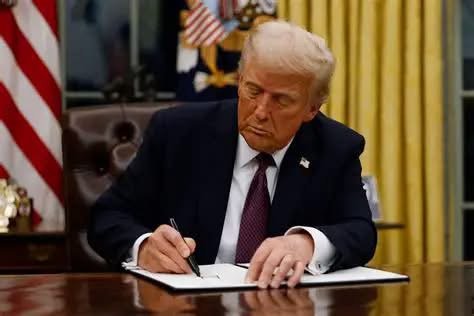
The development was reported by Reuters, which said the administration of U.S. President Donald Trump plans to provide the security assistance to Colombia’s new government. The announcement represents a substantial expression of U.S. support for Bogotá at a moment when Colombia is undergoing a sharp political shift from the left-wing government of outgoing President Gustavo Petro to De La Espriella’s conservative administration. (Reuters)
The timing is significant. De La Espriella, a political newcomer and former lawyer, campaigned on restoring state authority, intensifying the fight against criminal organisations and taking a more confrontational approach to Colombia’s armed groups.
He was inaugurated on August 7 in Cali, rather than in Bogotá, in a ceremony that underscored his emphasis on security and the country’s regions. Associated Press reported that the new president has vowed to abandon the previous administration’s negotiation-focused approach toward armed groups and pursue stronger military action against organisations involved in violence and illicit economies. (AP News)
A new security alignment between Washington and Bogotá
The proposed $1 billion package could become one of the clearest early indicators of how closely the new Colombian administration intends to work with Washington.
For decades, Colombia has been one of the United States’ most important security partners in Latin America, particularly in the fight against cocaine trafficking and armed groups.
American security assistance has historically supported Colombia’s military and law-enforcement institutions through equipment, training, intelligence cooperation and counter-narcotics programmes.
The new proposal therefore builds on an established bilateral relationship rather than creating an entirely new partnership.
However, the political circumstances surrounding the latest announcement are markedly different from those under Petro.
Petro, a left-wing former guerrilla who governed Colombia from 2022 until August 2026, pursued a policy known as “Total Peace”, seeking negotiations with several armed organisations in an effort to reduce violence.
De La Espriella has taken a fundamentally different position.
During his inauguration, he promised a robust campaign against criminal groups and drug traffickers and said his government would prioritise restoring security and state control.
Reuters reported that his administration intends to eradicate illicit coca cultivation and revive aerial herbicide spraying, while ruling out further peace negotiations with armed groups. (Reuters)
That policy direction aligns closely with the Trump administration’s increasingly forceful emphasis on counter-narcotics operations and regional security.
What the $1 billion package could mean
The precise breakdown of the proposed $1 billion assistance package has not yet been fully detailed publicly.
That distinction is important.
The announcement represents a planned security assistance commitment, rather than confirmation that $1 billion has already been transferred to Colombia.
The final composition, timing, congressional requirements and specific programmes covered by the assistance will determine its practical impact.
Security assistance can take several forms, including military equipment, training, intelligence capabilities, border security, counter-narcotics support and law-enforcement cooperation.
Colombia faces a complex security environment involving drug-trafficking networks, dissident factions of the former Revolutionary Armed Forces of Colombia (FARC), the National Liberation Army (ELN), illegal mining operations and other criminal organisations.
The country remains one of the world’s largest producers of cocaine, making counter-narcotics cooperation a longstanding priority for Washington.
The proposed package therefore has implications beyond Colombia’s domestic security agenda.
It could also become an important component of the Trump administration’s wider effort to strengthen security partnerships across Latin America.
De La Espriella takes office with security at the centre
The U.S. announcement arrived almost immediately after De La Espriella assumed the presidency.
His inauguration speech provided a clear indication of the direction he intends to take.
According to Reuters, the new president pledged to combat crime, eliminate illicit coca crops and restore state authority. He also signalled support for aerial eradication and rejected continued negotiations with armed groups. (Reuters)
Associated Press similarly reported that De La Espriella threatened military action against armed groups that refuse to disarm and described security as a central priority of his administration. (AP News)
The president has also expressed support for closer cooperation with the United States.
Before taking office, De La Espriella indicated that Colombia would participate in the Trump administration’s “Shield of the Americas” security initiative.
That alignment could provide Washington with a more receptive partner in its efforts to coordinate counter-narcotics and anti-cartel operations throughout the region.
The political transition in Colombia
The security package also needs to be understood within the context of Colombia’s dramatic political transition.
De La Espriella defeated left-wing Senator Iván Cepeda in a closely contested presidential runoff, succeeding Petro after a period of political tension between Bogotá and Washington.
The incoming president’s relationship with Trump has been notably warmer than Petro’s.
Trump publicly endorsed De La Espriella during the election campaign, while senior U.S. officials signalled their interest in strengthening cooperation with the incoming government.
The relationship between Washington and Bogotá had become increasingly strained under Petro, particularly over drug policy and the U.S. approach to counter-narcotics operations.
Petro advocated voluntary coca eradication and crop-substitution programmes, arguing that rural communities involved in coca cultivation should be offered economic alternatives rather than being treated primarily as security threats.
The new administration is expected to adopt a much harder line.
The proposed U.S. security assistance could therefore represent both a financial commitment and a political signal that Washington believes Colombia is moving back towards a more conventional U.S.-aligned security strategy.
Cocaine trafficking remains a central concern
Drug trafficking is likely to remain one of the most important issues in the U.S.-Colombia relationship.
Colombia has spent decades fighting powerful drug-trafficking organisations and armed groups financed by illicit economies.
Although Colombian authorities have achieved major successes in drug seizures and the dismantling of criminal networks, coca cultivation and cocaine production remain serious challenges.
The Trump administration has made combating narcotics trafficking a central component of its Western Hemisphere security agenda.
De La Espriella’s willingness to pursue aggressive eradication policies could therefore make Colombia a key partner in Washington’s regional strategy.
His government has also signalled an interest in strengthening military and police capabilities to confront armed organisations.
The proposed $1 billion assistance package could provide resources for those objectives, although its ultimate effect will depend on how the funds are structured and deployed.
Supporters see opportunity, critics may raise concerns
Supporters of the new approach are likely to argue that Colombia needs stronger security institutions and that armed groups have exploited negotiations and weak state control.
They could also point to the persistence of violence in parts of the country as evidence that a tougher security strategy is necessary.
But the policy is not without potential risks.
Colombia’s recent history demonstrates that military operations alone do not necessarily eliminate criminal economies.
Many armed groups operate through local networks, illegal mining, extortion, coca cultivation and control of remote territories.
A heavily militarised approach could therefore produce short-term security gains while leaving the underlying economic and political conditions that sustain armed groups unresolved.
Human-rights organisations and critics of aerial coca eradication have also historically raised concerns about the effects of spraying on rural communities, food crops and the environment.
Those issues are likely to become more prominent if the new administration proceeds with its plan to restore aerial herbicide operations.
A major test for US-Colombia relations
The proposed security package could become an early test of the renewed U.S.-Colombia relationship.
Washington will want to see tangible results in areas such as cocaine production, trafficking networks, border security and the disruption of armed groups.
Bogotá, meanwhile, will need to balance its security cooperation with concerns about national sovereignty, civilian protection and the social consequences of counter-narcotics operations.
The relationship also extends beyond security.
The two countries have significant economic ties, and the incoming Colombian administration has expressed interest in attracting investment, expanding energy production and strengthening relations with the United States.
Security cooperation could consequently form part of a broader strategic partnership involving trade, investment, migration, energy and regional diplomacy.
Regional implications
The development could also influence the broader security landscape of Latin America.
Washington has increasingly sought stronger partnerships with governments willing to cooperate on counter-narcotics, migration enforcement and organised crime.
Colombia’s geographic position makes it particularly important.
It sits between the Caribbean and South America and shares borders with Venezuela, Ecuador, Peru, Brazil and Panama.
Its Pacific and Caribbean coastlines also give criminal networks access to major trafficking routes.
Strengthening Colombia’s security capabilities could therefore have consequences beyond its borders.
It could affect trafficking routes, cooperation among regional law-enforcement agencies and U.S. efforts to disrupt criminal organisations operating throughout the hemisphere.
What happens next
The central question now is how the proposed $1 billion package will be implemented.
Further details will be needed on the categories of assistance, delivery schedules, oversight mechanisms and the extent to which the Colombian government will have discretion over the use of the resources.
Congressional processes and U.S. foreign-assistance rules may also shape the final package.
For Colombia, the challenge will be to convert additional resources into measurable improvements in security without repeating the shortcomings of previous counter-narcotics campaigns.
For Washington, the challenge will be to ensure that its support strengthens Colombian institutions rather than simply expanding military capacity.
For De La Espriella, the announcement represents an important diplomatic opening.
His government enters office with a clear security agenda and a powerful U.S. partner willing to provide substantial assistance.
Whether that partnership produces lasting reductions in drug trafficking and armed violence will depend not only on money and military capabilities but also on governance, intelligence, judicial institutions, rural development and the ability of the Colombian state to maintain a sustained presence in areas historically controlled by criminal groups.
A new era for Washington and Bogotá?
The planned $1 billion U.S. security package is one of the strongest early signals that relations between Washington and Colombia are entering a new phase.
De La Espriella’s election has shifted Bogotá’s political direction to the right, while his administration’s security priorities closely correspond with the Trump administration’s counter-narcotics agenda.
The timing of the U.S. announcement — immediately after the new president’s inauguration — reinforces that alignment.
Still, the ultimate measure of the partnership will not be the size of the announced package.
It will be whether the resources help Colombia build safer communities, weaken criminal networks, protect civilians and create conditions in which legitimate economic activity can replace illicit economies.
For now, Washington has made its position clear: the United States intends to deepen security cooperation with Colombia under its new president.
The next test will be whether that commitment can translate into sustainable security results for Colombians and a more effective joint strategy against the drug trade that has shaped U.S.-Colombian relations for generations.
Sources
- Reuters: US says it plans $1 billion security assistance to government of Colombia’s new leader — reporting on the U.S. State Department’s announcement and the planned assistance under President Donald Trump’s administration. (Reuters)
- Reuters: New Colombia president pledges robust fight against crime, fiscal austerity in maiden speech — reporting on President Abelardo De La Espriella’s inauguration and security agenda. (Reuters)
- Associated Press (AP): Colombia’s new president takes office in ceremony in Cali highlighting hard line on armed groups — reporting on the inauguration and the new government’s approach to armed groups. (AP News)
- The Wall Street Journal: Trump Ally Takes Office in Colombia With Vow to Fight Cocaine Armies — reporting on De La Espriella’s security agenda, U.S. backing and counter-narcotics cooperation. (The Wall Street Journal)
- U.S. Senate Committee on Appropriations: Congressional background on the FY2026 U.S. national-security and State Department appropriations framework, including security assistance and counter-drug programmes. (appropriations.senate.gov)
- Colombian Presidency: Official statements documenting the country’s recent security, counter-narcotics and U.S.-Colombia policy environment. (Presidencia)