Reported by Simon yusuph,| Journalist at wengglobal
As the war with Russia enters another critical phase, Ukraine is pressing ahead with one of the world’s most ambitious military technology programs, expanding the deployment of artificial intelligence-powered combat robots, autonomous ground vehicles, and advanced drone systems despite recent political changes within its defence leadership.
The dismissal of Ukraine’s former Defence Minister has generated international attention, but analysts say the country’s long-term strategy of integrating artificial intelligence into modern warfare remains firmly intact. Ukrainian authorities continue to view autonomous technologies as essential tools for reducing military casualties, improving battlefield awareness, and strengthening the country’s defensive capabilities against a larger and better-equipped adversary.
For Ukraine, the development of AI-assisted military systems is no longer viewed as an experimental project but as a strategic necessity shaped by more than four years of high-intensity conflict. Officials argue that replacing soldiers with robotic platforms for the most dangerous frontline operations could significantly reduce casualties while improving operational efficiency.
The continuation of these programs demonstrates that Ukraine’s defence innovation agenda extends beyond individual political appointments. Military planners, technology firms, research institutions, and international partners remain actively involved in expanding the country’s growing ecosystem of defence technologies.
AI and Robotics Become Central to Ukraine’s Defence Strategy
Since Russia’s full-scale invasion in 2022, Ukraine has rapidly transformed into one of the world’s leading testing grounds for military drone innovation and battlefield artificial intelligence.
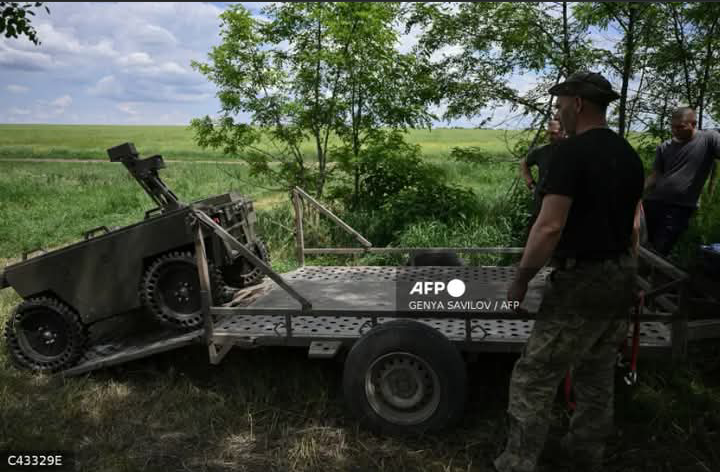
Thousands of aerial drones are now used daily for reconnaissance, surveillance, logistics support, precision strikes, electronic warfare, and damage assessment. Building on these successes, Ukraine has increasingly shifted attention toward unmanned ground vehicles capable of transporting ammunition, evacuating wounded soldiers, clearing mines, and carrying out high-risk combat missions without exposing troops to direct danger.
Many of these robotic systems incorporate varying degrees of artificial intelligence, allowing them to navigate complex terrain, identify obstacles, assist with target recognition, and operate with reduced human intervention. Military experts note that while most lethal decisions remain under human control, AI substantially enhances operational speed and battlefield awareness.
According to Ukrainian officials, autonomous technologies are designed primarily to preserve human life by taking over dangerous missions traditionally performed by soldiers.
Defence Leadership Changes Do Not Slow Innovation
The recent dismissal of Ukraine’s defence minister prompted questions about whether military procurement reforms and technological modernization would lose momentum.
However, Ukrainian government officials have repeatedly emphasized that defence innovation remains a national priority supported by multiple institutions rather than a single ministry or political figure.
The country’s Ministry of Digital Transformation continues to collaborate with defence agencies, private technology companies, universities, and international partners to accelerate the production of drones, autonomous vehicles, and AI-enabled defence systems.
Industry observers believe the leadership transition is unlikely to derail ongoing investments, particularly as Ukraine seeks to strengthen domestic weapons production while reducing dependence on foreign military supplies.
Several Ukrainian defence technology companies have continued unveiling new robotic platforms in recent months, reflecting sustained government backing for research, testing, and battlefield deployment.
Saving Soldiers Through Automation
One of the primary objectives behind Ukraine’s robotics initiative is reducing the risks faced by frontline troops.
Combat engineers often operate under constant artillery fire while clearing minefields or recovering damaged equipment. Similarly, medical evacuation teams frequently come under attack while attempting to rescue wounded personnel.
Autonomous ground robots can undertake many of these dangerous assignments, including delivering ammunition, transporting supplies, evacuating injured soldiers, conducting reconnaissance, and even supporting engineering operations in hazardous areas.
Military commanders argue that each successful robotic mission represents lives potentially saved by limiting direct human exposure to combat.
The increased use of AI also allows commanders to process battlefield intelligence more rapidly. Machine-learning algorithms can assist in analysing drone footage, identifying potential threats, and prioritising targets for further human assessment.
While human operators continue making critical decisions regarding the use of force, AI significantly improves the speed at which information reaches commanders.
Ukraine Emerges as a Global Defence Technology Laboratory
The prolonged conflict has transformed Ukraine into an important centre for military technological innovation.
International defence analysts increasingly describe Ukraine as a real-world laboratory where emerging technologies—including artificial intelligence, autonomous robotics, electronic warfare systems, and drone swarms—are being tested under active combat conditions.
Lessons learned on Ukrainian battlefields are influencing military planning across Europe, North America, and Asia, where governments are accelerating investments in autonomous defence technologies.
Several NATO member states have closely monitored Ukraine’s technological developments, viewing them as indicators of how future conflicts may evolve.
At the same time, Ukraine’s rapidly expanding defence technology sector has attracted growing interest from international investors, defence manufacturers, and research institutions seeking collaboration on next-generation military systems.
Ethical Questions Continue to Shape Global Debate
Despite the operational advantages offered by AI-assisted military technologies, their growing use has intensified international discussions about ethics, accountability, and compliance with international humanitarian law.
Human rights organisations and arms-control advocates continue calling for clear international standards governing autonomous weapons, particularly concerning systems capable of selecting or engaging targets without meaningful human oversight.
Ukraine has consistently maintained that its military operations comply with international law and that human personnel remain responsible for decisions involving lethal force.
Technology specialists also caution that artificial intelligence should be viewed as a decision-support tool rather than a replacement for military judgment. AI systems remain vulnerable to electronic interference, cyberattacks, inaccurate data, and unexpected battlefield conditions that require human interpretation.
These concerns have fuelled broader global conversations within the United Nations and other international forums regarding the regulation of autonomous weapons systems.
Global Military Competition Intensifies
Ukraine’s continued investment reflects a broader international race to integrate artificial intelligence into national defence capabilities.
Major military powers—including the United States, China, the United Kingdom, France, Israel, South Korea, and Russia—are investing billions of dollars in autonomous vehicles, AI-enabled surveillance, robotic logistics, and advanced drone technologies.
Many defence experts believe future conflicts will increasingly involve cooperation between human soldiers and intelligent autonomous systems rather than conventional troop formations alone.
Ukraine’s wartime experience has accelerated this transition, offering practical insights into how AI can enhance operational effectiveness while reducing human risk.
Although the conflict continues to exact a devastating humanitarian and economic toll, Ukraine’s rapid technological adaptation has positioned the country among the leading innovators in military robotics.
As political leadership evolves, Ukraine’s commitment to expanding artificial intelligence, combat robotics, and autonomous defence technologies appears set to remain a cornerstone of its national security strategy. The coming years are likely to determine not only the future of Ukraine’s military capabilities but also the broader role of artificial intelligence in warfare worldwide.
Sources
- Reuters
- Associated Press (AP)
- BBC News
- Financial Times
- The New York Times
- The Washington Post
- Defense News
- The Economist
- NATO Review