Reported by Weng Patrick Atokor | Weng Global
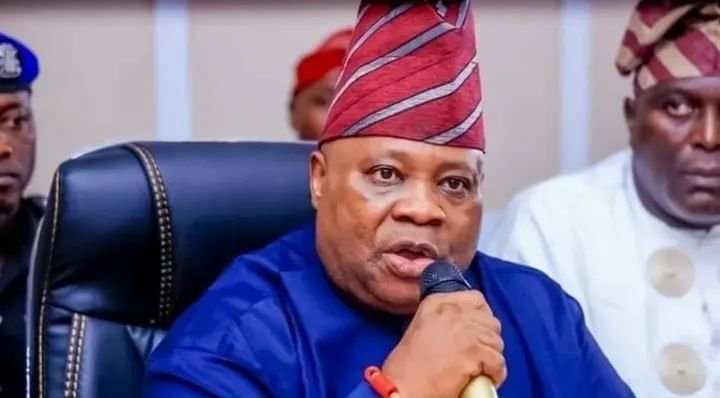
OSOGBO, Nigeria — Osun State Governor, Ademola Adeleke, has demanded an explanation from the Chairman of the Economic and Financial Crimes Commission (EFCC) over the freezing of the state’s bank account, describing the action as unlawful and a violation of due process.
The governor insisted that the anti-graft agency failed to obtain a valid court order before directing the bank to place restrictions on the state’s account, arguing that such action undermines constitutional governance and threatens the delivery of essential public services.
The development has intensified the growing dispute between the Osun State Government and the EFCC over investigations linked to the state’s finances, with Adeleke maintaining that while his administration supports transparency and accountability, law enforcement agencies must operate strictly within the law.
Adeleke challenges EFCC’s action
Speaking through a statement issued by his spokesperson, Governor Adeleke questioned the legal basis upon which the EFCC instructed the bank to freeze the account.
According to him, the commission owes the people of Osun an explanation regarding why it acted without first securing judicial authorization.
He argued that Nigeria’s legal framework requires anti-corruption agencies to obtain appropriate court approval before placing restrictions on bank accounts, particularly those belonging to a government institution.
The governor warned that arbitrary actions by law enforcement agencies could erode confidence in public institutions and create unnecessary disruptions in governance.
He stressed that the state government has continued to cooperate with legitimate investigations and has never attempted to obstruct anti-corruption efforts.
“No court order was obtained”
Adeleke maintained that neither the state government nor its legal representatives were presented with any valid court order authorizing the freezing of the account.
According to the governor, this raises serious legal and constitutional questions about the commission’s decision.
He therefore challenged the EFCC chairman to publicly clarify:
- The legal authority used to freeze the account.
- Whether a competent court granted approval before the restriction.
- Why the Osun State Government was allegedly not notified beforehand.
- Whether due process was followed throughout the exercise.
The governor said Nigerians deserve transparency from institutions empowered to enforce the law.
Impact on governance
The Osun State Government warned that freezing government accounts could have significant consequences for governance.
Officials noted that state accounts are used to fund salaries, pensions, healthcare services, education projects, infrastructure development and other critical government obligations.
According to the government, any prolonged restriction could delay payments to workers, contractors and service providers while affecting the execution of ongoing projects.
The administration argued that anti-corruption efforts should never unnecessarily disrupt legitimate government activities or punish citizens who rely on public services.
Commitment to accountability
Governor Adeleke reiterated that his administration remains committed to prudent financial management and accountability.
Since assuming office, the governor has repeatedly stated that transparency in public finance remains one of his administration’s priorities.
He maintained that his government has nothing to hide and is willing to provide relevant financial records whenever lawfully requested by investigative agencies.
However, he insisted that every investigation must comply with the Constitution and established legal procedures.
According to the governor, adherence to due process protects both government institutions and citizens from arbitrary actions.
Legal concerns
Legal analysts note that while the EFCC possesses broad investigative powers under the Economic and Financial Crimes Commission Act, restrictions on bank accounts generally require judicial authorization.
Nigerian courts have consistently emphasized that investigative agencies should obtain appropriate court orders before directing financial institutions to freeze accounts, except where specific statutory provisions provide otherwise.
The debate therefore centres on whether the commission complied with all legal requirements before issuing its directive.
Should a court determine that proper procedures were not followed, the restriction could become the subject of further legal challenges.
EFCC yet to respond
As of the time of filing this report, the EFCC had not publicly responded to Governor Adeleke’s demand or provided detailed clarification regarding the legal basis for the action.
The commission has yet to confirm whether it obtained a court order before directing the bank to freeze the account.
Observers expect the agency to issue an official statement to address the allegations and explain the circumstances surrounding the restriction.
Growing scrutiny
The latest disagreement highlights the delicate balance between fighting corruption and respecting constitutional safeguards.
Anti-corruption agencies are expected to investigate allegations of financial misconduct without fear or favour, but they are equally required to operate within the limits of the law.
Public policy experts argue that strict compliance with judicial procedures enhances the credibility of investigations and protects the integrity of anti-corruption institutions.
Failure to observe due process, they warn, could expose investigations to legal setbacks and diminish public confidence.
Political implications
The dispute is also expected to attract political attention, particularly as tensions continue between state governments and federal agencies over issues relating to financial oversight and administrative authority.
Supporters of the Osun State Government argue that constitutional procedures should always be respected regardless of the institution involved.
On the other hand, advocates of stronger anti-corruption enforcement insist that investigations into public finances must continue wherever credible evidence exists, provided they comply with the law.
What happens next?
Attention is now focused on whether the EFCC will provide the explanation requested by Governor Adeleke or release documentation showing the legal authority under which the account was frozen.
The outcome could shape future interactions between state governments and federal investigative agencies, particularly regarding the freezing of public accounts during ongoing investigations.
Legal experts believe the matter may ultimately require judicial clarification if both parties maintain their current positions.
For now, Governor Adeleke has maintained that the state government will continue to defend its constitutional rights while cooperating with lawful investigations conducted in accordance with due process.
The EFCC’s next move—and whether it confirms the existence of a court order—will likely determine how the dispute unfolds in the coming days.
Sources:
- Punch Newspapers
- The Nation
- Vanguard News
- EFCC (for any subsequent official response)