Reported by Simon yusuph,| Journalist at wengglobal
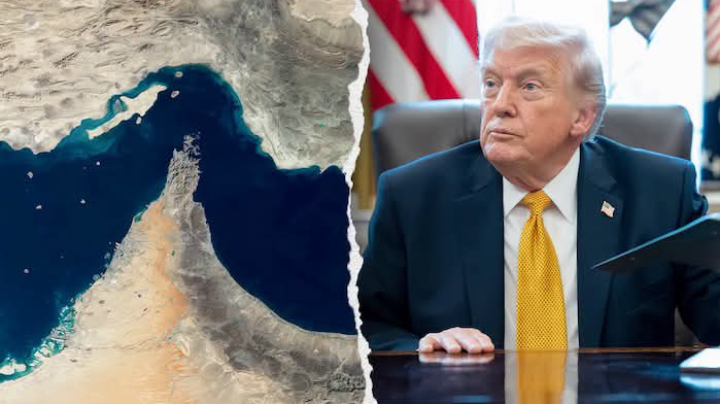
The prospect of a breakthrough in one of the world’s most strategically important maritime corridors has gained renewed momentum after United States President Donald Trump indicated that an agreement concerning the Strait of Hormuz could be reached “within days.” His remarks come as diplomatic engagement involving Iran and Oman intensifies, fueling cautious optimism that disruptions to global oil shipping may soon ease.
The Strait of Hormuz, a narrow waterway connecting the Persian Gulf to the Gulf of Oman and the Arabian Sea, remains one of the world’s most vital energy chokepoints. Roughly one-fifth of global oil consumption passes through the strait, making any instability in the region an immediate concern for international energy markets, governments, and businesses.
Speaking during a media engagement, Trump suggested that negotiations involving Iran and Oman were progressing positively, expressing confidence that an agreement could be finalized in the coming days. While he offered limited details about the substance of the discussions, his comments were interpreted as a signal that diplomatic channels remain active despite years of geopolitical tensions across the Gulf.
The latest developments have attracted global attention because any sustained improvement in security within the Strait of Hormuz would have far-reaching consequences for energy prices, international trade, and regional stability.
Strait of Hormuz Remains Critical to Global Energy Security
The Strait of Hormuz has long occupied a central position in global energy security. Measuring only about 33 kilometres at its narrowest point, the waterway serves as the primary export route for crude oil and liquefied natural gas from major Gulf producers, including Saudi Arabia, Iraq, the United Arab Emirates, Kuwait, Qatar, and Iran.
According to international energy analysts, millions of barrels of crude oil transit the strait every day, supplying key markets across Asia, Europe, and North America. Any disruption—whether through military confrontation, sanctions, or maritime incidents—can trigger sharp increases in oil prices and heightened uncertainty in financial markets.
In recent years, concerns over attacks on commercial vessels, naval confrontations, and escalating tensions between Iran and Western nations have repeatedly raised fears about the security of shipping through the waterway.
Against this backdrop, Trump’s remarks have been viewed as an encouraging indication that diplomatic engagement may help reduce risks to international maritime commerce.
Oman Continues Its Traditional Role as Regional Mediator
Oman has once again emerged as a central diplomatic player in efforts to ease tensions between Iran and the international community.
For decades, the Gulf nation has maintained a policy of neutrality, enabling it to facilitate dialogue among parties that often have strained political relations. Muscat has previously hosted sensitive negotiations involving Iran, the United States, and other regional actors, earning recognition as one of the Middle East’s most trusted mediators.
Analysts believe Oman’s involvement provides a credible platform for confidence-building measures that could eventually contribute to broader regional de-escalation.
Although officials have not publicly disclosed the full agenda of the ongoing discussions, reports indicate that maritime security, freedom of navigation, and mechanisms to ensure uninterrupted commercial shipping are among the issues under consideration.
Markets Respond Cautiously to Diplomatic Optimism
Global energy markets closely monitor every development concerning the Strait of Hormuz due to its direct influence on crude oil supply.
Following Trump’s comments, market observers noted that investors remained cautiously optimistic, balancing hopes of reduced geopolitical risk against uncertainty surrounding the outcome of negotiations.
Energy economists say that a durable agreement ensuring safe passage through the strait could help stabilize oil prices, reduce shipping insurance costs, and improve confidence among international energy traders.
However, experts also caution that diplomatic negotiations involving long-standing regional disputes are inherently complex and often require sustained engagement before tangible results emerge.
Implications for Africa’s Energy Landscape
For African economies, developments in the Strait of Hormuz carry particular significance.
Many African countries remain heavily dependent on imported refined petroleum products, making them vulnerable to fluctuations in global crude oil prices. Rising energy costs can contribute to inflation, increase transportation expenses, and place additional pressure on government budgets.
Conversely, major African oil exporters—including Nigeria, Angola, Algeria, and Libya—closely monitor international oil price movements because export revenues are directly influenced by global market conditions.
Should maritime stability improve and supply disruptions decline, oil markets could experience greater predictability, enabling governments and businesses across Africa to plan more effectively.
Nevertheless, analysts note that lower geopolitical risk does not necessarily translate into lower fuel prices, as global demand, production quotas, exchange rates, and refining capacity also influence market outcomes.
Broader Geopolitical Context
The renewed diplomatic momentum follows years of heightened tensions involving Iran, the United States, Gulf Arab states, and international shipping operators.
The Strait of Hormuz has frequently been at the centre of geopolitical disputes, with accusations of vessel seizures, military deployments, sanctions enforcement, and concerns over freedom of navigation contributing to periodic instability.
International shipping companies have repeatedly adjusted operational procedures in response to evolving security risks, while insurers have increased premiums for vessels operating in the region during periods of heightened tension.
A successful diplomatic understanding could therefore benefit not only oil producers but also shipping firms, insurers, manufacturers, and consumers worldwide.
International Community Watching Closely
Governments across Europe, Asia, and the Middle East are expected to monitor developments carefully over the coming days.
Countries heavily reliant on Gulf energy supplies including China, India, Japan, and South Korea have consistently supported efforts aimed at maintaining uninterrupted maritime trade through the Strait of Hormuz.
International financial institutions and commodity traders are likewise assessing whether current diplomatic efforts could contribute to longer-term stability in one of the world’s most strategically sensitive maritime corridors.
While optimism has grown following Trump’s remarks, analysts stress that official confirmation from negotiating parties will ultimately determine whether a formal agreement has been achieved.
Outlook
The coming days may prove significant for global energy markets as negotiations reportedly continue between Iran and Oman, with diplomatic backing from other international stakeholders.
If an agreement materializes, it could reduce tensions in the Gulf, strengthen confidence in international shipping, and improve stability across global energy markets. Such an outcome would be welcomed by both oil-producing and oil-importing nations, including many African economies seeking greater resilience amid ongoing economic challenges.
Until formal announcements are made, however, policymakers, investors, and industry stakeholders are likely to remain cautiously attentive, recognising that diplomacy in the Gulf has historically required patience, sustained engagement, and careful implementation.
As one of the world’s most important maritime trade routes, the Strait of Hormuz will remain central to global economic stability. Any lasting agreement that safeguards freedom of navigation would represent a significant milestone for international diplomacy and energy security.
Sources:
- Reuters
- Bloomberg
- Associated Press (AP)
- Financial Times
- Al Jazeera
- CNBC
- U.S. Energy Information Administration (EIA)