Reported by Weng Patrick Atokor | Journalist at Weng Global
As the world marks World Breastfeeding Week, the United Nations Children’s Fund (UNICEF) has called on fathers, families, employers, community leaders, and policymakers to play a more active role in supporting breastfeeding mothers, describing breastfeeding as one of the most effective and affordable ways to improve child survival and development.
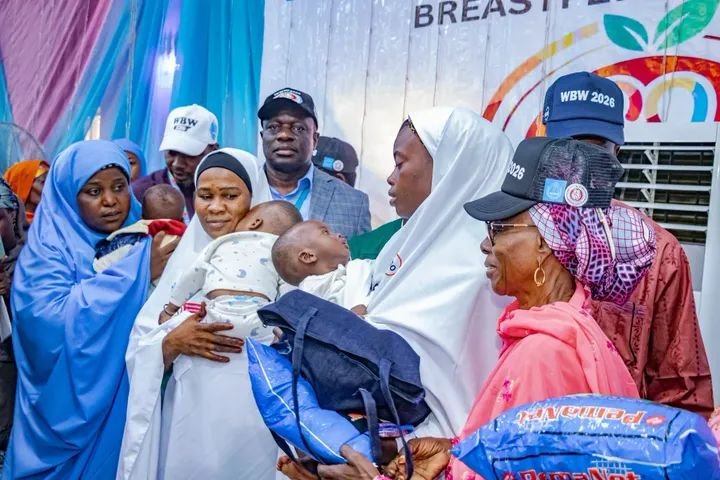
The appeal was made during awareness activities in Borno State, where UNICEF stressed that breastfeeding is not solely the responsibility of mothers but requires a supportive environment created by families and society. The agency noted that fathers, in particular, have a significant influence on whether mothers can successfully initiate and sustain exclusive breastfeeding during a child’s first six months.
According to UNICEF, optimal breastfeeding practices can dramatically reduce infant deaths, improve children’s cognitive development, strengthen immunity against diseases, and lower healthcare costs for families and governments. Despite these well-established benefits, many mothers continue to face social, economic, and workplace challenges that hinder exclusive breastfeeding.
UNICEF explained that support from fathers can take many forms, including assisting with household responsibilities, encouraging mothers emotionally, ensuring they have adequate nutrition, accompanying them to healthcare appointments, and advocating for breastfeeding-friendly environments at home and in public spaces.
The agency emphasized that when fathers actively participate in childcare and support breastfeeding mothers, children are more likely to receive exclusive breastfeeding for the recommended first six months of life. This practice is associated with lower risks of diarrhoea, pneumonia, malnutrition, and other preventable illnesses that remain leading causes of child mortality in many developing countries.
Health experts note that breast milk provides all the nutrients an infant requires during the first six months of life. It contains antibodies that protect babies against infections while also promoting healthy brain development. Mothers also benefit from breastfeeding through reduced risks of breast and ovarian cancers, improved postpartum recovery, and stronger emotional bonding with their infants.
UNICEF further highlighted that creating breastfeeding-friendly workplaces remains essential, especially as more women combine motherhood with employment. The agency encouraged employers to provide adequate maternity leave, flexible work arrangements, nursing breaks, and designated breastfeeding spaces to enable mothers to continue breastfeeding after returning to work.
In Borno State, where many families continue to recover from years of conflict and displacement, UNICEF said protecting maternal and child health remains a critical priority. The organisation has continued working alongside the Borno State Government, healthcare workers, and development partners to improve maternal nutrition, expand healthcare access, and educate communities on infant feeding practices.
The agency observed that emergencies often disrupt proper infant feeding, increasing the vulnerability of children to disease and malnutrition. During humanitarian crises, breastfeeding becomes even more important because breast milk remains the safest and most reliable source of nutrition when access to clean water and safe infant formula may be limited.
UNICEF urged religious leaders, traditional rulers, community volunteers, and civil society organisations to continue promoting accurate information about breastfeeding while challenging harmful myths and misconceptions that discourage mothers from exclusively breastfeeding their babies.
The organisation also encouraged healthcare workers to provide consistent counselling during pregnancy, childbirth, and postnatal care to help mothers overcome common breastfeeding challenges. Early guidance, UNICEF said, improves mothers’ confidence and increases exclusive breastfeeding rates.
According to global health recommendations from UNICEF and the World Health Organization (WHO), babies should be breastfed within one hour of birth, receive exclusive breastfeeding for the first six months, and continue breastfeeding alongside appropriate complementary foods until at least two years of age or beyond.
UNICEF warned that aggressive marketing of breast milk substitutes, inadequate family support, and limited workplace protections continue to undermine breastfeeding efforts in many countries. Addressing these challenges requires coordinated action from governments, private employers, healthcare institutions, and communities.
The agency reiterated that investing in breastfeeding is also an investment in national development. Healthier children are more likely to perform better in school, become productive adults, and contribute positively to economic growth. Families also spend less on healthcare when children experience fewer illnesses during infancy.
As World Breastfeeding Week activities continue, UNICEF called on everyone—not just mothers—to share responsibility for giving every child the healthiest possible start in life.
The agency concluded that fathers who actively support breastfeeding contribute significantly to the physical, emotional, and cognitive development of their children, making family involvement an indispensable part of child survival strategies.
Sources:
- UNICEF Nigeria
- World Health Organization (WHO)
- News Agency of Nigeria (NAN)