Reported by Simon yusuph,| Journalist at wengglobal
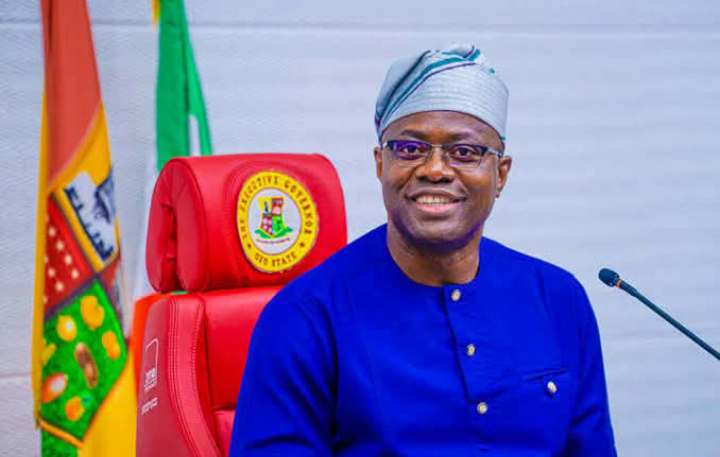
As political realignments ahead of Nigeria’s 2027 general elections continue to gather momentum, the Lagos State chapter of the Allied People’s Movement (APM) has declared Oyo State Governor Seyi Makinde as the most credible and suitable opposition figure to challenge for Nigeria’s presidency.
The endorsement adds another dimension to the growing national conversation over who will emerge as the leading opposition candidate capable of mounting a formidable challenge against the ruling establishment in the next presidential election. While the political landscape remains fluid, the APM believes Makinde’s governance record, administrative experience, and national appeal position him as a strong alternative for Nigerians seeking a new direction.
The party’s position reflects the increasing political calculations already underway across party lines, despite the fact that the Independent National Electoral Commission (INEC) has yet to officially commence activities for the 2027 electoral cycle.
APM Makes Case for Makinde
Speaking on behalf of the Lagos chapter, APM leaders described Governor Makinde as a politician who has demonstrated practical leadership, fiscal discipline, and a commitment to governance rather than divisive politics.
According to the party, Makinde has consistently shown the capacity to manage public resources, execute infrastructure projects, and maintain relative political stability in Oyo State since assuming office in 2019.
The party argued that these achievements distinguish him from many other opposition figures who may be considering presidential ambitions ahead of the next general election.
APM further maintained that Nigeria requires leadership capable of addressing economic hardship, insecurity, unemployment, infrastructure deficits, and declining public confidence in governance.
The Lagos chapter stated that Makinde possesses both executive experience and political maturity that could unite different regions and demographic groups across the country.
Growing Political Speculation Ahead of 2027
Although Governor Makinde has not officially declared interest in the presidency, political observers have increasingly mentioned his name among several influential politicians who could play significant roles in determining the shape of the opposition ahead of 2027.
His growing national visibility has been strengthened by his participation in regional governance initiatives, engagements on economic development, and involvement in broader political discussions beyond Oyo State.
Makinde also remains one of the most influential governors within the opposition People’s Democratic Party (PDP), where he has maintained considerable political relevance despite internal disagreements that have occasionally affected the party.
Political analysts note that endorsements such as that of the Lagos APM may be aimed not only at encouraging Makinde to contest but also at influencing coalition negotiations expected to intensify before party primaries.
Opposition Politics Enter New Phase
Nigeria’s opposition parties are expected to undergo significant restructuring over the coming months as discussions around alliances and mergers continue.
Several politicians across different parties have repeatedly emphasized the need for greater unity among opposition groups if they hope to present a competitive challenge in 2027.
Analysts believe fragmentation among opposition parties during previous elections weakened their electoral prospects, making coalition-building a central issue ahead of the next presidential contest.
The endorsement of Makinde by a party outside the PDP may therefore be viewed as an early indication that cross-party consultations are already underway.
Political commentators, however, caution that endorsements alone do not determine presidential candidacies, noting that internal party processes, delegate support, coalition agreements, and regional political considerations will ultimately influence who emerges as a consensus candidate.
Makinde’s Governance Record Under Spotlight
Since becoming governor of Oyo State, Makinde has frequently highlighted investments in education, healthcare, agriculture, infrastructure, security, and fiscal transparency.
His administration has overseen road rehabilitation projects, education reforms, rural development initiatives, and efforts aimed at improving internally generated revenue.
Supporters argue that these accomplishments provide evidence of administrative competence that could resonate with voters nationally.
Critics, however, maintain that governing a single state differs significantly from managing Nigeria’s complex federal structure, where national security, foreign policy, macroeconomic management, and intergovernmental coordination present much broader challenges.
As political activities gradually intensify, Makinde’s performance in Oyo State is expected to remain central to debates over his potential suitability for higher office.
Regional Balance and National Appeal
One factor likely to shape discussions ahead of the 2027 election is Nigeria’s long-standing consideration of regional balance and power rotation.
Political stakeholders continue to debate whether the presidency should remain in the South beyond President Bola Tinubu’s tenure or rotate to another geopolitical zone after the current administration.
Against this backdrop, endorsements such as that from the Lagos APM could influence broader conversations regarding regional consensus and coalition strategies.
However, constitutional requirements, party zoning arrangements, and political negotiations will ultimately determine how presidential tickets are structured.
Analysts Urge Focus on Policies
Political analysts have urged Nigerians to focus less on early endorsements and more on concrete policy proposals from potential presidential aspirants.
Issues including inflation, unemployment, foreign investment, healthcare delivery, food security, education quality, and electricity supply are expected to dominate campaign conversations as the election approaches.
Experts argue that voters increasingly expect candidates to present practical solutions rather than relying solely on political endorsements or regional affiliations.
Civil society organisations have also encouraged political parties to strengthen internal democracy and ensure transparent candidate selection processes to improve public confidence in Nigeria’s democratic institutions.
Looking Ahead
With more than a year before major political campaigns are expected to intensify, endorsements from smaller political parties are likely to become increasingly common as stakeholders attempt to shape the emerging political narrative.
Whether Governor Seyi Makinde eventually joins the presidential race remains uncertain, but the endorsement by the Lagos chapter of the Allied People’s Movement underscores his growing profile within Nigeria’s opposition politics.
As parties continue consultations and strategic engagements, the road to the 2027 general election is expected to witness evolving alliances, policy debates, and leadership contests that will shape the country’s democratic future.
For now, the Lagos APM’s endorsement represents another significant contribution to the broader national conversation about leadership, governance, and the direction Nigeria should take in the years ahead.
Sources
- Reuters
- Channels Television
- Premium Times Nigeria
- The Punch
- Vanguard Nigeria
- Daily Trust
- Nigerian Tribune