Reported by Weng Patrick Atokor | Journalist at Weng Global
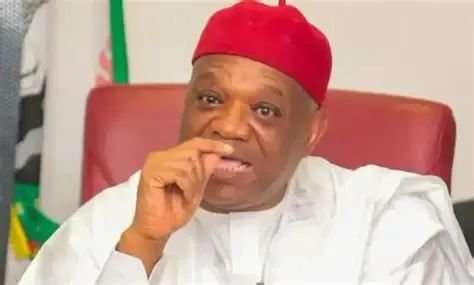
Former Abia State Governor and Senator representing Abia North, Orji Uzor Kalu, has said that members of the Catholic Bishops’ Conference of Nigeria (CBCN) were sincere in their assessment of the country’s economic and security challenges during their recent meeting with President Bola Ahmed Tinubu, noting that the clerics expressed concerns many politicians often avoid raising.
Kalu made the remarks while reacting to the closed-door meeting between President Tinubu and Catholic bishops, where the religious leaders reportedly highlighted the worsening cost of living, persistent insecurity, unemployment, and the growing hardship faced by millions of Nigerians.
According to the former Senate Chief Whip, the bishops fulfilled their moral responsibility by presenting the realities confronting ordinary Nigerians directly to the President instead of offering flattering remarks.
“They told the President the truth. That is what religious leaders are expected to do,” Kalu said, adding that many politicians sometimes fail to communicate the true situation on the ground because of political interests.
Church has duty to speak truth
Kalu explained that religious leaders occupy a unique position in society because they interact daily with citizens across different communities and are therefore well placed to understand the hardships affecting families.
He noted that churches witness firsthand the increasing number of Nigerians seeking assistance for food, school fees, healthcare and other basic necessities, making their observations credible reflections of the country’s socio-economic realities.
According to him, leaders should welcome constructive criticism aimed at improving governance rather than viewing such comments as attacks on government.
“The bishops did not insult the President. They simply spoke the truth about what Nigerians are experiencing,” Kalu was quoted as saying.
Economic hardship remains major concern
Nigeria has continued to grapple with severe economic pressures following a series of reforms introduced by the Tinubu administration, including the removal of fuel subsidies and the liberalisation of the foreign exchange market.
While the Federal Government maintains that the reforms are necessary to stabilise the economy and attract long-term investment, many households continue to struggle with soaring food prices, rising transportation costs, inflation and declining purchasing power.
Businesses have also faced higher operating costs, with small and medium-sized enterprises reporting increased difficulties due to fluctuating exchange rates, expensive energy and reduced consumer spending.
Although government officials insist that some economic indicators are beginning to improve, many Nigerians say the benefits of the reforms have yet to reach ordinary citizens.
Insecurity still threatens communities
Beyond economic concerns, insecurity remains one of Nigeria’s biggest challenges.
Several parts of the country continue to experience attacks linked to banditry, kidnapping, terrorism and communal violence. Farmers in many rural communities have also reported difficulties accessing their farmlands because of security fears, contributing to food shortages and inflation.
The Catholic bishops reportedly urged government to intensify efforts to restore security and protect lives and property, stressing that sustainable economic growth cannot be achieved without peace and stability.
Kalu agreed that security should remain one of the administration’s highest priorities, noting that economic recovery depends heavily on improving safety across the country.
Government must continue reforms
Despite acknowledging the hardships facing Nigerians, Kalu maintained that President Tinubu inherited significant economic challenges and requires continued public support to implement difficult but necessary reforms.
He argued that although the reforms have created temporary pain, their long-term objective is to place Nigeria on a stronger economic foundation.
However, he stressed that government must also expand social protection programmes and ensure that vulnerable citizens receive adequate support while the reforms take effect.
According to him, economic policies should be accompanied by visible improvements in security, job creation and infrastructure development to restore public confidence.
Nigerians expect practical results
Political analysts say comments from respected religious leaders often attract significant public attention because churches and mosques remain trusted institutions for millions of Nigerians.
Observers believe the bishops’ message reflects growing public concern over inflation, unemployment and insecurity, issues that continue to dominate national discourse.
Many citizens are now looking beyond policy announcements and expecting measurable improvements in their daily lives, including lower food prices, safer communities, stable electricity, affordable transportation and increased employment opportunities.
The Tinubu administration has repeatedly assured Nigerians that ongoing reforms will eventually produce sustainable economic growth, stronger public finances and greater investment.
Calls for dialogue
Kalu urged continued engagement between government, religious organisations, civil society groups and the private sector, saying national development requires honest conversations and collective responsibility.
He noted that criticism delivered in good faith should be viewed as valuable feedback rather than opposition, adding that democratic governance thrives when leaders listen to diverse voices.
According to him, Nigeria’s complex economic and security challenges require collaboration among all stakeholders, including political leaders, faith-based organisations and ordinary citizens.
As debates over the country’s economic direction continue, Kalu’s endorsement of the Catholic bishops’ intervention underscores the growing consensus that frank discussions about governance, hardship and insecurity remain essential to finding lasting solutions.
For many Nigerians, the focus now shifts from diagnosis to action, with expectations that both government and relevant institutions will work together to ease economic pressures, improve security and restore confidence in the nation’s future.
Sources:
- Punch Newspapers
- Vanguard
- The Nation Nigeria
- Channels Television