Reported by Simon yusuph,| Journalist at wengglobal
Nigeria Pushes Urban Transformation and Equal Learning Opportunities Through Landmark Development and Education Reforms
Nigeria is poised to witness two significant developments that underscore the country’s drive toward sustainable urban growth and inclusive social development. President Bola Ahmed Tinubu is scheduled to officially unveil the ambitious ₦2.4 trillion Abuja City Walk Project, a landmark urban renewal initiative designed to reshape the nation’s capital into a globally competitive city. At the same time, the Lagos State Government has reaffirmed its commitment to strengthening inclusive education policies aimed at ensuring that every child, regardless of physical ability or background, enjoys equal access to quality learning.
Together, these initiatives highlight efforts by both the federal and state governments to address critical aspects of national development modern infrastructure and equitable education which remain central to Nigeria’s long-term economic and social aspirations.
Tinubu to Commission Abuja City Walk Project
President Tinubu is expected to unveil the Abuja City Walk Project during a formal ceremony on Thursday, marking one of the largest privately driven urban development projects in Nigeria’s history.
The proposed development, estimated at ₦2.4 trillion, spans approximately 250 hectares within the Federal Capital Territory (FCT). Project developers describe it as a mixed-use urban district that will combine residential communities, commercial centres, hospitality facilities, recreational spaces, entertainment hubs, and modern public infrastructure into a single integrated city destination.
Among the project’s most prominent features are plans for Africa’s tallest tower, Nigeria’s largest indoor entertainment complex, luxury hotels, premium retail outlets, green parks, office developments, cultural centres, and pedestrian-friendly walkways intended to encourage sustainable urban mobility.
According to project promoters, Abuja City Walk is expected to become a landmark destination that will attract local and international investors while expanding opportunities within Nigeria’s tourism, hospitality, real estate, construction, and service sectors.
Economic Significance of the Development
Urban development experts say projects of this scale often generate significant economic activity through direct and indirect employment, increased property values, infrastructure expansion, and enhanced investor confidence.
Construction activities alone are expected to create thousands of jobs across engineering, architecture, building services, logistics, technology, and facility management. Once completed, the district is also expected to support long-term employment across hospitality, retail, finance, entertainment, healthcare, and other service industries.
Analysts believe that integrated developments such as Abuja City Walk can strengthen Abuja’s position as a regional investment hub while diversifying economic opportunities beyond government administration.
The project also aligns with broader national objectives aimed at encouraging public-private partnerships (PPPs) to finance large-scale infrastructure, particularly at a time when governments across Africa continue exploring alternative funding models for urban expansion.
Transforming Abuja Into a Global Capital
Urban planners note that Abuja was originally conceived as a carefully planned capital city with room for structured expansion.
The Abuja City Walk initiative seeks to build upon that vision by introducing smart-city concepts that incorporate modern transportation systems, environmentally sustainable infrastructure, digital connectivity, public recreation, and mixed-use neighbourhoods designed to reduce commuting distances.
If successfully implemented, the project could become one of the most recognisable urban landmarks in Africa, comparable with integrated city developments emerging across the Middle East, Asia, and parts of North Africa.
Industry observers, however, stress that long-term success will depend on transparent implementation, environmental sustainability, affordability considerations, and efficient maintenance after completion.
Lagos Reaffirms Inclusive Education Commitment
While attention focuses on Abuja’s urban transformation, Lagos State has reiterated its determination to strengthen inclusive education across the state.
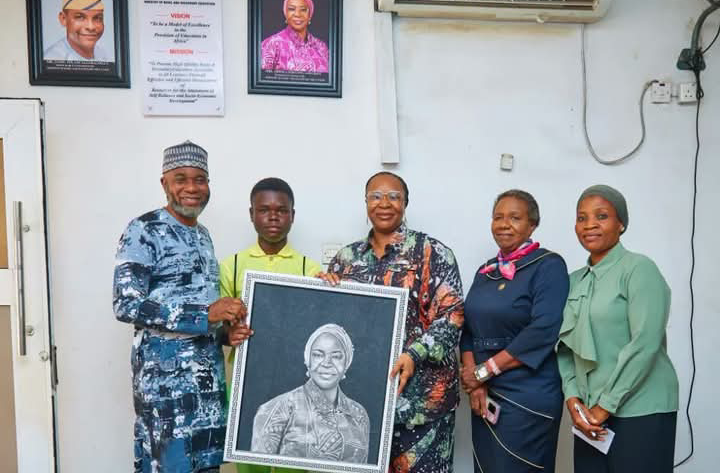
Government officials reaffirmed that every child including children living with disabilities deserves equal access to quality education within safe, supportive, and well-equipped learning environments.
The renewed commitment reflects Nigeria’s obligations under international conventions promoting equal educational opportunities and aligns with Sustainable Development Goal 4, which advocates inclusive and equitable quality education for all.
Lagos has consistently expanded programmes designed to improve access to education for learners with visual, hearing, intellectual, and physical disabilities through specialised teaching methods, teacher capacity building, assistive technologies, and improved school infrastructure.
Expanding Opportunities for Every Child
Education stakeholders have welcomed continued investments in inclusive education, noting that removing barriers to learning benefits not only children with disabilities but also society as a whole.
Inclusive classrooms encourage diversity, reduce discrimination, strengthen social integration, and improve learning outcomes by enabling children from different backgrounds to study together.
Officials say the state’s approach includes teacher training, curriculum adaptation, accessible classrooms, counselling services, and partnerships with development organisations working in disability inclusion.
Parents and advocacy groups have also called for sustained investment in specialised learning materials, accessible transportation, early intervention programmes, and expanded funding for public schools serving children with special educational needs.
Education as a Driver of National Development
Experts widely agree that education remains one of the strongest drivers of economic growth, poverty reduction, innovation, and national productivity.
By investing in inclusive education, governments can expand workforce participation, reduce inequality, and ensure that talented individuals are not excluded from contributing to national development because of disability or social disadvantage.
Nigeria has increasingly prioritised education reforms alongside infrastructure investments as part of broader efforts to improve human capital development and achieve long-term economic resilience.
Balancing Infrastructure and Human Development
The simultaneous focus on transformative infrastructure in Abuja and inclusive education in Lagos reflects two complementary dimensions of national progress.
Large-scale infrastructure projects have the potential to stimulate investment, create jobs, improve tourism, and modernise cities. At the same time, investments in education ensure that future generations possess the knowledge and skills needed to sustain economic growth.
Development specialists argue that infrastructure alone cannot guarantee prosperity without corresponding investments in people through education, healthcare, and social inclusion.
As Nigeria continues implementing ambitious development initiatives, policymakers will face the challenge of balancing rapid urban expansion with inclusive policies that ensure all citizens benefit from economic progress.
Looking Ahead
The unveiling of the Abuja City Walk Project represents a significant milestone in Nigeria’s urban development ambitions, while Lagos State’s renewed emphasis on inclusive education reinforces the importance of equal opportunity in national development.
Both initiatives illustrate different but interconnected pathways toward building a more competitive, inclusive, and economically resilient Nigeria. Their long-term success will depend not only on policy commitments but also on effective implementation, transparency, stakeholder collaboration, and sustained investment.
For investors, educators, policymakers, and citizens alike, these developments will be closely watched as indicators of Nigeria’s evolving approach to infrastructure modernisation and human capital development.
Sources:
- Presidency of the Federal Republic of Nigeria
- Federal Capital Territory Administration (FCTA)
- Lagos State Government
- Punch Newspapers
- Premium Times
- The Guardian Nigeria
- Channels Television
- Vanguard Nigeria
- News Agency of Nigeria (NAN)