Reported by Simon yusuph,| Journalist at wengglobal
A fresh political disagreement has emerged in Osun State over Governor Ademola Adeleke’s directive to rehabilitate the Olaiya Flyover in Osogbo, with the opposition All Progressives Congress (APC) describing the proposed intervention as an unnecessary use of public funds.
The controversy has reignited debate over infrastructure spending, governance priorities, and accountability in one of Nigeria’s politically significant states, as both the ruling Peoples Democratic Party (PDP) administration and the opposition APC present contrasting views on the condition of the bridge and the state’s broader development agenda.
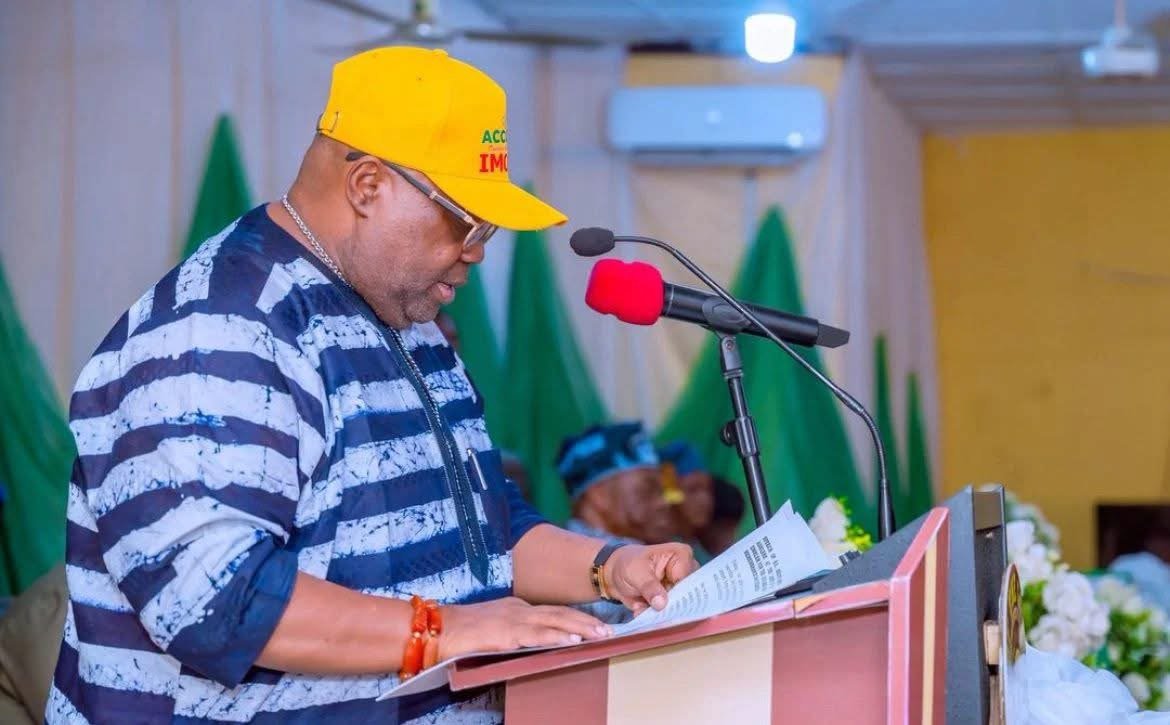
Governor Adeleke recently ordered the rehabilitation of the Olaiya Flyover, one of Osogbo’s most recognizable transport structures, citing the need to preserve public infrastructure and guarantee the safety of motorists and pedestrians. The state government has maintained that periodic maintenance of critical public assets is an essential responsibility of any administration and forms part of its broader commitment to improving infrastructure across Osun State.
However, the Osun State chapter of the APC has strongly opposed the decision, arguing that the bridge remains structurally sound and does not require rehabilitation at this time. According to the opposition party, channeling public resources toward a bridge it considers to be in good condition would amount to misplacing government priorities, especially at a time when many communities across the state continue to demand improved roads, healthcare facilities, schools, and other essential public services.
In a statement reacting to the governor’s directive, the APC questioned the rationale behind the planned rehabilitation, insisting that there was no visible evidence suggesting that the Olaiya Flyover had developed structural defects warranting immediate intervention. The party argued that government expenditure should be guided by urgent public needs and verifiable engineering assessments rather than political considerations.
The opposition further urged the Adeleke administration to redirect available resources toward projects that would have a more immediate impact on residents, particularly rural road rehabilitation, water supply initiatives, educational infrastructure, and healthcare delivery.
The disagreement reflects the broader political rivalry between the APC and the PDP in Osun State, where infrastructure projects have frequently become subjects of intense public and political scrutiny. Since assuming office, Governor Adeleke has consistently emphasized infrastructure renewal as one of the pillars of his administration, commissioning road projects, approving rehabilitation works, and promising improved public facilities across the state.
Supporters of the governor argue that preventive maintenance is often less expensive than waiting until infrastructure deteriorates significantly. They contend that regular rehabilitation of bridges, roads, and other public assets reduces long-term maintenance costs while enhancing public safety and extending the lifespan of critical infrastructure.
Engineering experts generally note that many structural issues affecting bridges may not be immediately visible to ordinary road users. Routine technical inspections often identify hidden defects such as corrosion, concrete fatigue, weakened support systems, drainage failures, or expansion joint deterioration before they become serious safety hazards. Consequently, governments frequently undertake preventive maintenance based on engineering evaluations rather than obvious physical damage.
While the Osun State Government has yet to publicly release a detailed engineering assessment explaining the specific reasons for the rehabilitation order, officials have maintained that the decision followed technical recommendations aimed at ensuring the continued safety and durability of the flyover.
The Olaiya Flyover occupies a strategic position within Osogbo, the Osun State capital, serving thousands of commuters daily while easing traffic congestion within the city. Constructed during the administration of former Governor Rauf Aregbesola, the bridge has remained one of the state’s most prominent infrastructure projects and has often featured in political discussions regarding development achievements in Osun.
Because of its symbolic significance, any proposed modification or rehabilitation of the structure naturally attracts political attention. Analysts say infrastructure projects frequently become focal points of political contestation, particularly when successive administrations pursue different development priorities or review projects executed by their predecessors.
The latest dispute also highlights a recurring issue in Nigerian governance: balancing preventive infrastructure maintenance with competing fiscal demands. Across many states, governments face increasing pressure to allocate limited financial resources efficiently while addressing aging infrastructure, expanding urban populations, and growing demands for improved public services.
Public finance specialists argue that transparent procurement processes, publicly available engineering reports, and detailed project cost disclosures are essential for building public confidence in major infrastructure decisions. Such transparency enables citizens to understand the necessity, scope, and expected benefits of rehabilitation projects while strengthening accountability in public spending.
Residents of Osogbo have expressed mixed reactions to the controversy. While some believe the government should prioritize maintaining existing infrastructure before deterioration occurs, others argue that available resources should instead address pressing socioeconomic challenges affecting communities throughout the state.
Transportation experts also emphasize that regular inspection and maintenance of bridges remain globally accepted engineering practices. They note that infrastructure maintenance schedules are typically determined by technical evaluations, traffic volumes, environmental conditions, and the age of the structure rather than visible surface damage alone.
The unfolding debate underscores the importance of evidence-based policymaking, especially where public infrastructure and taxpayer resources are concerned. Regardless of political affiliation, governance experts stress that major public works should be supported by transparent technical documentation capable of withstanding independent scrutiny.
As discussions continue, observers expect the Osun State Government to provide additional information regarding the rehabilitation project, including estimated costs, project timelines, procurement procedures, and the engineering findings that informed the governor’s directive. Such disclosures could help address public concerns while promoting greater confidence in the administration’s infrastructure strategy.
For residents and stakeholders, the central issue extends beyond politics to ensuring that public funds deliver measurable value through projects that improve safety, economic productivity, and quality of life. Whether the Olaiya Flyover requires immediate rehabilitation remains a matter of public debate, but the controversy has once again highlighted the need for transparency, accountability, and informed decision-making in infrastructure development across Nigeria.
As Osun navigates this latest political disagreement, the outcome may shape broader conversations about responsible public spending, infrastructure sustainability, and governance standards—not only within the state but across Nigeria, where maintaining aging public assets continues to pose significant policy and fiscal challenges.
Sources
- Punch Newspapers
- Vanguard Newspaper
- The Guardian Nigeria
- Premium Times
- Nigerian Tribune