Reported by Simon yusuph, | Journalist at wengglobal
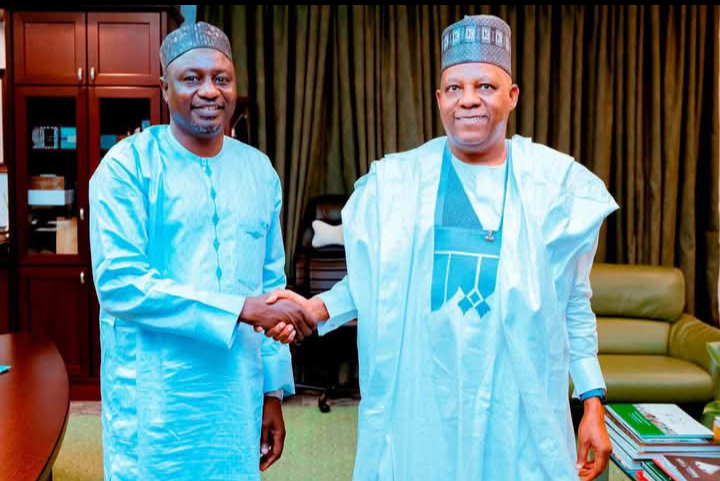
ABUJA, Nigeria Nigeria’s Vice President, Senator Kashim Shettima, on Friday shared a cordial moment with prominent investigative journalist Jaafar Jaafar at the State House Mosque in Abuja, where both joined other Muslim faithful for the weekly Jumu’ah prayers before holding a private discussion on national affairs.
The encounter, which was disclosed by Jaafar Jaafar through a public statement, has attracted public attention because of the long-standing relationship between the Vice President and the journalist despite Jaafar’s reputation for uncompromising investigative reporting and critical commentary on public officials.
According to Jaafar, the interaction reflected a relationship built on mutual respect even as both occupy different spaces within Nigeria’s democratic landscape—one in government and the other in the media.
Jaafar revealed that Vice President Shettima has consistently treated him with warmth and respect since his days as Governor of Borno State and has never failed to acknowledge him whenever they meet.
Describing their latest encounter, Jaafar recounted that the Vice President greeted him in his characteristic Kanuri-accented Hausa and jokingly remarked:
“Kai dai Jaafar, ko mutum daya ba ka bari ba. Ko ni abokinka, ba ka kyale ni.”
The statement translates roughly as:
“Jaafar, you spare no one—not even me, your friend.”
The light-hearted exchange drew smiles from those nearby and underscored the cordial relationship between the two men despite Jaafar’s well-known record of scrutinizing political leaders through investigative journalism.
Following the congregational prayers, Vice President Shettima reportedly invited Jaafar to lunch before hosting him in his office within the Presidential Villa.
According to Jaafar, the meeting provided an opportunity for both men to exchange views on a wide range of issues affecting Nigeria, including politics, governance and broader national developments.
Although neither party disclosed the specific details of their discussions, Jaafar described the conversation as constructive and marked by mutual respect and goodwill.
The meeting comes at a period when Nigeria continues to navigate significant political and economic challenges, with public discourse increasingly shaped by interactions between policymakers, civil society, and the media.
As one of Nigeria’s most recognizable investigative journalists, Jaafar Jaafar has built a reputation for holding public officials accountable through high-impact investigations and commentary. His work has frequently sparked national conversations on transparency, governance and accountability.
Vice President Kashim Shettima, meanwhile, has continued to represent the administration of President Bola Ahmed Tinubu in engagements involving governance, diplomacy, economic reforms and national security.
Observers note that cordial interactions between government officials and journalists are an important feature of democratic societies, provided they do not compromise editorial independence or the watchdog role of the press.
The exchange between Shettima and Jaafar has therefore been viewed by many as an example of professional respect despite differences that naturally arise from journalistic scrutiny.
The Vice President’s humorous remark acknowledging Jaafar’s fearless reporting also resonated with many Nigerians on social media, where users interpreted the comment as recognition of the journalist’s willingness to question those in positions of authority regardless of personal relationships.
Media analysts have long argued that healthy democracies benefit when journalists are able to engage political leaders openly while maintaining professional independence. Such interactions can promote dialogue without diminishing the media’s responsibility to report objectively and hold public institutions accountable.
Although informal in nature, Friday’s meeting highlighted the continuing importance of communication between elected officials and members of the press, particularly at a time when public confidence in institutions depends heavily on transparency and access to information.
Neither the Office of the Vice President nor the Presidency immediately released an official statement providing further details of the meeting. However, Jaafar’s account indicates that the discussions remained cordial and focused on issues of national importance rather than partisan politics alone.
For Nigeria’s media industry, the encounter also serves as a reminder that robust journalism and respectful engagement with public officials are not mutually exclusive. Independent journalism remains a cornerstone of democratic governance, ensuring citizens receive accurate information while encouraging accountability across all levels of government.
As political conversations continue ahead of future national developments, engagements such as this demonstrate that dialogue between journalists and public office holders can occur in an atmosphere of civility without undermining the principles of press freedom or democratic oversight.
While the luncheon and office meeting were private, the symbolism of the encounter has generated public interest because it reflects a relationship where criticism is acknowledged rather than avoided, reinforcing the value of open democratic engagement.
For many observers, the Vice President’s humorous acknowledgment of Jaafar’s uncompromising reporting style illustrates the enduring importance of an independent press in Nigeria’s evolving democracy.
Sources
- Daily Trust
- Premium Times Nigeria
- Daily Nigerian
- Channels Television
- Jaafar Jaafar’s official public statement